⏱ About 6 min read
Does Gut Health Really Change Your Mind? The Latest Evidence on Fermented Vegetables and Mental Wellness
You’ve probably heard the phrase “the gut is the second brain.”
What recent research is actually showing us is something even more compelling—the “gut-brain axis,” a two-way conversation happening between your digestive system and your mind. And the messengers making this conversation possible? The trillions of bacteria living in your gut.
In January 2026, a review paper published in Probiotics Antimicrobial Proteins (Springer) brought together what we know about the relationship between fermented vegetables and mental health in one comprehensive overview (PubMed ID: 40402417).
What Exactly Are “Psychobiotics”?
Psychobiotics are living microorganisms and foods that improve mental health by working through your gut bacteria.
While probiotics in general concern themselves with digestive wellness, psychobiotics are specifically focused on how gut bacteria influence your brain and emotional wellbeing. The scientific conversation around this really started around 2013, and it’s an area where research is accelerating rapidly.
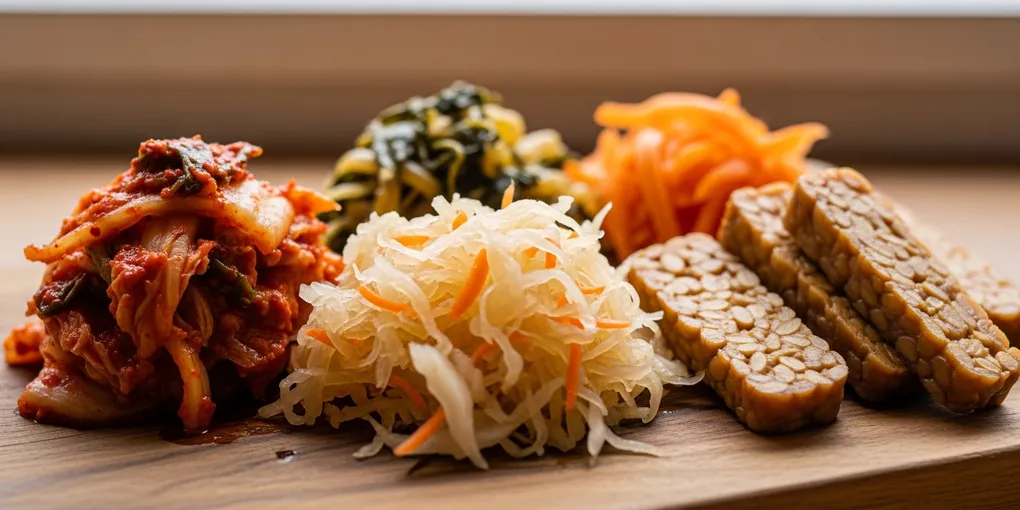
This particular review paper examined three fermented vegetables—kimchi, sauerkraut, and tempeh—as potential psychobiotics.
The Beneficial Bacteria in Fermented Vegetables
Both kimchi and sauerkraut share something in common: they’re created through lactic acid fermentation. During this process, bacteria from the Lactobacillus genus multiply and thrive.
Tempeh, a fermented soybean product originally from Indonesia, is packed with plant-based protein. When it undergoes fermentation, it becomes rich in beneficial bacteria that support your gut environment.
Bifidobacterium, another genus of bacteria found in these foods, is also recognized as playing a key role in the gut-brain axis.
Three Pathways to Your Brain
The paper highlights three distinct ways that beneficial bacteria from fermented vegetables can influence brain function.
Regulating Neurotransmitters
Gut bacteria are known to be involved in producing neurotransmitters like serotonin and GABA. Serotonin is deeply connected to mood stability. Here’s something remarkable: about 90% of the serotonin your body produces is actually made in your gut. That fact alone tells you everything about how intimately your gut and your mood are connected.
Reducing Inflammation
More and more research is showing that chronic, low-level inflammation is linked to depression and anxiety. When beneficial gut bacteria suppress inflammatory substances and help regulate your immune system, it opens a door to better mental health.
Improving Stress Response
The HPA axis—your hypothalamic-pituitary-adrenal axis—is essentially your body’s stress control center. When gut bacteria help keep this axis from overreacting, your ability to handle chronic stress improves. At least, that’s what emerging research suggests.
What This Means for Anxiety, Depression, and Cognition
The review examined three areas: anxiety disorders, depression, and cognitive function.
In each of these areas, the research points toward the possibility that beneficial bacteria in fermented vegetables may have a positive effect through the gut-brain axis. That said, the paper is refreshingly honest about the limitations of existing research, concluding that “more detailed clinical trials are needed.”
We’re at a stage where the possibility has been scientifically demonstrated. We don’t yet have rock-solid proof of effectiveness. But that possibility feels substantial enough to take seriously.
Connecting With Japanese Pickled Vegetables
The three fermented foods this review focused on—kimchi, sauerkraut, and tempeh—are all plant-based fermented foods.
Japan has its own traditions of the same type of lactic acid fermentation. Nukadoko (rice bran paste for pickling), takuan (pickled daikon radish), and nozawana-zuke (pickled mountain greens) all come to mind. These are equally rich in lactic acid bacteria and, from the psychobiotic perspective, would likely offer similar benefits.
The Japanese culture of pickled vegetables that’s graced dinner tables for generations—maybe that wasn’t just nourishing the gut. Maybe it was also nourishing the heart and mind.
Wrapping Up
The relationship between gut bacteria and mental health is a field where scientific understanding is rapidly expanding. This review paper has brought together the evidence showing how beneficial bacteria in fermented vegetables may influence the brain through three specific pathways: neurotransmitter production, inflammation reduction, and stress response regulation.
None of this is established fact yet. But adding fermented vegetables to your daily meals might matter in ways that go far beyond just keeping your digestive system healthy.
Calm your gut, calm your mind. The potential of fermented foods is still unfolding.
From Toshi
I found this paper genuinely fascinating to read.
I’ve heard the phrase “the gut is the second brain” plenty of times. But honestly, it always felt a bit like a metaphor—something poetic rather than literally true.
Reading through this research, something shifted for me. It started to feel less like an expression and more like an actual phenomenon happening in the body.
What really stuck with me was the idea of those three distinct pathways. Neurotransmitters. Inflammation. Stress response. When you see those spelled out so specifically, suddenly “your gut reaching your brain” doesn’t feel like philosophy anymore. It feels real.
We’ve long heard that “you are what you eat.” Maybe we should start thinking of it this way too: “how you feel and think is influenced by what you eat.”
From my own experience, I can point to moments that align with this.
When my eating habits get loose or I’m eating out constantly, there’s a kind of restlessness that settles in. On the flip side, when I’m intentional about including fermented foods, not only does my body feel better—my mood feels more balanced too.
I can’t claim that every shift is purely from gut bacteria. But reading this research made me feel like maybe my instincts weren’t entirely off base.
The connection to Japanese pickle culture really resonated with me in a new way.
Nukadoko, takuan, pickled vegetables—they were just there on the dinner table when I was growing up. Completely ordinary. Not presented as medicine or as something special.
But what if all along, they were doing exactly this? Quietly tending to the gut, which in turn tended to the mind. That’s a beautiful idea.
The changes aren’t dramatic. But there’s something deeply nourishing about shifts that happen so quietly you almost don’t notice them.
Tending to your gut isn’t just a physical practice. It might be one of those gentle ways we care for our emotional lives without even realizing it.
This research is still in the “possibility” stage—it’s not conclusive yet. But that’s precisely why I think the approach should be quiet and consistent, rather than something we chase with high expectations.
Through running and eating, I keep checking in with how I feel, making small adjustments. I want to keep noticing, slowly and patiently, how my gut and my heart are connected.
※ This article is based on personal experience and publicly available information. It is not intended to diagnose, treat, or prevent any disease. If you have health concerns, please consult a doctor or registered dietitian. See our Disclaimer.