⏱ About 5 min read
My Nukadoko Is Being Studied by a University. The Surprising Connection Between Salt Concentration and Lactic Acid Bacteria.
Every morning, I mix my nukadoko.
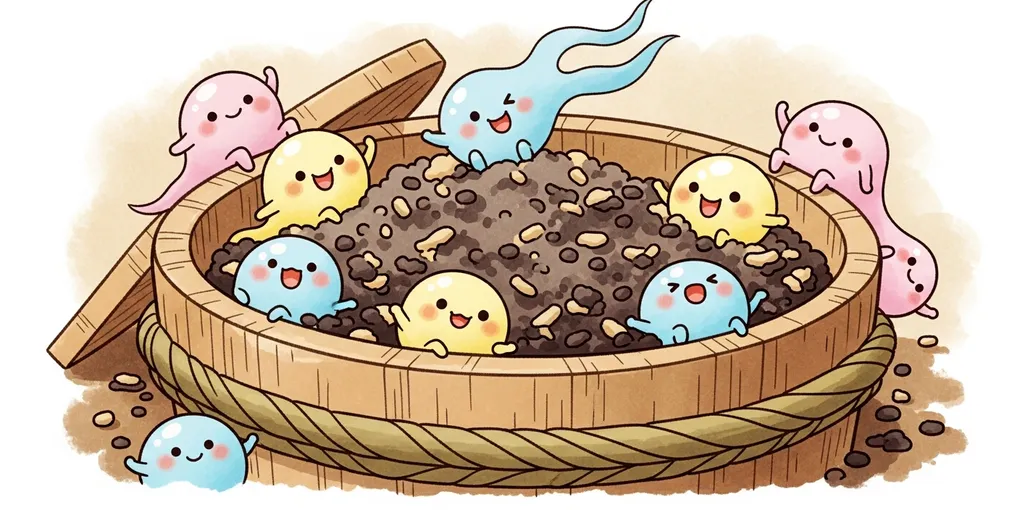
With my bare hands, carefully from the bottom. I do this thinking, “There are tens of billions of bacteria living in here,” but honestly, I didn’t know much about what kinds of bacteria they actually were.
A joint research project between Tokyo Science University and Tabelog is getting closer to those answers.
The Tokyo Science University × Tabelog Collaborative Research
The “Tabelog Food Value Creation Collaborative Research” is an industry-academia partnership project that’s been running since 2016. Tokyo Science University’s School of Life Science and Technology leads the effort, conducting scientific analysis of Japan’s traditional fermented foods.
The focus areas are “nukadoko pickles,” “pickled vegetables,” and “lactic acid bacteria.” You might wonder why Tabelog, known for restaurant information, would partner with a university.
The goal is simple: “to prove the value of food through science.” What kinds of microorganisms live in the fermented foods that support Japanese food culture? The researchers are trying to unlock, at the genetic level, how these bacteria work in the human body.
Salt Concentration Changes the “Cast of Characters” in Your Nukadoko
One of the key discoveries from this research is the relationship between salt concentration and microbial communities.
The amount of salt in your nukadoko determines which bacteria become dominant. When salt levels are higher, salt-loving microorganisms increase. Research has confirmed that these bacteria likely generate amino acids that create umami flavors.
For those of us who work with nukadoko, this is information we can’t afford to ignore.
I’ve spent years managing my nukadoko by feel—just adding salt when it gets too watery, nothing more scientific than that. But what this research shows is that the salt balance you maintain actually determines the power dynamics in the bacterial world living in your paste.
It’s not just about taste. The very types of bacteria change.
Lactic Acid Bacteria from Pickles Have “Immune-Regulating Power”
Even more noteworthy results were announced in April 2025.
A research team at Tokyo Science University examined 61 strains of lactic acid bacteria isolated from Japanese pickles. They looked at Lactiplantibacillus plantarum (commonly called L. plantarum) and L. pentosus—both bacteria commonly found in nukadoko and vegetable pickles.
When these 61 strains were applied to human immune cells, something remarkable emerged: the immune response varied dramatically depending on the strain. Some induced IL-10, which suppresses inflammation, while others triggered IL-12, which activates immunity—and the ability to induce these varied wildly from strain to strain.
Why such differences among bacteria of the same species? When the research team investigated using a new comparative genomic analysis method, they discovered that the presence or absence of the “TagF2 gene” was the key.
This gene controls the synthesis of teichoic acid, which is involved in bacterial cell wall structure. When the wall is built differently, the way bacteria “communicate” with immune cells changes. This difference in communication leads to variations in immune-regulating ability.
These research findings were published in the international academic journal “mSystems” (April 29, 2025 issue).

For Someone Like Me Who Mixes It Every Day, This Isn’t Someone Else’s Problem
After reading the research, I found myself reflecting.
Living in the nukadoko I mix every morning are these kinds of bacteria. Tens of billions of bacteria with the power to regulate immunity, their populations rising and falling with salt concentration.
People often say, “nukadoko is a living thing.” I used to think that was just poetic language, but science is backing it up.
Going forward, I think I’ll pay a bit more attention to salt balance. Not just “not too salty,” but actively searching for “the concentration where the bacteria thrive.”
We’re still in the middle of the research. But the fact that this research continues suggests that scientists themselves believe in nukadoko’s potential.
Summary | Being Mindful of Salt and Lactic Acid Bacteria in Your Nukadoko
Nukadoko isn’t just a vessel for pickling vegetables—it’s a fermentation environment where diverse microorganisms, including lactic acid bacteria, coexist.
What emerges from this research is a clear fact: the relationship between salt concentration and lactic acid bacteria in nukadoko influences not just flavor, but the types of bacteria present and how they function.
A single adjustment to salt balance changes your nukadoko’s condition. That change extends beyond flavor differences—it carries potential consequences for your gut environment and immune function.
Incorporating nukadoko pickles and fermented foods into your daily life isn’t some special health regimen.
It’s simply stirring your nukadoko every morning. Observing its state and adding a pinch of salt when needed.
Those small, accumulated actions help establish a balanced gut environment, which in turn supports your whole body’s condition.
Nukadoko is alive.
When you approach it with that awareness, the practice of fermentation becomes a little deeper and far more interesting.
Salt concentration and lactic acid bacteria in nukadoko. Simply holding this perspective might just change your everyday table a little.
Source: Tokyo Science University × Tabelog “Tabelog Food Value Creation Collaborative Research” / “mSystems” April 29, 2025 publication
- Research project details: Pickle Fermentation Microbiota and Lactic Acid Bacteria | Tokyo Science University × Tabelog Collaborative Research
- Research announcement: Unlocking the “Immune-Regulating Power” of Lactic Acid Bacteria from Pickles | Tokyo Science University
- Press release: Tabelog · Tokyo Science University Paper Publication | PR TIMES
※ This article is based on personal experience and publicly available information. It is not intended to diagnose, treat, or prevent any disease. If you have health concerns, please consult a doctor or registered dietitian. See our Disclaimer.