⏱ About 5 min read
Lactic Acid Bacteria Flip the Immune Cell "Switch" — New Research on Macrophage Control
Immunity isn’t just about fighting off invaders.
It’s about knowing when to spark inflammation and when to calm it down. Using both strategies at the right moment—that’s what true immunity looks like.
One of the key cells orchestrating this balance is the macrophage. In March 2026, a review paper published in Probiotics and Antimicrobial Proteins (Springer Nature) laid out in systematic detail how probiotic lactic acid bacteria interact with macrophages (PubMed ID: 41870857).
What Are Macrophages?
Macrophages are immune cells found throughout your body’s tissues. The name comes from Greek, meaning “big eaters,” and that’s exactly what they do—they engulf and clear away bacteria, viruses, and dead cells.
They’re stationed everywhere: in your gut, lungs, liver, and fat tissue. When infection strikes, they spark inflammation to eliminate the threat. When healing begins, they dial down inflammation to support tissue repair.
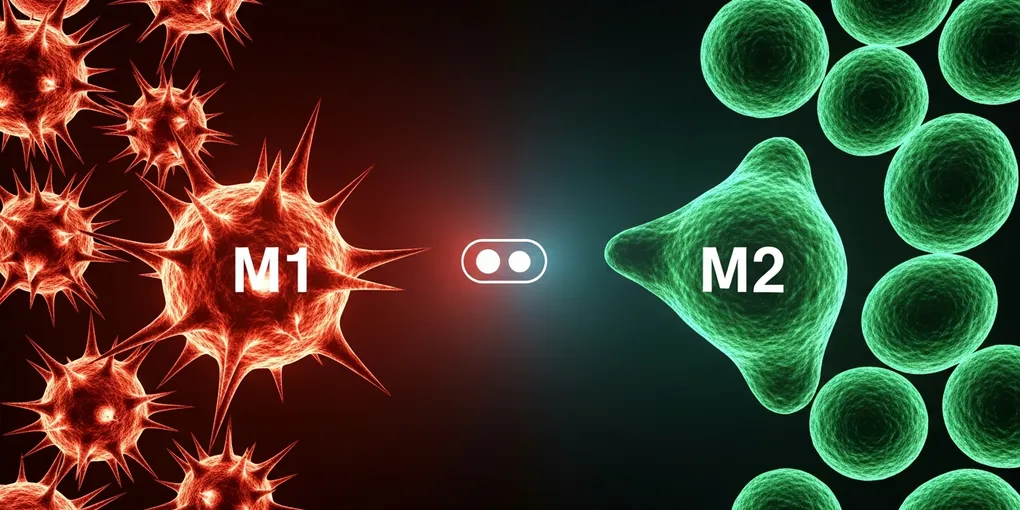
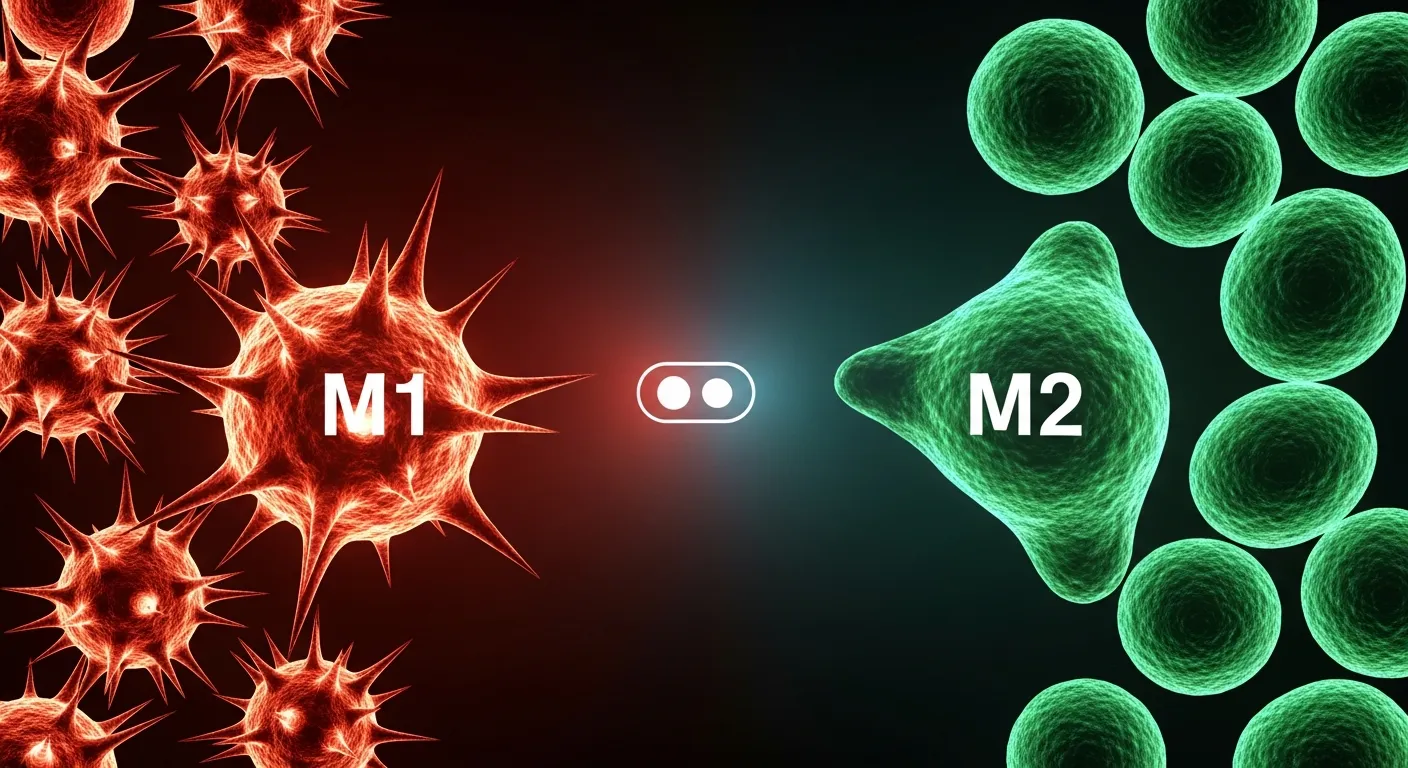
These two functions are distinguished by what we call “polarization”—either M1 type (pro-inflammatory, or attack mode) or M2 type (anti-inflammatory and repair-promoting, or recovery mode).
Lactic Acid Bacteria Control the “Switch”
What the paper shows is this: probiotic lactic acid bacteria influence multiple functions of macrophages.
Regulating Polarization
Research indicates that lactic acid bacteria help orchestrate the M1/M2 switching mechanism in macrophages. They can suppress an excessive M1 state (chronic inflammation) and promote a shift toward M2, supporting inflammation resolution and tissue repair. Given what we know about chronic low-grade inflammation’s connection to lifestyle diseases and aging, this regulatory capacity matters quite a bit.
Boosting Autophagy
Autophagy is the cell’s own recycling system—it breaks down and reuses unnecessary components. When macrophages activate autophagy, they can eliminate pathogens that have invaded the cell and prevent excessive inflammatory responses. Evidence suggests lactic acid bacteria can modulate this autophagy, helping prevent immune overreaction.
Effects on Apoptosis and Metabolism
The paper also highlights how lactic acid bacteria influence macrophage apoptosis (programmed cell death) and metabolic function. A macrophage’s metabolic state is a critical determinant of its immune function direction.
Effects Vary by Bacterial Strain
A key theme the paper emphasizes is strain specificity.
“Lactic acid bacteria” covers many species—Lactobacillus, Bifidobacterium, and others—and even within a species, different strains have different properties. An effect observed with one probiotic strain may not appear with another.
Dose-dependence is equally important. The strength and direction of effects can shift based on how much you consume.
This points to a crucial insight: saying “fermented foods are good for you” is too simple. Which strain? What quantity? What’s the mechanism? This level of precision is where future research needs to go.
Potential Clinical Applications
The paper particularly highlights possible applications for macrophage-related diseases.
Obesity: We know that macrophages infiltrating fat tissue trigger chronic inflammation, disrupting metabolism. Lactic acid bacteria’s ability to fine-tune the M1/M2 balance could potentially ease this inflammation.
Wound healing: Since M2 macrophages promote repair, researchers are exploring whether lactic acid bacteria could support this process.
Both remain at the research stage. Actual clinical translation will require years of accumulated evidence.
Connecting to Japan’s Fermented Foods
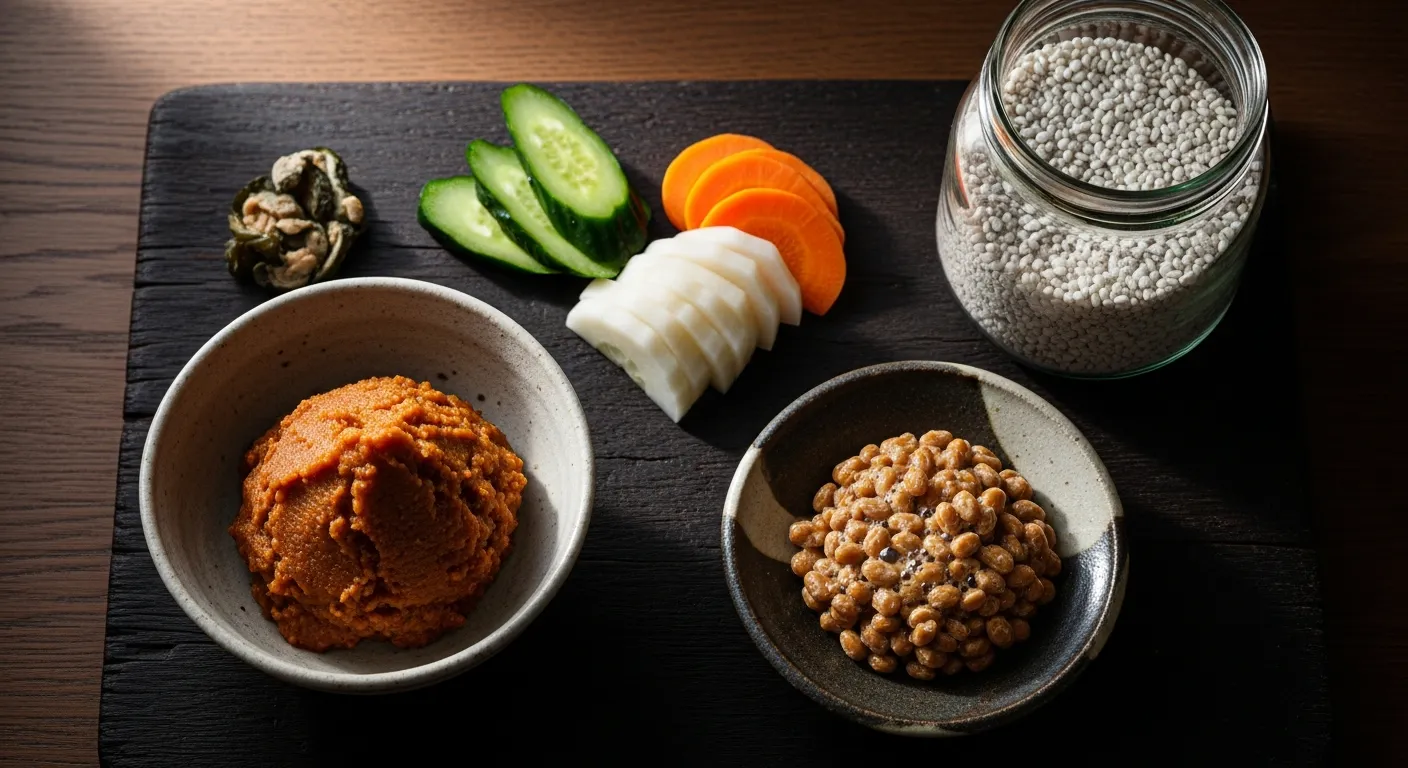
Traditional Japanese fermented foods—miso, natto, nukadoko (fermented rice bran for pickling)—contain diverse lactic acid bacteria.
While natto itself uses Bacillus subtilis rather than lactic acid bacteria, the Lactobacillus strains found in nukadoko, miso, and pickled vegetables overlap with the bacterial species this research focuses on.
It’s striking to consider: fermented foods that have sat on Japanese tables for centuries may have actually been working on the “switch” of our immune cells all along.
The Takeaway
Probiotic lactic acid bacteria influence immune regulation through multiple pathways in macrophages: polarization, autophagy, apoptosis, and metabolism. The M1/M2 balancing act—particularly its role in controlling inflammation—holds real promise for preventing and improving chronic inflammatory conditions and obesity.
With caveats about strain specificity and dose-dependence in mind, we’re approaching a stage where we can speak with scientific backing about how everyday fermented foods might genuinely support immune function over time.
Lactic acid bacteria don’t just keep your gut balanced. They’re also involved in flipping the immune “switch.”
From Toshi
Reading this research, I found myself thinking: maybe my understanding of lactic acid bacteria—that they’re simply “good for the gut”—was pretty surface-level.
The truth seems much deeper. Lactic acid bacteria reach into places I hadn’t fully grasped. They actually influence macrophages, cells that act as something like immune command centers.
And here’s what struck me most: they don’t just make immunity stronger. They help switch between inflammation and its suppression. That nuance feels profoundly important.
In my own life and work, I’ve felt firsthand how dangerous chronic inflammation can be. I’ve also felt how crucial the shift toward recovery really is.
And it turns out the same thing is happening inside our bodies—and food, especially fermented food, plays a role in that adjustment.
When you think about it that way, you start to see the depth of Japanese food culture in a new light.
All those generations eating miso and nukadoko as part of daily life. It wasn’t just a habit—maybe it was an intuitive way of tuning the body’s balance without even knowing the science behind it.
Now, as science gradually reveals what was always happening, I feel that connection between old wisdom and new knowledge clicking into place.
Going forward, I want to be more intentional about which bacteria I’m consuming, choosing fermented foods with my particular needs in mind. That feels like the next step in learning to work with fermentation in a way that’s truly aligned with my body.
※ This article is based on personal experience and publicly available information. It is not intended to diagnose, treat, or prevent any disease. If you have health concerns, please consult a doctor or registered dietitian. See our Disclaimer.