⏱ About 5 min read
Had drinks with colleagues at a Chinese restaurant, then ran 11km the next day.
We had our monthly get-together.
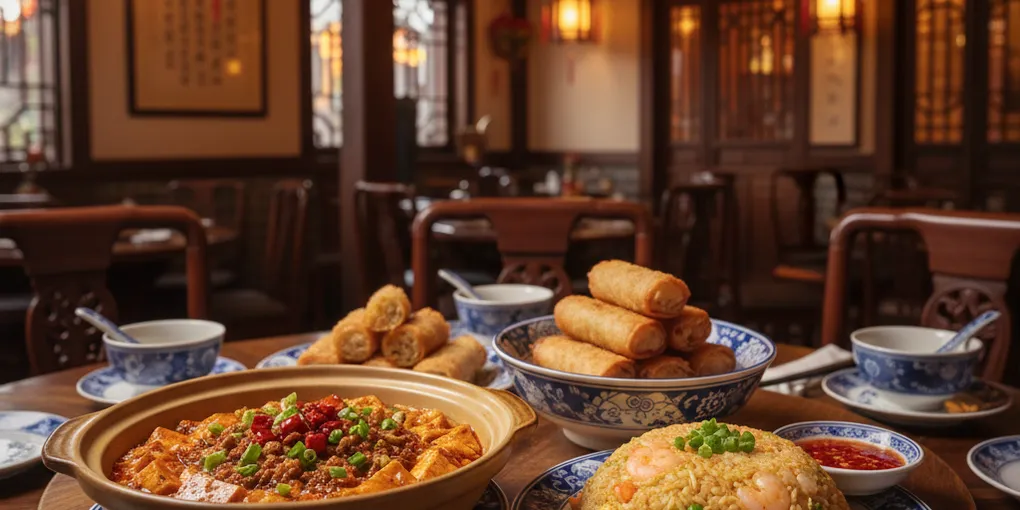
It’s a regular meeting where my workplace colleagues gather once a month. We headed to a nearby Chinese restaurant in the evening. Two hours of all-you-can-drink for 6,000 yen.
This time feels a little different from just an extension of work. Even though our titles stay the same, the tone of conversation shifts.
A night where everyone brings their month
When we get together, each of us shares what’s happened over the past month. How things are on the ground, what went well, what’s been troubling.
It’s not a place to decide anything. Not a briefing either.
We just talk, and listen.
When people in the same position gather, it’s easier to put things into words. Even complaints turn into something you can laugh about.
The biggest topic that night was a personnel reshuffle.
For any salaryman, it’s something that catches your attention. Who’s going where, what happened to whom.
We bantered back and forth, joking around. The questions without answers never seem to run dry.
Really having Shaoxing wine for once
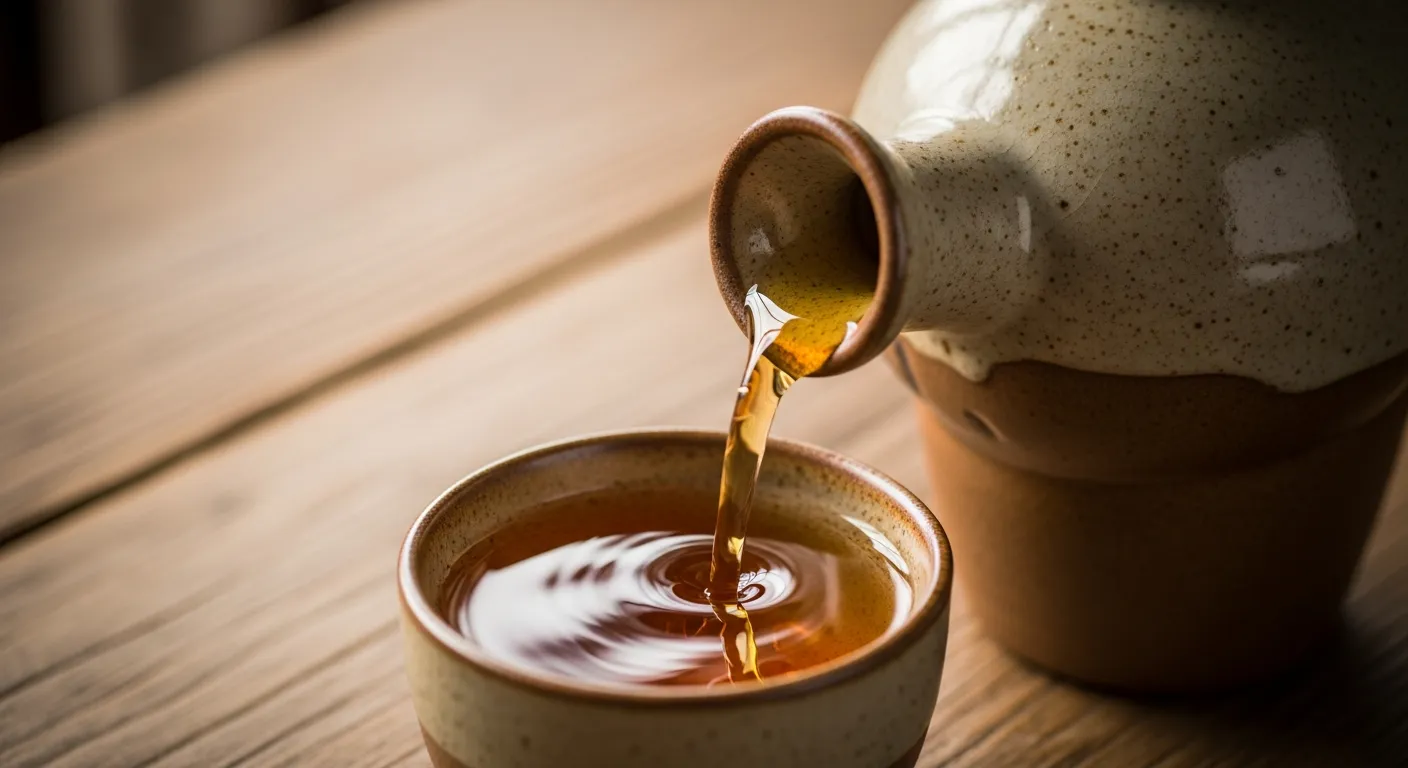
I usually go for beer or wine. But this evening, since we were at a Chinese restaurant, I chose Shaoxing wine.
The liquid poured into the glass was a faint amber color. One sip, and a depth of flavor spread through me that I hadn’t expected.
Sweetness, richness, and just a hint of astringency. Not a simple taste—one that layers upon itself.
Different from the lightness of beer or the acidity of wine. It felt as though the passage of time had become flavor itself.
Shaoxing wine—the sensation of drinking time
Shaoxing wine is a traditional brewed spirit that originated in Shaoxing, Zhejiang Province, China.
Glutinous rice is saccharified and fermented with koji and microorganisms, then slowly aged in earthenware vessels or bottles.
Like miso or sake, it is a drink born from the hands of people, microorganisms, and time working together.
Its history is immensely long, and it has grown alongside rice culture for millennia.
As it ages, the color deepens and the aromas and flavors grow more complex.
The sweetness of honey, aromas of nuts and dried fruits. Umami derived from amino acids spreading quietly through you.
It is not merely alcohol—it felt as though I was tasting time itself.
Types and how to enjoy it
Shaoxing wine has distinct personalities depending on how long it has been aged.
Young varieties are light and easy to drink. Mid-aged varieties are well-balanced and easy to incorporate into daily life. And long-aged varieties—the laojiu—are deep, heavy, and leave a lasting impression.
What I drank that night was probably mid-aged. Even so, I could feel the depth in every sip.
It also changes character with temperature. It’s fine chilled, but at room temperature or gently warmed, the aroma really opens up.
It pairs well with food too. Braises, pork belly, teriyaki. Add just a little to home cooking and it brings real depth to the flavor.
As someone who loves fermented foods, I felt a natural kinship with it. There’s a sense of it quietly connecting to Japanese food culture.
The next day, I ran
The morning after drinking, I went for my usual run.
Distance: 11.54km, time: 1 hour and 8 seconds. Average speed: 11.51 km/h, calories burned: 803 kcal.
I’d had Shaoxing wine the night before. And yet, my body moved just fine.
My legs felt light. My breathing was steady. My pace held together.
There wasn’t a trace of a hangover—if anything, my body felt remarkably good.
The body is honest
Fermented foods are said to be good for the gut. Shaoxing wine, too, is born from fermentation.
Whether that affected my condition the next day, I honestly can’t say.
But one thing I can say is this: the body doesn’t lie.
On heavy days, it truly feels heavy. You know it the moment you start running.
But this day was different. My stride was natural, my rhythm good.
My mind was quiet, and there was just the sensation of moving forward.
That feeling of being in alignment
What I’ve been thinking lately is that the state of being “in alignment” can only be understood through feeling, not through numbers.
Something more vague than fatigue levels or hours of sleep, but real nonetheless.
What you ate, what you drank, how you spent your time. All of it accumulates and builds the you of the next day.
Fermented foods might be part of that.
You can explain it with words like gut environment or immunity.
But in reality, I think it lives somewhere quieter, more personal than that.

And that’s enough
I can’t say for certain why. Was it the power of fermentation, or just coincidence?
But there’s one thing I know for certain.
I had a great run.
And that’s enough.
I want to keep my body in shape so I can run even the day after having a drink. That’s one of my goals right now.
※ This article is based on personal experience and publicly available information. It is not intended to diagnose, treat, or prevent any disease. If you have health concerns, please consult a doctor or registered dietitian. See our Disclaimer.