⏱ About 12 min read
Unmelted Cheddar and Shifts in Gut Bacteria Markers? An Editorial Overview of 10 Fermented Food Studies
About This Article: This piece introduces an editorial overview from a special issue that compiles research on fermented foods and gut bacteria. It does not demonstrate that any particular food prevents or treats disease, nor is it medical advice. The studies covered include both human trials and animal experiments (such as in mice). I’ll make clear in the text which is which, but results from animal studies don’t necessarily apply to people.
Cheese—do you eat it as-is, or do you melt it?
It’s only that small difference, yet it might actually change how your gut bacteria respond. Surprised? I was too when I first heard about such research.
A special issue dedicated to the interaction between fermented foods and gut bacteria has been published in the journal Frontiers in Microbiology. The editorial was released in July 2026, edited by researchers from four institutions: Teagasc Food Research Centre in Ireland, the Tata Institute of Fundamental Research in India, Lithuanian University of Health Sciences, and Catholic University in Portugal.
The issue contains eight research papers and two review articles—ten pieces in total. Using this editorial as a guide, I’d like to explore what’s actually being investigated in fermented food research right now, and sketch out the current landscape.
What Is an Editorial?
Before diving in, let me explain the nature of the material this article covers.
Academic journals often organize multiple papers around a single theme, creating a “special issue.” At the beginning of such an issue sits the editor’s editorial—an introduction that says, “Here’s what research we’ve gathered,” and lays out the current state and challenges of the field.
So the editorial itself isn’t reporting new experimental findings. What I’m sharing here is simply information about “these kinds of studies are being conducted.” I should note upfront that this article can’t fully chase down every detail, condition, and limitation of each individual study.
Also, this editorial discloses that generative AI was used in drafting the text, with the authors then verifying and editing the content and taking responsibility for it. This doesn’t mean AI created the ten research papers themselves—only that the editorial text itself employed AI in its writing process.
Unmelted Cheddar Shows Changes in the Markers
The first study I want to highlight is by Chonnáchàin and colleagues. This is a human trial.
But I want to be precise about the study’s scale and nature. This report is a secondary, exploratory analysis of 69 people from the original trial who voluntarily provided stool samples and met the intake criteria. Participants were 50 years or older with BMI ≥ 25, divided into three groups: unmelted (30 people), melted (18 people), and control (21 people). They consumed 120 grams of cheddar cheese daily for 6 weeks. This isn’t a large-scale study or one involving a wide age range.
Here are the results: In the unmelted group, bacterial diversity markers in stool increased from before to after the intervention. In the melted group, no significant increase was observed. However, because only one group showed significance, we can’t immediately conclude that the two groups differed in the amount of change.
For individual bacteria, Dorea and Erysipelotrichaceae UCG-003 showed increased relative abundance in the unmelted group before and after intervention, while Bacteroides showed different relative abundance between the unmelted and melted groups after intervention. However, these were exploratory analyses, and confirmation of reproducibility is needed.
The results do suggest that the processing state of a food might influence its relationship with gut bacteria. Yet the fact that bacterial diversity increased doesn’t automatically translate into confirmed health benefits. While gut bacterial diversity is often used as a marker of health, what this analysis showed was merely a change in bacterial composition indicators.
It’s worth noting that this research was supported by public and industry funding through Food for Health Ireland. The findings aren’t invalid because of this, but it’s worth understanding the research’s background.
Kefir Research Also Uses Human Subjects
Another human trial is the kefir study by Choi and colleagues.
In a short-term trial completed by 28 healthy participants aged 18–30, a group that drank 150 milliliters of kefir daily for two weeks showed changes in the relative abundance of certain bacteria. Specifically, these were lactic acid-producing bacteria: Bifidobacterium breve, Ruthenibacterium lactatiformans, Weissella koreensis, Leuconostoc mesenteroides, and members of the Blautia genus.
Kefir is a drink made by fermenting milk with lactic acid bacteria and yeast. It may not be familiar in Japan, but it’s a fermented milk beverage with a long history in Eastern Europe and Central Asia.
Here too, I want to note the limitations. This was a short-term (two weeks) trial with a small number of participants, all of whom were young and healthy. The change in relative bacterial abundance is interesting in itself, but this wasn’t a trial designed to confirm improvements in health status.
Animal Experiments Are Also Included
The special issue contains animal experiments as well, which need to be distinguished from human trials.
Zhou and colleagues isolated three lactic acid bacteria strains from the juice of Chinese sauerkraut (fermented cabbage). When a strain called Lactiplantibacillus sp. LP03 was administered to mice with drug-induced lung fibrosis, mortality, systemic inflammation, and collagen deposition all decreased. Note: what was given to the mice wasn’t the fermented vegetable itself, but a specific bacterial strain isolated from it. This distinction matters.
In Hao and colleagues’ research, “three-bean soup” (a traditional Chinese food) fermented with lactic acid bacteria was given to mice fed a high-fat diet. This resulted in an increase in short-chain fatty acid-producing bacteria like Prevotella, Coprococcus, and Oscillospira, with levels of butyrate and propionate reaching roughly 1.8 times their baseline.
Both results are intriguing, but these are mouse experiments. Humans eating the same food won’t necessarily experience the same effects. I want to be clear about this point.
The Challenges the Editors Themselves Point Out
What I found most honest in this editorial was how clearly the editors articulated the field’s challenges.
They write that to link the mechanisms we’ve understood at the level of bacterial strains and metabolic products to dietary guidelines and functional food design, more controlled human trials are needed.
In other words, promising results from animal experiments alone aren’t enough. Research must accumulate with conditions carefully controlled in human subjects before we can offer guidance like “eating this way is beneficial.”
The people putting research together are themselves writing “more is still needed.” That humility becomes an important guide for those of us reading it.
How Should We Take All This In?
Looking at the landscape this way, I can see that fermented food research spans several stages.
There are experiments in test tubes. There are animal studies with mice and others. There are small-scale, short-term human trials. And beyond that, there are large epidemiological studies following many people over long periods.
Even though all of it falls under the umbrella term “fermented food and gut bacteria research,” the weight of what can be said differs entirely depending on which stage we’re discussing. Reading just the news headline makes this distinction hard to see.
This special issue teaches us that these various stages of research are happening simultaneously. Researchers are incrementally filling in the blanks of a field where answers aren’t yet complete.
A Gentle Hint for the Dinner Table
That said, there’s something about the cheese research that captures my interest.
The processing state of a food might influence its relationship with gut bacteria. This tells us that fermented foods are being researched not just for what to eat, but in what state to eat them.
Miso soup is heated. Bread is baked. Pickles and yogurt are usually eaten as-is. Even with the same fermented food, we eat things in various ways without much thought. How science will understand those differences is still unfolding.
That said, it’s too simplistic to say “cheese should be eaten unmelted.” What I’ve presented here is an exploratory analysis under limited conditions with a limited number of people. The difference between the groups wasn’t directly proven. Whether other researchers can confirm the same findings remains unknown.
Hope for the best, but don’t get your hopes too high. That’s the distance I want to keep when watching future research unfold.
From Toshi
Reading this article, what first struck me was that research isn’t just about “what to eat,” but also about “in what state to eat it.”
Cheese can be eaten plain, or melted on bread or in a dish. I’d never really thought there was a big difference. If it’s the same cheddar cheese, I figured that whether it was melted or heated was beside the point—basically the same food.
But in the research introduced here, the group eating unmelted cheddar showed changes in their stool bacterial diversity markers before and after the intervention. Meanwhile, the group eating melted cheese showed no comparable significant changes.
A single difference in how you prepare a food might actually change how your gut bacteria interact with it. That idea felt completely fresh to me.
But here’s where we need to be careful not to jump to conclusions like “eating unmelted cheese must be better for you.”
The analysis involved 69 people who provided stool samples and met the specified intake criteria. The participants had certain age and body composition requirements, they ate 120 grams of cheddar daily, and the trial lasted six weeks. These aren’t conditions you can easily reproduce in everyday eating, nor is there any recommendation to eat that much cheese.
Also, just because the unmelted group showed pre-and-post changes while the melted group didn’t, it doesn’t mean the unmelted group was “clearly superior.” An increase in bacterial diversity isn’t the same as feeling better. This wasn’t research that confirmed disease prevention or health improvements.
When I check each of these conditions one by one, my interpretation of the research result shifts.
I don’t think the appeal of scientific research lies only in flashy conclusions. There’s real value not just in “something was proven,” but in new questions emerging—like “maybe things we thought were the same are actually different.”
That’s exactly what this cheese research is, isn’t it?
Why did melted and unmelted cheese show different patterns in gut bacterial indicators? Did heating change the cheese’s structure? Did the way fat and protein were digested change? Or is there another reason? At this point, much remains unknown.
But because we don’t know, the next study can build on it. Will the same results appear in other participants? What happens if the amount consumed changes? What about over a longer period? Will it actually relate to health outcomes? These verifications pile up, and gradually the bigger picture becomes clear.
I felt the same way about the kefir research.
Young, healthy participants drank kefir for two weeks, and changes in the relative abundance of certain gut bacteria were reported. That’s interesting, but it’s a short-term study with few participants. A shift in bacterial proportions doesn’t immediately mean “health improved.”
In gut bacteria research, bacterial names and changes in their relative amounts draw attention. Yet a rise in one bacterium doesn’t carry the same meaning for everyone. Gut environment relates to diet, age, lifestyle, constitution, and many other factors. I think we need carefulness—not a simple “increase this bacteria and you’re good.”
This special issue included not just human trials but mouse studies too.
Animal experiments are crucial for investigating mechanisms happening inside the body. At the same time, results observed in mice don’t automatically apply to humans. You can’t take results from giving mice a bacterial strain isolated from fermented vegetables and say “eating that fermented food will have the same effect in people.”
Rather than lumping “fermented food research” together, we should distinguish: Is this a test tube experiment? An animal study? A human trial? Learning to see that difference is crucial, and this article reminded me of that.
I love fermented foods. Miso, natto, pickles, yogurt, cheese—I enjoy them in my daily meals. But it’s not because I believe eating them will definitely make me healthy.
I love the flavors and aromas created by fermentation, and I find them fascinating as part of Japanese and world food cultures. On top of that, I’m interested in how science is gradually researching their relationship with our bodies.
I don’t think I need to dramatically change my eating habits every time research comes out. Reading this study won’t make me stop eating melted cheese. Hot cheese toast has its own deliciousness. At the same time, there’s pleasure in nibbling a small piece of unmelted cheese.
What matters is not deciding from one research result that “this is correct, that is wrong.”
Science isn’t just about negating yesterday’s common sense. It’s also a tool for looking a little more closely at things in our daily lives. Even the same cheese might have different relationships with our bodies depending on processing and cooking methods. Just having that question changes how we see our ordinary dinner table.
There’s still so much about fermented foods we don’t understand. Beyond the types of bacteria, factors like raw materials, fermentation time, storage method, heating, food pairings, and the condition of the person eating might all affect outcomes.
That’s exactly why I want to see fermented foods not as “magical health foods,” but as foods with a long history and complex workings.
Don’t get your hopes too high, but don’t dismiss them either. Distinguish between what research has confirmed and what we still don’t know. And keep enjoying your daily meals deliciously.
That distance feels most natural to me.
Not just what to eat, but how to eat it. And under what conditions was this research actually confirmed?
One piece of cheese made me think all of that—and I think that’s where the real charm of this research lies.
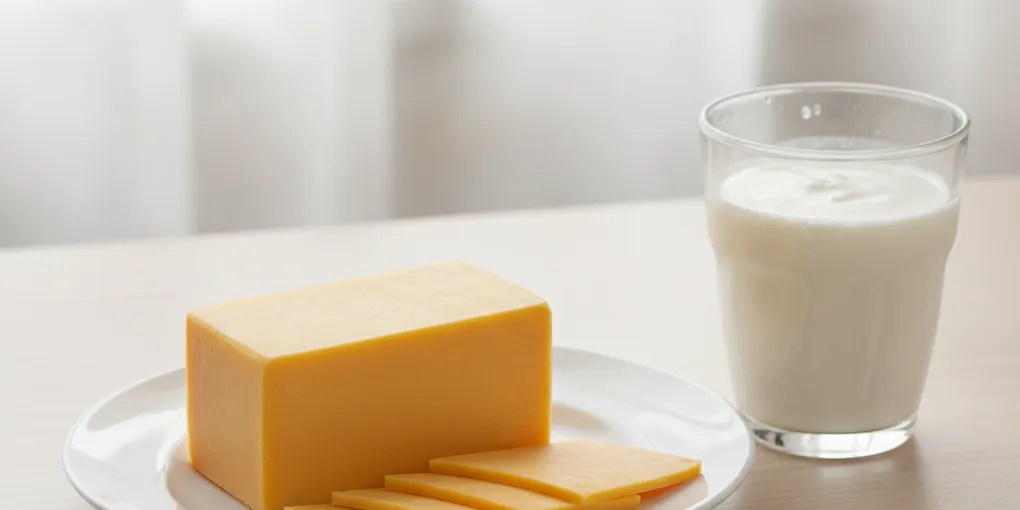
※ The images in this article are illustrative images representing fermented food and gut bacteria research. They are not photographs of samples or specific products used in the research.
It’s not just about what you eat, but how you eat it. The science of fermentation looks at that too.
※ This article is based on personal experience and publicly available information. It is not intended to diagnose, treat, or prevent any disease. If you have health concerns, please consult a doctor or registered dietitian. See our Disclaimer.