⏱ About 4 min read
My First Homemade Miso: Packed into a Wooden Barrel and Opened 10 Months Later
I’d been thinking about it for a long time.
Not just eating miso — actually making it myself.
Since I started eating fermented foods every day, I’d become fascinated by the way ingredients transform through the work of microbes. I’d already started making my own nukadoko pickles and shio-koji, but miso always felt like a bigger hurdle. I kept putting it off.
February 2025: Time to Start
I came across the term “cold-season preparation” — kanjikomi.
Miso made during the cold winter months ferments more slowly and develops better flavor, because harmful bacteria struggle to multiply in the cold. That was enough to convince me: this winter, I’m doing it.
The ingredients? Just three: soybeans, koji, and salt. Almost laughably simple.
Soak the soybeans overnight, then boil them until soft. Mash them, mix in the salt and koji, then pack everything into the barrel. Add a weight on top, and wait.
The whole process took less than half a day. After that, time does the rest — and that, I thought, is exactly what makes fermented foods so special.
Why I Chose a Wooden Barrel
I could have used a plastic container. Instead, I went with a wooden barrel.
I’d read that wood naturally harbors microorganisms that contribute to deeper, more complex flavor. It also just feels right — like you’re making something real.
Using a wooden barrel as a beginner was a bit of a gamble. But that was part of the fun.
Protecting the Surface with Sake Kasu
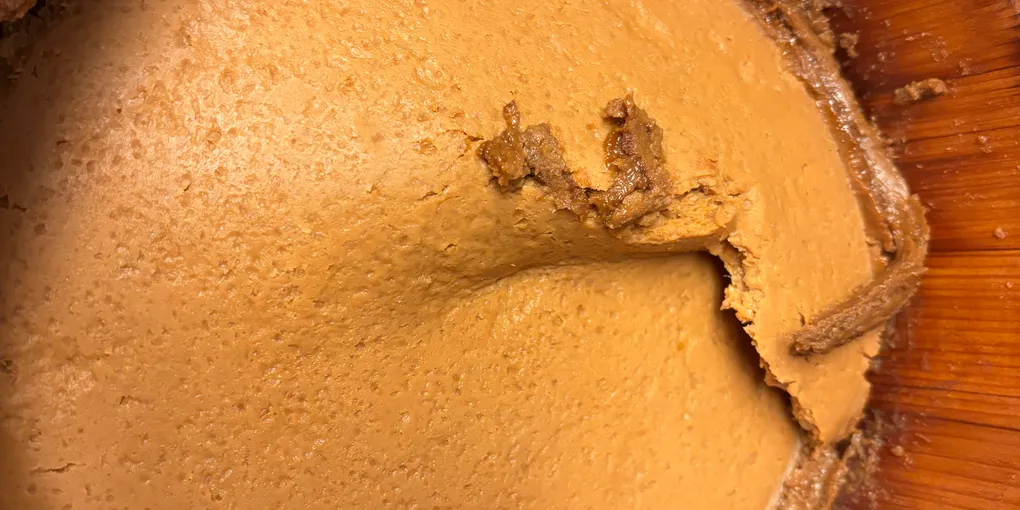
To prevent mold from forming where the miso met the air, I covered the surface with sake kasu — the lees left over from sake brewing.
The pale yellow layer held everything together through the months of fermentation.
10 Months Later: Opening Day, December 2025
Ten months after packing that barrel, the moment finally came.
I was nervous as I lifted the lid. What if it had gone wrong? What if mold had spread through the whole thing?
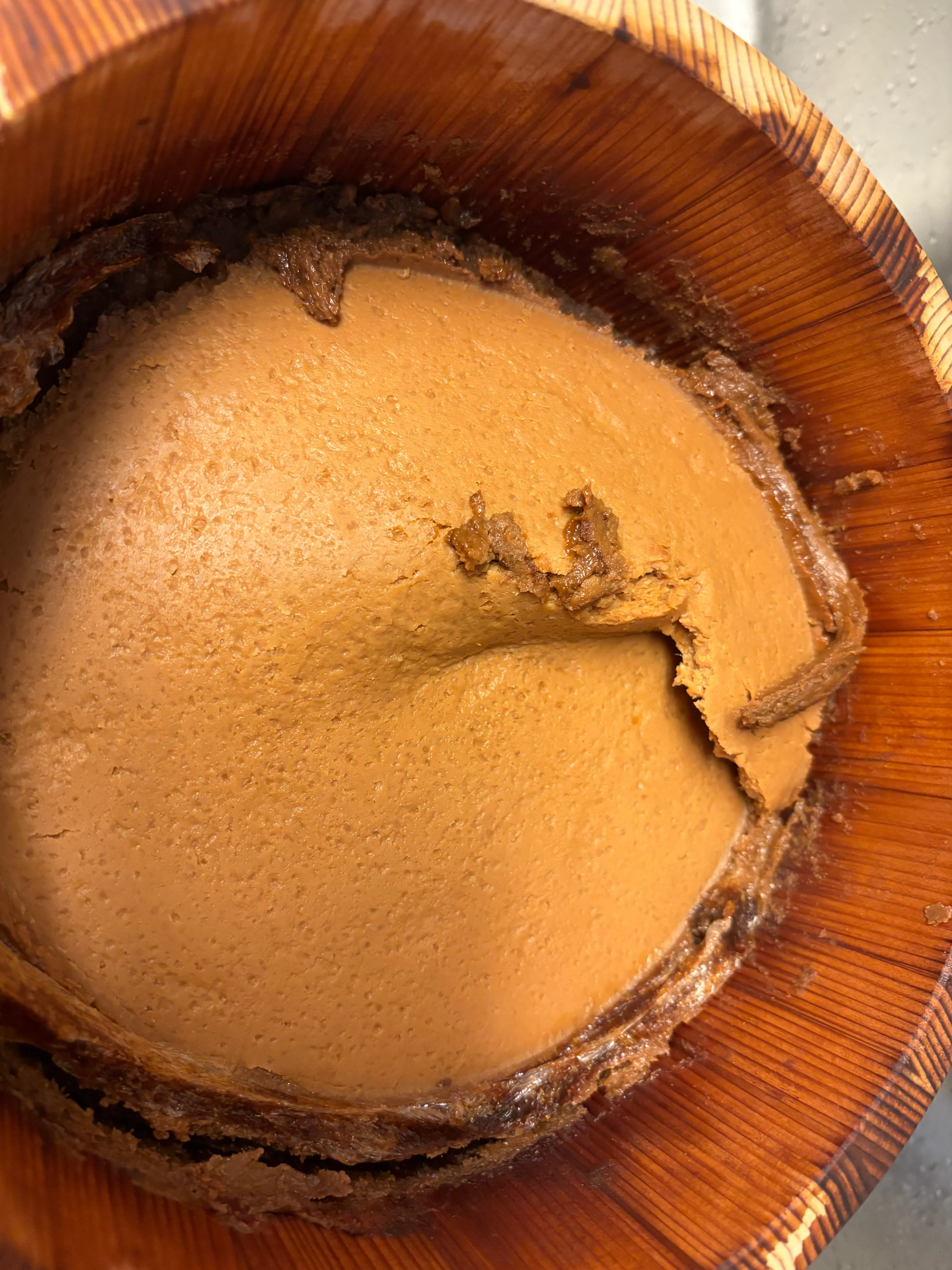
But the moment the lid came off, I smelled it: miso.
I dug in with a spoon. What came out was a firm, slightly moist, brown mass — a little darker than the store-bought kind. Deep aroma, faintly sweet.
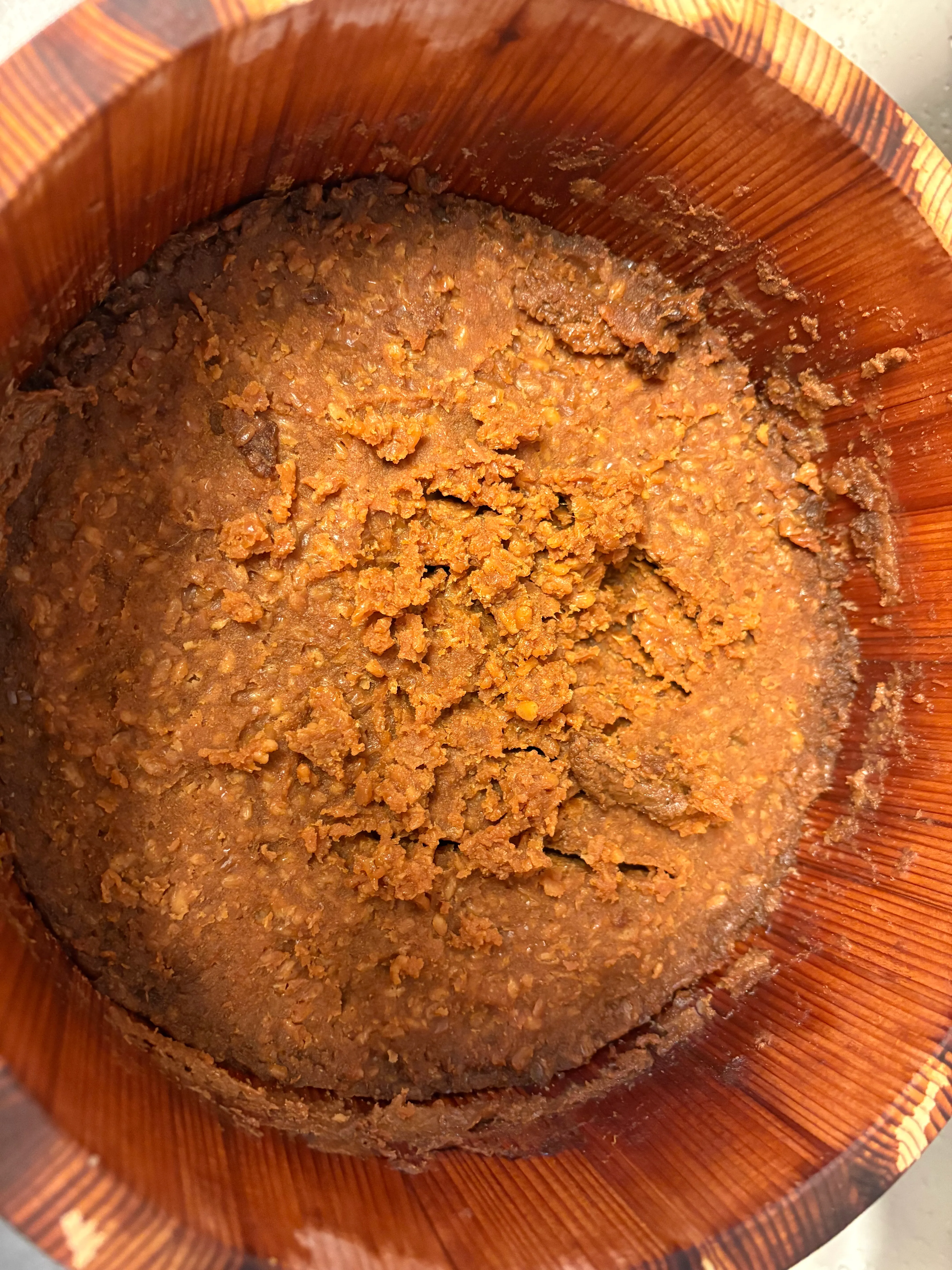
I tasted a small bit.
Salty. But good.
This is miso, I thought — and laughed. Soybeans, koji, salt, and ten months of waiting. That’s all it took.
What It Means to Make It Yourself
You can buy miso at the supermarket for 300 yen.
There’s no practical reason to spend all day boiling soybeans, mashing them by hand, and then waiting ten months. By any efficiency measure, it’s a waste.
But this miso is different. Every bowl of miso soup carries the memory of making it — the cold kitchen in winter, hands red from mashing the soybeans, the quiet hope as I packed the barrel.
That time is in every sip.
Jogging, fermented foods, quitting smoking — the good things all take time. There’s no shortcut. Waiting is part of the work.
And Then — February 22, 2026: I Did It Again
Once you start, you can’t stop.
On February 22, 2026, I packed a new batch of miso into the wooden barrel. This time with a few small tweaks to the recipe, based on last year’s experience.
Opening planned for December 2026.
Will it be better than last year? Different? I honestly don’t know yet.
But I’m already looking forward to finding out.
I’ll report back in December. Stay tuned.
This blog is the record of Toshi — a total amateur — exploring food and health in his 50s through fermented foods and jogging. Not a professional. Just figuring it out as I go.
※ This article is based on personal experience and publicly available information. It is not intended to diagnose, treat, or prevent any disease. If you have health concerns, please consult a doctor or registered dietitian. See our Disclaimer.