⏱ About 6 min read
Your Gut Bacteria's "Enzymes" Might Be the Real Key to Getting Health Benefits from Vegetables: The Latest Science on Phytonutrients and Gut Health
Why Do the Same Vegetables Have Different Effects on Different People?
That question is finally getting a clear answer from the latest research.
The key lies in the “enzymes” produced by your gut bacteria.
In January 2026, a paper published in Nature Microbiology (Nature) highlighted the bacterial enzyme transformation process as one of the crucial factors determining whether phytonutrients—bioactive compounds from plants—actually benefit your health (PMID: 41492064). The study builds on a massive 2025 investigation published in Nature Food involving 124,805 people (Parmenter et al., PMID: 40456886).
What these two top-tier studies suggest is that it’s not just “what you eat”—but also “what happens inside your gut”—that deeply influences your health outcomes.
The Power of Flavonoids: What 120,000 People Taught Us
Let’s start with the Nature Food research.
This study tracked 124,805 people registered in the UK Biobank, analyzing the relationship between dietary diversity of flavonoids—plant pigments with antioxidant and anti-inflammatory properties—and long-term health outcomes.
Flavonoids are a group of polyphenols found in tea, berries, apples, oranges, grapes, and many other plants. What made this research distinctive was that it examined not just the quantity of specific flavonoids consumed, but the diversity—how many different types people ate.
The results were striking.
People who consumed the most diverse flavonoids showed significantly lower risk compared to those with lower dietary diversity:
- All-cause mortality: 6–20% reduction
- Cardiovascular disease risk: Significant reduction
- Type 2 diabetes risk: Significant reduction
- Cancer risk: Significant reduction
- Respiratory and neurodegenerative disease risk: Significant reduction
While intake amount matters, diversity emerged as an independent predictor—meaning that eating more varieties was even more protective than simply eating larger quantities. In other words, with the same total amount, eating a wider range of flavonoid sources led to better long-term health outcomes.
So Why Do We Need Gut Bacteria?
This is where the Nature Microbiology paper comes in.
Phytonutrients like flavonoids aren’t easily absorbed by your body just from eating them. In their original form, they typically can’t pass through the intestinal wall. Only after being metabolized and transformed by specific enzymes produced by gut bacteria do they become the active forms your gut can actually absorb.
Take isoflavones (found in soybeans, tofu, and miso), a type of flavonoid. Gut bacteria enzymes convert isoflavones into a compound called equol—which has several times to dozens of times more biological activity than the original isoflavone. But this conversion only happens if you harbor equol-producing bacteria in your gut. Even among Japanese people, only about 50% can produce equol.
This same process happens with many phytonutrients. Polyphenols, flavonoids, terpenoids—all kinds of plant compounds are either “activated” or “deactivated” by your gut bacteria’s enzymes.
This means that even if two people eat identical amounts of vegetables, fruits, or fermented foods, the health benefits they actually experience can differ depending on their gut bacterial composition.
Your Gut Environment Is the Gateway to Health Benefits
Let’s think through what this discovery really means.
Traditional nutrition science has focused on “what you eat.” Calories, protein, fat, vitamins—the idea has been that your diet determines your health, period.
But the latest research shows that’s not enough.
Between the moment food arrives in your gut and when it actually delivers health benefits in your body, there’s a “processing factory” called your gut microbiota. Whether that factory is functioning well, whether the bacteria carrying the necessary enzymes actually live in your gut—these factors dramatically shape whether your diet works for you.
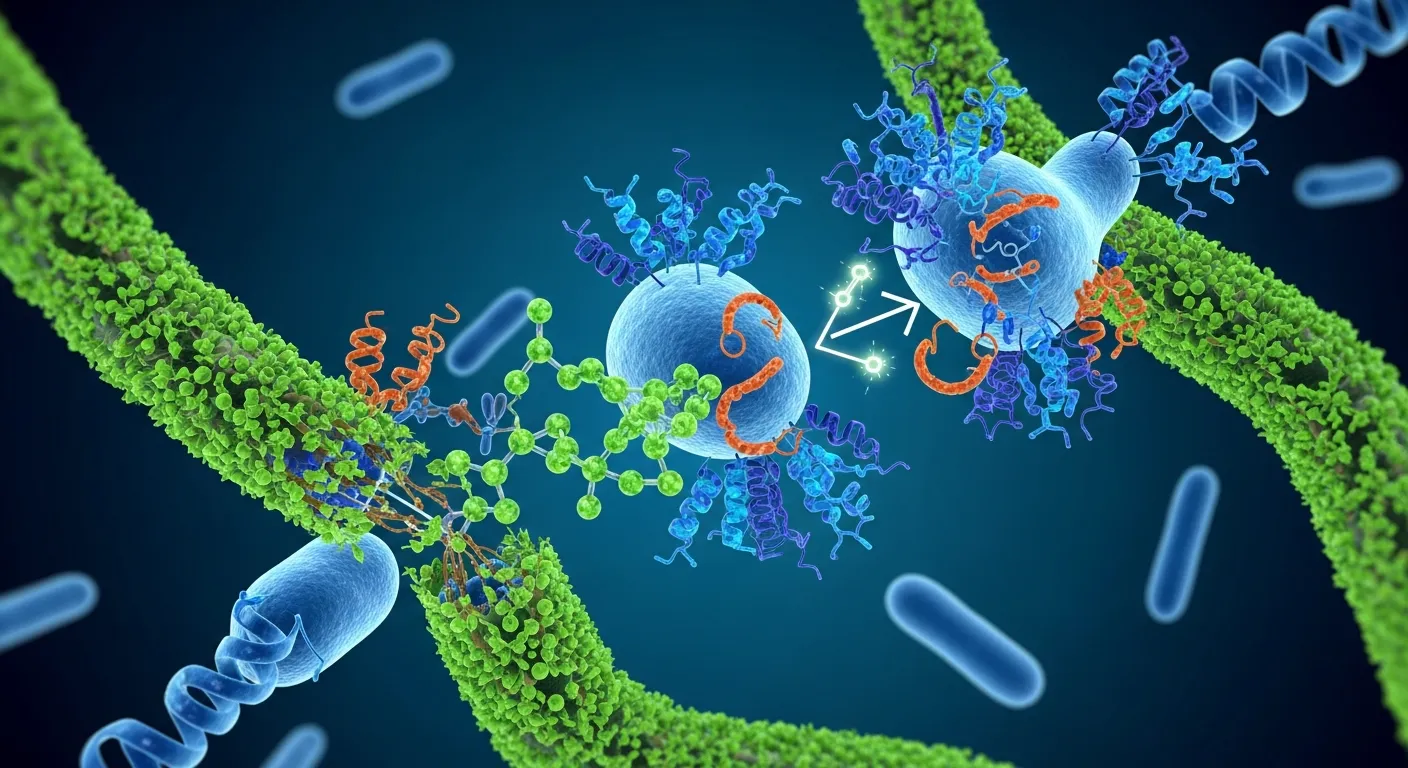
Fermented foods have become a focus of attention as a dietary habit supporting gut health. Multiple studies have shown that microorganisms from fermented foods—starting with lactic acid bacteria—may influence your gut environment.
The Double Meaning of Eating Fermented Foods Daily
From this perspective, regularly consuming fermented foods has two layers of benefit.
First is the direct health impact of fermented foods themselves. The direct action of lactic acid bacteria and beneficial microbes, the production of short-chain fatty acids, immune regulation—these are well-documented by existing research.
Second is the indirect possibility that fermented foods support the health benefits of other foods by optimizing your gut environment. Incorporating miso, pickled vegetables (nukadoko), natto, and other fermented staples into your daily diet might also enhance how your body processes and benefits from the phytonutrients in vegetables, fruits, and tea.
Fermented foods don’t work in isolation—they may have far greater significance when combined thoughtfully with other foods. That’s the perspective emerging from this research.
The Scientific Case for Eating Diversely
The fact that Nature Food emphasized diversity of flavonoids offers another important insight.
Different types of phytonutrients are processed by enzymes from different gut bacteria. Eating diverse phytonutrients essentially gives different bacterial species their “turn to work.” This diversity may help maintain a richer, more resilient gut microbiota overall.
The health benefits of dietary diversity might not just come from nutritional complementarity—they could also be explained by maintaining gut bacterial diversity itself.
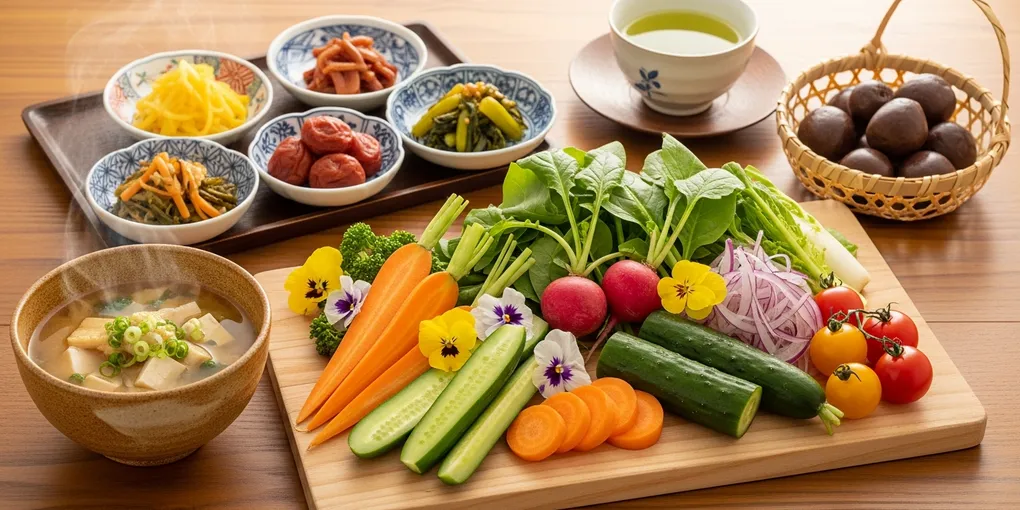
Traditional Japanese cuisine has long embodied this principle beautifully. Miso soup, pickled vegetables, natto, simmered vegetables, fish, tofu. The ichijū-san-sai structure (one soup, three dishes) organizes a range of fermented and plant-based foods in a way that’s nutritionally and microbiologically sound.
In Summary
Phytonutrient health benefits—from flavonoids and beyond—appear to depend significantly on how gut bacteria’s enzymes transform these compounds. A massive study of over 120,000 people (Nature Food, 2025) demonstrated that diverse flavonoid intake reduces all-cause mortality and major chronic disease risk by 6–20%, while Nature Microbiology (2026) suggests this may be driven by the gut microbiota’s metabolic transformation machinery.
“What you eat” and “how you maintain your gut environment” are now inseparable topics.
That said, these studies don’t prove that “eating this food guarantees disease prevention.” Large-scale human studies show associations between dietary habits and health outcomes; we need to be cautious about inferring cause-and-effect.
But here’s what seems clear: supporting your gut with fermented foods may amplify the benefits of everything else you eat.
Gut bacteria are the “translators” of what you eat. How they translate determines your health.
From Toshi
This research really seems to make clear that “food’s health benefits aren’t determined by the food alone.” The same vegetables and fruits can have different effects on different people, and one reason is that enzyme activity varies based on your gut bacteria. That’s an idea that really resonates with me.
What struck me most was the role of fermented foods. Miso, natto, and pickled vegetables aren’t just good for you on their own—they might actually support how your body uses the phytonutrients from other foods. When you think about it that way, fermented foods aren’t just another dish. They’re like the foundation that brings out the full potential of your entire meal.
Learning about this research reminded me that “how your body uses what you eat” matters just as much as “what you eat.” In daily life, rather than relying on specific superfoods, combining fermented foods with a diverse range of plant-based foods seems to be becoming the real foundation of good health moving forward.
※ This article is based on personal experience and publicly available information. It is not intended to diagnose, treat, or prevent any disease. If you have health concerns, please consult a doctor or registered dietitian. See our Disclaimer.