⏱ About 8 min read
Lactic Acid Bacteria Are More Than Just "Good for Your Gut"—Three Biological Functions of Fermented Foods
How many times have I heard the phrase, “Lactic acid bacteria are good for your gut”?
It’s written on yogurt packages. It’s printed on supplement labels. And it’s not wrong. But that one phrase leaves out so much.
On February 3rd, 2026, Foods—an academic journal of food science published by MDPI—released an editorial introducing the contents of a special issue on the biofunctional characteristics of lactic acid bacteria. Written by Svetoslav Dimitrov Todorov, the special issue contains eleven research papers (PMID: 41683114 / PMC ID: PMC12897044).
What this special issue clarifies is the multifaceted function of lactic acid bacteria—something that can’t be summed up by the simple phrase “balancing your gut.” Antimicrobial action, oral care, intestinal barrier strengthening, short-chain fatty acid production… Lactic acid bacteria may be working on our bodies through far more pathways than we realize.
Lactic Acid Bacteria Aren’t Just “One Thing”
First, it’s important to understand that “lactic acid bacteria” isn’t a single microorganism.
Lactobacillus, Leuconostoc, Lacticaseibacillus—these bacterial groups are all treated as “lactic acid bacteria,” but each belongs to a different genus, species, or strain, and their functions are completely different. It’s worth noting that Bifidobacterium is technically a different lineage from lactic acid bacteria, but in the context of fermented foods and probiotics, it’s often discussed alongside them.
It’s not uncommon for an effect shown by one strain of lactic acid bacteria to go unconfirmed in another. The statement “lactic acid bacteria in general are effective for X” is scientifically imprecise. We need to look at each bacterial strain individually—which strain, under what conditions, and what specific actions it demonstrates.
This special issue is valuable precisely because it organizes these “individual functions” study by study.
Function #1: Food Preservation and Infection Defense via Antimicrobial Peptides (Bacteriocins)
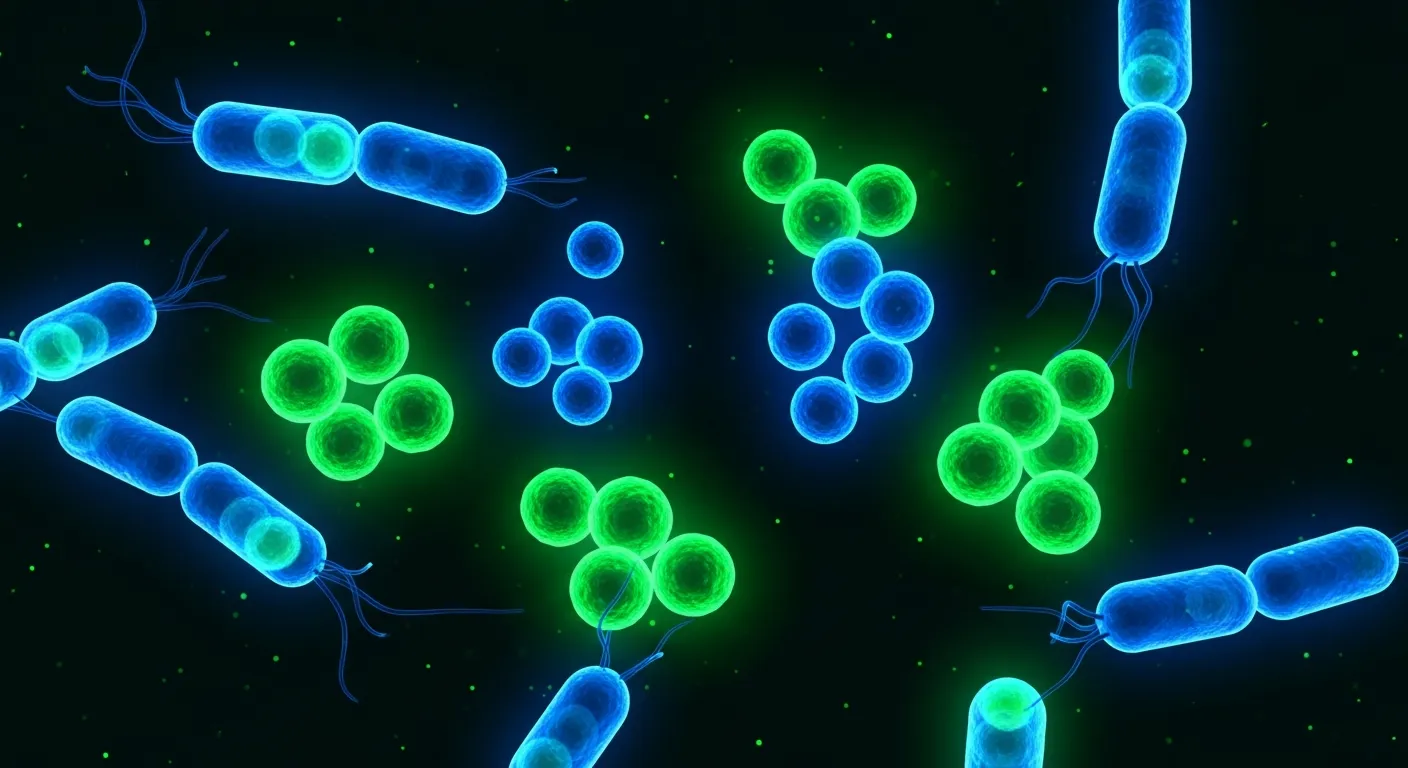
One aspect that stands out among the research covered in the special issue is the production of bacteriocins—antimicrobial peptides.
The strain Lactiplantibacillus pentosus PCZ4 was confirmed to produce antimicrobial peptides that suppress the growth of other harmful bacteria. This research explores applications in fish preservation.
Bacteriocins are like “weapons” that lactic acid bacteria developed to win out in natural competition for survival. In food, they’re attracting attention as natural preservative factors that suppress the growth of harmful and spoilage-causing bacteria. There’s potential for similar action in the intestines, but we need to distinguish between antimicrobial effects in food and effects within the body.
This is also a more concrete mechanism behind the effect that “lactic acid bacteria protect food.” The ability of lactic acid bacteria to suppress harmful bacteria involves not just numbers, but also these kinds of chemical suppression mechanisms.
Food preservation depends on multiple factors—salt, acidity, moisture levels, aging environment. Among these, organic acids produced by lactic acid bacteria and antimicrobial substances like bacteriocins may be part of why traditional fermented foods are resistant to spoilage.
Function #2: Impact on the Oral Microbiome
Next is something rather unexpected—the impact on the mouth.
The strain Lacticaseibacillus paracasei L9 shows potential to improve the microbial balance in the oral cavity and lower the risk of tooth decay. Additionally, Levilactobacillus brevis CD2 possesses nitrate reduction activity, and pathways are being explored for how the oral environment influences whole-body health.
While less celebrated than the gut microbiome, the mouth also hosts hundreds of bacterial species in an ecosystem called the oral microbiome. When this balance is disrupted, not only does the risk of cavities and gum disease rise, but recent research has shown it’s also linked to systemic inflammation.
The traditional Japanese practice of eating fermented foods “by chewing thoroughly” is an opportunity for food-derived microorganisms and fermentation metabolites to contact the oral cavity. However, oral care benefits vary by bacterial strain and intake method, so we can’t say that “any fermented food prevents cavities.” What’s important here is recognizing that there’s a microbial ecosystem not just in the gut, but in the mouth as well—and that food plays a role in both.
Function #3: Intestinal Barrier Strengthening and Short-Chain Fatty Acid Production
When it comes to the gut’s function, two mechanisms are particularly well-organized in the literature.
Regarding intestinal barrier strengthening: probiotic research with Bifidobacterium animalis and others has shown potential to protect intestinal epithelial cells and maintain intestinal barrier function. Studies have also reported recovery of disrupted gut environments following antibiotic use, though effects vary by strain and conditions.
The intestinal barrier is the “wall” formed by the gut’s mucous membrane, which prevents harmful substances and bacteria from entering. When this wall weakens, a state called “leaky gut” can develop, allowing toxins to enter the bloodstream and trigger systemic inflammation. This is deeply connected to the “gut-liver axis” perspective I’ve discussed before on this blog.
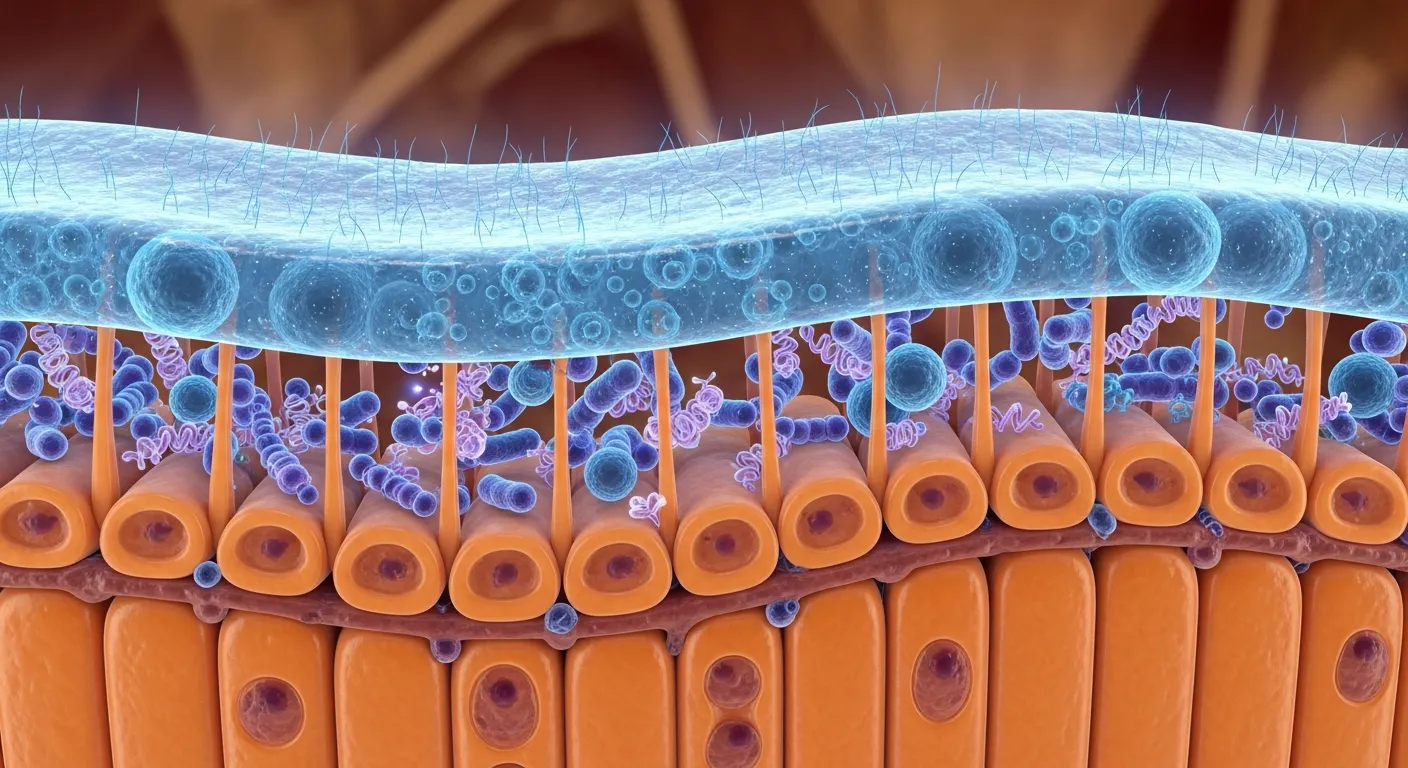
As for short-chain fatty acid production: the enzymes and polysaccharides produced by Leuconostoc mesenteroides MKSR and the oligosaccharides created using these components may contribute to the production of short-chain fatty acids like acetic acid, propionic acid, and butyric acid through fermentation by gut bacteria. What’s important here is that the bacteria themselves aren’t the “prebiotic”—rather, it’s the components the bacteria produce and how gut bacteria use those components.
Short-chain fatty acids are the energy source for intestinal epithelial cells and are crucial substances involved in intestinal barrier maintenance, immune regulation, and inflammation suppression. When beneficial bacteria in the gut are thriving, this creates a positive cycle of metabolite production.
Connections to Japanese Fermented Foods
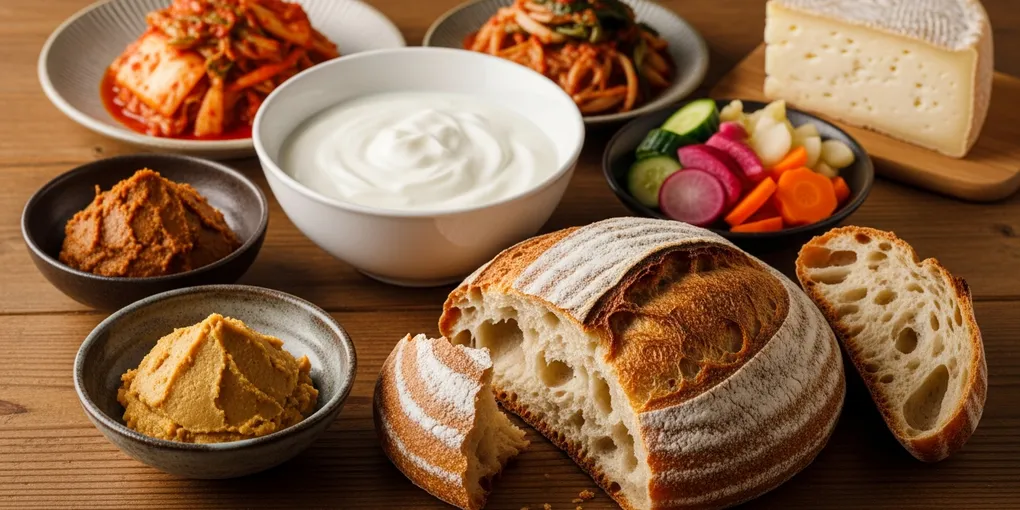
The special issue’s research includes studies involving various fermented foods—cheese, yogurt, sauerkraut, kimchi, rye bread. While not all focus directly on traditional Japanese fermented foods (miso, natto, or nukadoko—fermented vegetable bran beds), there’s much to learn from them when thinking about the function of the lactic acid bacteria and fermentation microbes they contain.
Nukadoko, in particular, sometimes contains Lactiplantibacillus plantarum, which overlaps with bacterial groups whose antimicrobial activity and involvement in gut health have been studied. Miso involves not just lactic acid bacteria, but also koji mold and yeast—multiple microorganisms and their fermentation metabolites layering together to create the food’s character.
The broad understanding that “lactic acid bacteria are good for your gut” is correct. But behind that lie multiple specific mechanisms: antimicrobial action, oral care, intestinal barrier health, and metabolic promotion. Understanding this makes the daily value of eating fermented foods come into three-dimensional focus.
Summary
Lactic acid bacteria are a group of microorganisms with multifaceted biofunctions that can’t be captured by simply saying they “balance the gut.” The editorial released by Foods (MDPI) in February 2026, through the research in its special issue, organizes knowledge about bacteriocin production, effects on the oral microbiome, and metabolic functions related to intestinal barrier strength and short-chain fatty acid production.
However, these effects differ from strain to strain and aren’t universal across all lactic acid bacteria. Additionally, most results come from test tubes and animal studies, and we need to distinguish these from effects directly established in humans.
Still, we’re reaching a stage where it’s scientifically serious to consider that the diverse lactic acid bacteria in everyday fermented foods may be working on our bodies through multiple pathways—not just the gut, but also oral health, immunity, and metabolism.
Maybe it’s time to move beyond lumping lactic acid bacteria into the single category of “bacteria that’s good for your gut.”
From Toshi
As I was writing this article, I felt freshly struck by how broad the term “lactic acid bacteria” really is.
Until now, when I heard “lactic acid bacteria,” my mind immediately went to “good for the gut.” But in reality, they work to keep food from spoiling, they’re involved in balancing bacteria in the mouth, they may protect the intestinal wall, and they play a role in metabolic functions related to short-chain fatty acid production. They have far more roles than I’d imagined.
What struck me most was learning that lactic acid bacteria aren’t “one kind of microorganism”—different species and strains work very differently. In other words, not all lactic acid bacteria are the same. What matters is seeing which bacteria are doing what work in which foods.
Fermented foods like miso, nukadoko, yogurt, cheese, and kimchi aren’t just delicious—they exist because of microbial activity. Within the wisdom of fermentation that’s been passed down for centuries, there may be deep value not just in preservation and flavor, but also in what it means for our bodies.
Of course, not all lactic acid bacteria show the same effects, and some effects in humans aren’t yet firmly established. Yet incorporating fermented foods into daily meals is an opportunity to think beyond just the gut—to consider the whole-body environment, including oral health, immunity, and metabolism.
Instead of seeing lactic acid bacteria as just “bacteria good for your gut,” I’ve come to think of them as small facilitators connecting food and body. When you look at it that way, the miso soup or nukadoko pickles on your table every day start to look a little different.
※ This article is based on personal experience and publicly available information. It is not intended to diagnose, treat, or prevent any disease. If you have health concerns, please consult a doctor or registered dietitian. See our Disclaimer.