⏱ About 7 min read
Why Some People Don't Gain Weight Even When They Eat Sweets: How Gut Bacteria Change the Impact of Sugar
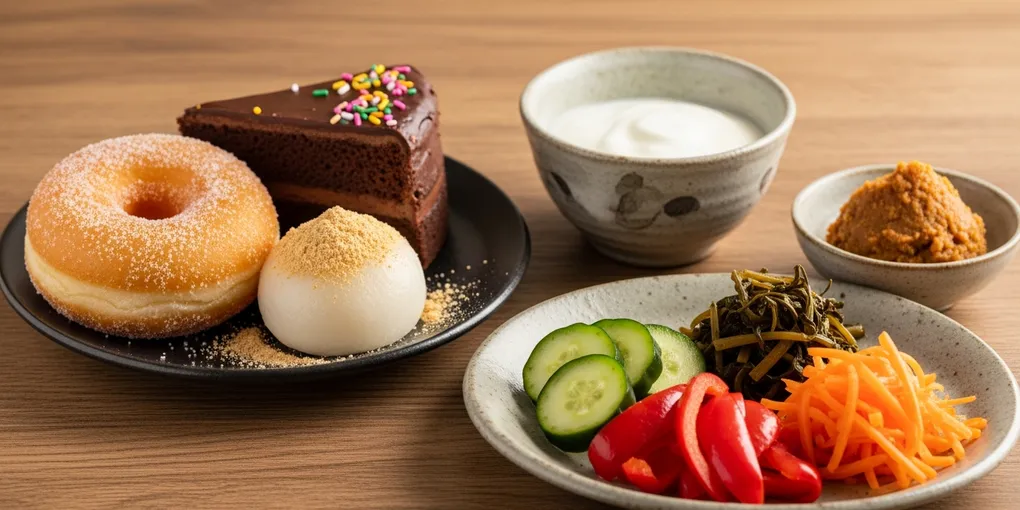
Some People Don’t Gain Weight Even When They Eat Sweets
There are people who can eat sweets without gaining weight easily.
We’ve heard all sorts of explanations — differences in metabolism, differences in exercise levels, and so on. But the latest research suggests that one factor behind these differences might be the presence of specific bacteria living in your gut.
On January 29, 2025, a study published in the academic journal Nature Communications revealed that the gut bacterium Streptococcus salivarius can produce hard-to-digest bacterial polysaccharides (EPS) from sugar (sucrose), potentially preventing obesity caused by sucrose consumption (PubMed ID: 39880823). The study was conducted by a collaborative research team led by Professor Ikuo Kimura from Kyoto University’s Graduate School of Life Sciences, involving researchers from Kyoto University, Tokyo University of Agriculture and Technology, Keio University, and other institutions.
What Stool Samples from Around 500 People Revealed
One of the major strengths of this research is that it started with data from human subjects.
The research team analyzed stool samples from around 500 people—both healthy individuals and those with obesity—searching for gut bacteria capable of producing EPS from sucrose. Among these, they focused on Streptococcus salivarius, a bacterium that naturally inhabits the human digestive tract.
The analysis in the paper showed that the presence of S. salivarius correlates inversely with obesity (BMI of 30 or higher). The research also reported that in people with obesity, the sugar metabolism process leading from EPS to short-chain fatty acids becomes weaker.
The fact that a correlation was demonstrated using human data rather than just animal experiments—showing that “people with obesity tend to have lower levels of S. salivarius”—is scientifically significant. However, this is only a correlation; it doesn’t prove that having less of this bacterium necessarily makes you gain weight.
Streptococcus salivarius: A Gut Bacterium
Streptococcus salivarius (hereafter S. salivarius) is a type of streptococcal bacterium originally found in abundance in the oral cavity. It naturally inhabits the human digestive tract and is generally considered non-pathogenic.
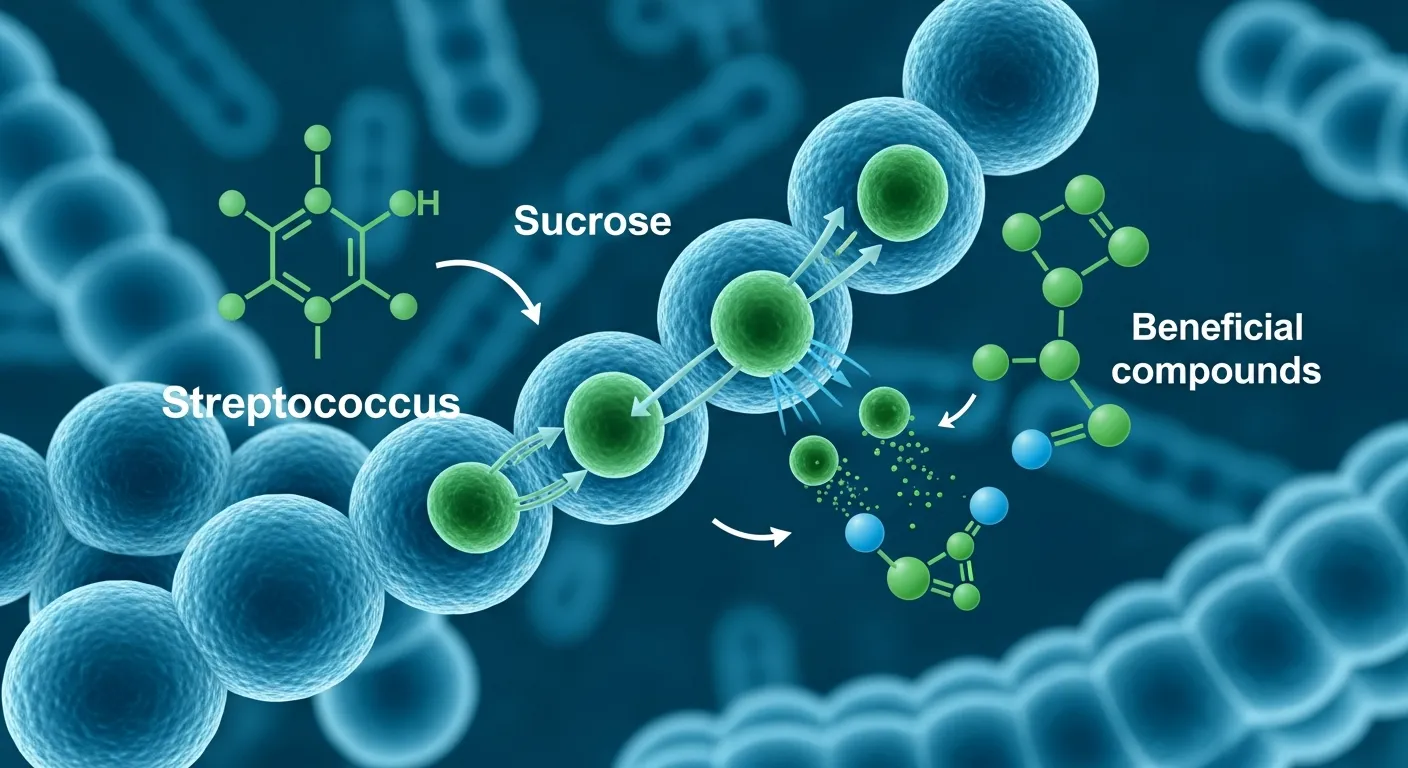
This bacterium’s characteristic is that it preferentially utilizes sucrose (the main component of table sugar). When it metabolizes sucrose as its substrate, S. salivarius produces large amounts of EPS (exopolysaccharides).
EPS refers to a collective term for polysaccharides secreted outside bacterial cells. When lactic acid bacteria create the smooth, creamy texture of yogurt, EPS is involved in that process. The EPS produced by S. salivarius has a “hard-to-digest” quality that resists being broken down by human digestive enzymes.
Sugar Transforms Into “Indigestible Fiber”
This is where the heart of the research lies.
Normally, sugar (sucrose) is broken down in the small intestine into glucose and fructose, which are then absorbed. If the energy you consume continues to exceed what you burn, the excess is readily stored as fat. This is one reason why “eating too much sugar tends to make you gain weight.”
However, if S. salivarius is abundant in the intestines, some of the ingested sucrose is taken up by this bacterium and converted into EPS. Because EPS is hard to digest, it isn’t absorbed in the small intestine and instead reaches the large intestine.
When EPS reaches the large intestine, it’s utilized by gut bacteria such as Bacteroides, leading to the production of short-chain fatty acids (SCFA: acetate, propionate, and butyrate).
The paper refers to this sequence as the “EPS-SCFA-glucose metabolism axis.”
Short-Chain Fatty Acids May Regulate Metabolism and Prevent Obesity
The short-chain fatty acids produced act on receptors (GPR41 and GPR43) found on intestinal walls and other tissues, and are thought to be involved in metabolic regulation. In this research, mouse experiments confirmed the following changes:
- Increases in intestinal hormones like GLP-1
- Improved blood sugar response
- Suppressed increases in fat tissue weight
- Elevated SCFA concentrations in fecal matter
In experiments using S. salivarius or EPS in mice, conditions with high sucrose intake showed suppressed increases in body weight and fat tissue.
In other words, even when consuming sugar, S. salivarius converts it into EPS, which becomes SCFA, which in turn regulates metabolism—a beneficial cycle may be at work. If enough S. salivarius is present in the gut, the impact of eating sweets might be reduced. This is the hypothesis suggested by this research.
Connection to Fermented Foods
S. salivarius is not particularly abundant in fermented foods themselves, but rather a naturally occurring bacterium found in the human oral cavity and digestive tract. That said, the “EPS-SCFA axis” demonstrated by this research does have connections to the world of fermented foods.
Some lactic acid bacteria produce EPS during fermentation. The smooth texture of yogurt and the viscosity found in some fermented foods involve these polysaccharides. It’s an area of ongoing research whether these EPSs can be utilized by gut bacteria and contribute to short-chain fatty acid production.
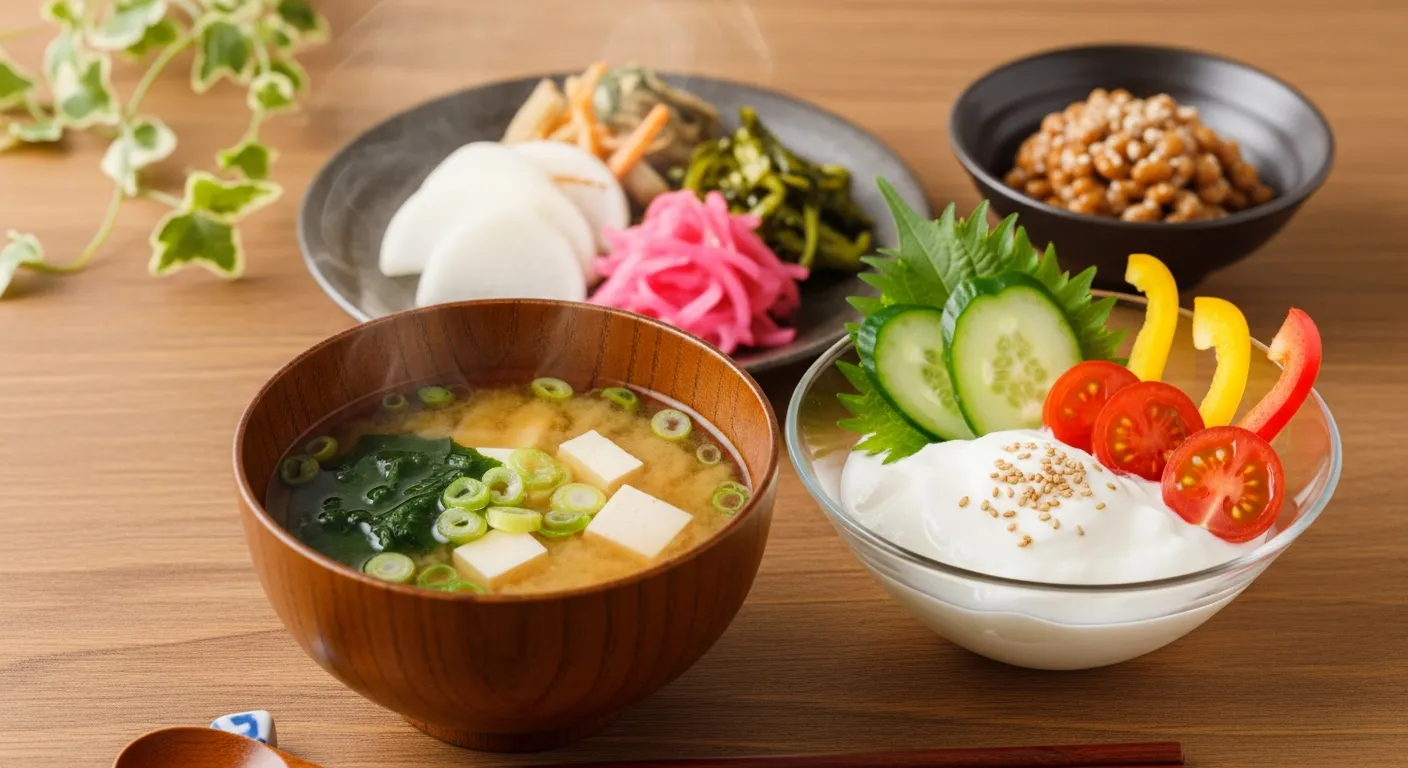
On the other hand, it hasn’t been directly shown that eating miso, natto, or pickles increases S. salivarius levels. We need to distinguish between these concepts. While fermented foods are recognized as part of a healthy eating pattern that supports gut health, the star of this research remains the human-resident bacterium S. salivarius and its capacity to produce EPS.
The phrase “improving your gut health makes it easier to lose weight” has been around for a while, but this research is important because it demonstrates one specific mechanism that might underlie this claim.
Summary
The research team at Kyoto University revealed that the gut bacterium Streptococcus salivarius can produce hard-to-digest EPS from sucrose, potentially suppressing sucrose-induced obesity through short-chain fatty acid production in the gut (Nature Communications, 2025). Analysis of human stool samples also confirmed a trend showing that people with obesity tend to have lower levels of this bacterium.
However, this research is primarily based on mouse experiments and observational human data. We’re not yet at a stage where we can definitively say “increasing this bacterium will make you lose weight,” and further clinical trials will be needed before applying these findings to probiotics and prebiotics.
Nevertheless, the fact that differences in how easily people gain weight—despite eating the same foods—may be related to gut bacteria composition offers an important perspective for thinking about food and health.
The same sugar, depending on what happens to it in your gut, can affect your body differently. That’s the nature of the intestinal environment.
A Personal Note from Toshi
Reading this research really reinforced something for me: the fact that even when people eat the same thing, their bodies can respond differently.
The reason some people don’t gain weight eating sweets might not just come down to metabolism or exercise levels—gut bacteria may also play a role. When I think about it that way, food doesn’t end when it goes into your mouth. What matters is how it gets processed in your gut. That’s what ultimately determines its impact on your body.
What really stuck with me was this idea: sugar itself isn’t necessarily the villain in the story. Instead, gut bacteria might transform it into something else, something that then affects your metabolism. These microorganisms aren’t just breaking down food—they might actually be converting it into forms that are meaningful for your body.
Of course, this one study doesn’t mean “go ahead and eat as much sugar as you want.” The burden that excess sugar places on the body remains real. But the notion that the state of your gut environment influences how the food you eat affects you—that’s a perspective I find truly valuable.
Maybe that’s also the deeper meaning behind incorporating fermented foods into your daily meals. When you regularly eat miso soup, natto, pickles, or yogurt, you’re not just doing something that “seems good for you”—you might actually be supporting the environment where the microbes in your gut can thrive.
The same sugar, depending on what happens in your gut, changes its impact on your body. This research has given us one more concrete look at the relationship between food and gut bacteria.
※ This article is based on personal experience and publicly available information. It is not intended to diagnose, treat, or prevent any disease. If you have health concerns, please consult a doctor or registered dietitian. See our Disclaimer.