⏱ About 7 min read
How Gut Health and Endometriosis-Related Inflammation are Connected: A Rat Study Shows Probiotics May Ease Inflammation
Gut health and inflammation happening somewhere completely different
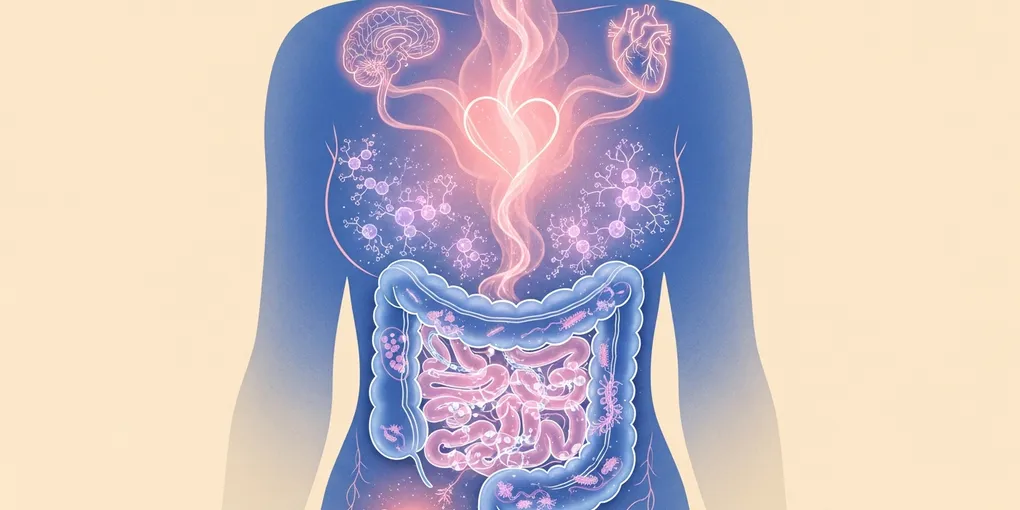
These two things might actually be connected—and research suggesting just that keeps appearing, one study after another. The gut bacteria aren’t isolated to the intestines alone. Through immune function and metabolism, they may influence various organs throughout our entire body.
In February 2026, a study was published in the academic journal Frontiers in Microbiology showing exactly this kind of “connection.”
The focus: “endometriosis” and “gut health.” At first glance, these two seem unrelated—but this research linked them together using probiotics, the gut microbiome, and short-chain fatty acids (SCFAs) as the key.
That said, I want to be very clear about one thing right from the start. This is an experiment using rats (animals), not humans. The results don’t confirm the same effects happen in people. Rather, this is foundational research showing the possibility that gut health and inflammation in distant organs are connected.
What exactly is endometriosis?
Let me briefly cover the disease that forms the foundation of this research.
Endometriosis occurs when tissue similar to the lining of the uterus (the endometrium) grows where it shouldn’t—outside the uterus, in places like the ovaries or peritoneum. With each menstrual cycle, it causes inflammation and pain, sometimes severely impacting a woman’s quality of life.
The disease is thought to be rooted in “chronic inflammation.” And in recent years, researchers have begun paying attention to the link between this inflammation and gut health.
This study asked an important question: Can probiotics intervene in this connection?
What did the rat experiment investigate?
The research team (led by Xiaoli Dong) created an endometriosis model in SD rats and divided them into two groups:
- Standard diet group: Only normal food
- Probiotic diet group: Standard food supplemented with probiotics
The probiotics used contained Bacillus subtilis and Lactobacillus acidophilus. After four weeks of dietary intervention, the researchers carefully examined inflammatory markers, the gut microbiome, and short-chain fatty acids.
One clarification: the probiotics used in this study came from commercially available nutritional supplements designed for animal research—this wasn’t testing a specific human product.
Result #1: Inflammatory markers decreased
The most striking finding was a drop in inflammation indicators.
In the group given probiotics, blood levels of TNF-α and IL-6—two key inflammatory markers—decreased significantly (P < 0.05).
TNF-α and IL-6 are representative substances that increase when inflammation occurs in the body. Their decrease suggests that the inflammation accompanying endometriosis may have been eased through probiotic intervention.
Something given to the gut affected inflammation in a place far from the gut—a result hinting at “gut-organ communication.”
Result #2: The gut microbiome was reorganized
The group receiving probiotics also showed changes in the balance of gut bacteria:
- Bifidobacterium and Lactobacillus increased
- Firmicutes decreased while Bacteroidetes increased
- The stability of the microbial network improved
Bifidobacteria and lactic acid bacteria are generally known as “beneficial bacteria” that support a healthy gut environment. Their increase suggests the gut ecosystem may have shifted toward a more stable state.
When the composition of the microbiome changes, so do the metabolic compounds produced within the gut—which brings us to the next topic: short-chain fatty acids.
Result #3: The short-chain fatty acid profile changed
Short-chain fatty acids (SCFAs)—including acetic acid, propionic acid, and butyric acid—are compounds produced when gut bacteria ferment dietary fiber. These support gut health while also helping regulate inflammation and immunity throughout the body.
In this study, probiotics changed the SCFA profile. Notably, a specific fatty acid called isocaproic acid (4-methylvaleric acid) increased significantly.
The research team identified this isocaproic acid as showing a negative correlation with certain gut bacteria, positioning it as a candidate compound with potential anti-inflammatory properties.
In other words, the rats’ bodies showed this sequence: “Probiotics given → Gut bacteria change → Metabolic products (SCFAs) change → Inflammation eases.” Each step was observed.
Why this research is so interesting
What makes this study compelling is that it attempted to show—with concrete mechanisms behind it—that “gut health may influence inflammation in organs far from the intestines.”
Gut bacteria aren’t merely digestion helpers. Through their metabolic products, they may send signals throughout the body and influence the balance of immunity and inflammation. Phrases like “the gut is the second brain” or “the gut is command central for immunity” exist because of research like this building up over time.
Diseases like endometriosis, which have traditionally seemed disconnected from gut health, might now be approached from a new angle—the gut environment itself. That’s the real significance of this research.
But there are important cautions to mention
This is crucial, so I want to be very direct about it.
This research is foundational, using rats (animals) as subjects. We have no idea yet whether the same effects would occur in humans.
In medicine, it’s not rare for interventions that show good results in animal studies to fail in human clinical trials. The human body is far more complex than any animal model, and individual variation is enormous.
Also, endometriosis is a disease requiring professional medical treatment. This research does not show that “probiotics can cure endometriosis.” Anyone experiencing symptoms must receive proper diagnosis and treatment from a healthcare provider. Fermented foods and probiotics should be thought of only as part of daily eating habits—they are never a replacement for medical treatment.
I want to emphasize again: this article is not recommending any particular disease treatment. It’s simply introducing one example of research on gut health and whole-body inflammation.
From the perspective of fermented foods and gut health
Still, the larger direction this research points toward—“nurturing gut health may impact our overall well-being”—is rich with implications for how we think about fermented foods.
Foods like miso, natto, pickles, and yogurt have long been part of our dietary culture precisely because they engage with gut bacteria balance and SCFA production. The “gut microbiome stabilization” and “SCFA production” that were key to this study overlap exactly with the kinds of impacts fermented foods can have on gut health.
Of course, eating fermented foods doesn’t prevent or cure specific diseases. But as our understanding deepens—that the gut is connected to whole-body health—the meaning of caring for our gut through daily meals becomes clearer.
What happens inside the gut doesn’t stay inside the gut. Even inflammation in distant places may be listening to what the gut is saying.
From Toshi
This article impressed me greatly in how it carefully bridges what initially seem like two unrelated themes: “gut health” and “endometriosis.” While the gut microbiome’s potential influence on whole-body inflammation and immunity is discussed frequently these days, this piece demonstrates it through concrete experimental results, offering readers a genuinely fresh perspective.
What I particularly appreciated was how clearly the article identifies this as foundational research using rats, repeatedly emphasizing that it doesn’t demonstrate direct effects in humans. Health and medical information is easily misunderstood, but this article shows careful consideration of that risk with its honest structure.
The step-by-step explanation of the sequence—“Probiotics → Gut microbiome → Short-chain fatty acids → Inflammation reduction”—makes the specialized content understandable and allows readers to follow along with real comprehension and conviction.
I was also struck by how naturally the discussion connects to fermented foods and daily eating habits. Rather than over-generalizing research findings, the piece presents them as “possibilities” while showing how they relate to our everyday lives—demonstrating an admirable sense of balance.
Overall, this article excels at communicating cutting-edge research in an accessible way while maintaining scientific caution. It conveys both the depth of the gut health topic and anticipation for future research.
※ This article is based on personal experience and publicly available information. It is not intended to diagnose, treat, or prevent any disease. If you have health concerns, please consult a doctor or registered dietitian. See our Disclaimer.