⏱ About 8 min read
Are Fermented Foods from Around the World Really That Good for You? What 50 Years of Research Across 6 Continents and 125 Studies Revealed
Nearly every food culture around the world has its own fermented foods.
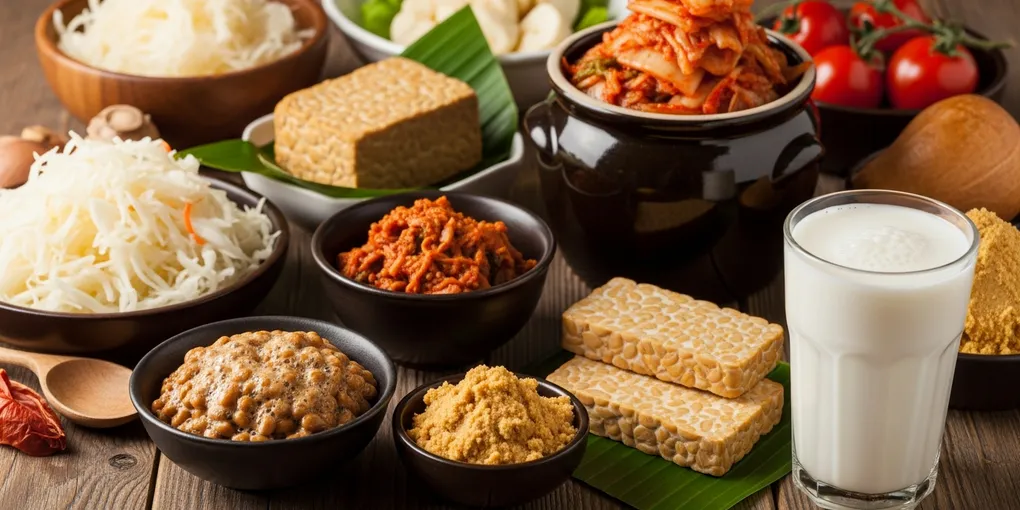
Japanese miso and natto, Korean kimchi, Indonesian tempeh, European cheese and sauerkraut, Caucasian kefir, African injera—these didn’t appear by accident. In an era without refrigerators, humanity relied on the power of microorganisms to preserve food and unlock its nutritional potential.
But here’s the question: are these fermented foods really good for you?
There’s certainly a vague sense that they’re “probably healthy.” Yet strangely, until recently, there haven’t been many comprehensive reviews that gathered research from around the world and clarified exactly what we can and cannot claim about them.
In September 2025, a major review article appeared in the academic journal Frontiers in Nutrition to fill that gap. It was conducted by an international team of researchers from over 16 countries, including North Macedonia, Germany, and Ireland.
This systematic review analyzed fermented foods and their health effects by collecting 125 human-subject studies across 6 continents over a 50-year period, from 1970 to 2024.
Narrowing Down from 4,566 to 125
The credibility of this research is built on its rigorous methodology.
The research team conducted comprehensive searches across three major academic databases—PubMed, Scopus, and Cochrane Library—for papers on fermented foods and health. The initial search yielded 4,566 candidate studies.
From there, they carefully selected only those meeting certain quality standards: human-subject studies. They narrowed the focus to studies with scientifically evaluable designs—randomized controlled trials (RCTs), cohort studies, cross-sectional studies—and ultimately selected 125 for inclusion.
The important thing is that they collected only studies involving actual people eating fermented foods, not animal experiments or test-tube studies.
And the foods examined weren’t limited to miso and natto. The review included traditional fermented foods from around the world—from Asia, Africa, Europe, and the Americas.
Health Effects Shown by Japanese Fermented Foods
Within this review, Japanese fermented foods were featured prominently across numerous studies.
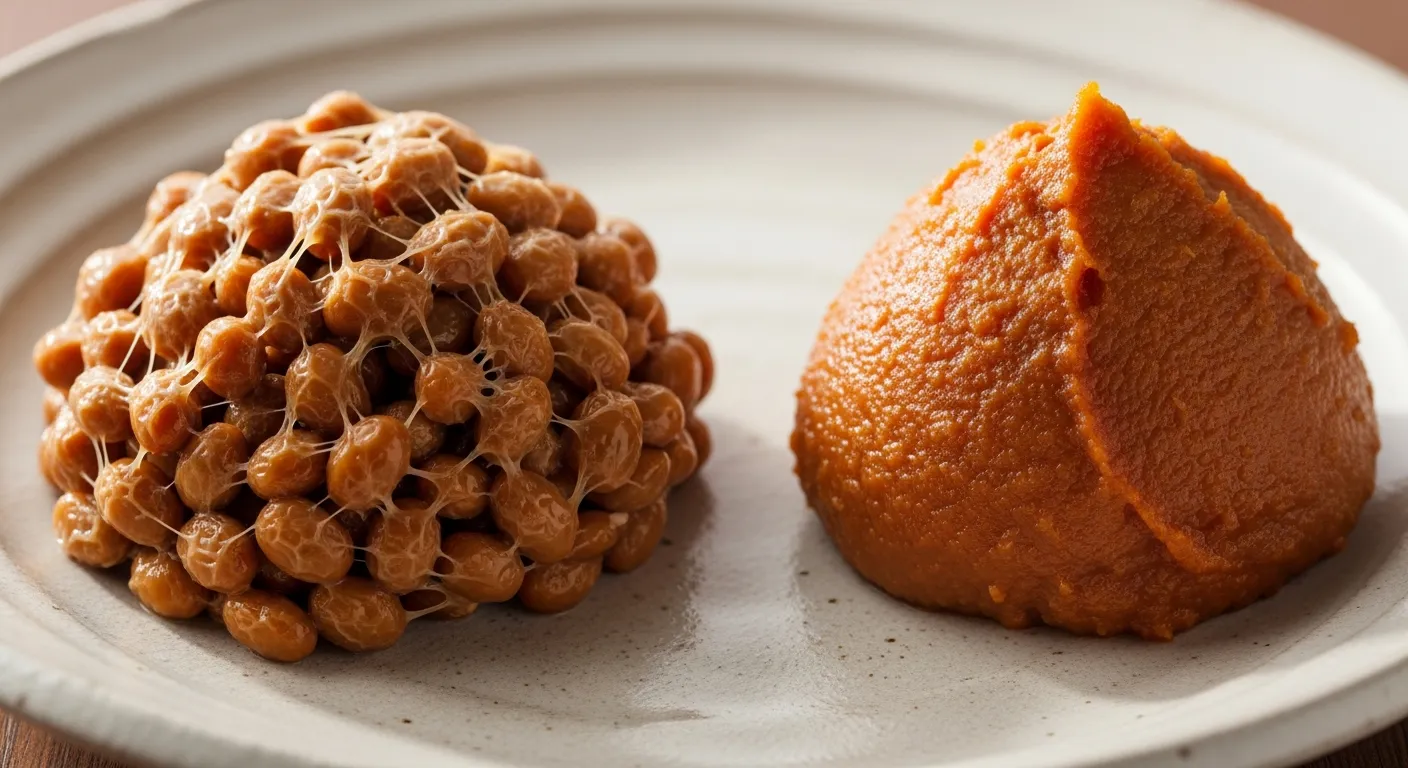
Natto was mentioned in 32 studies, making it one of the most researched foods. Research has focused on nattokinase (an enzyme found in natto), soy isoflavones, and vitamin K2 (menaquinone-7). Reported associations include suppression of blood sugar spikes after meals, prevention of bone loss in postmenopausal women and elderly people, and reduced risk of cardiovascular death.
Miso was covered in 28 studies. Interestingly, despite its high salt content, miso consumption was associated with lower nighttime blood pressure and reduced hypertension risk in some reports. This is thought to be due to peptides and isoflavones contained in miso. That said, this doesn’t mean you can ignore salt intake.
Amazake (sweet rice drink) appeared in 7 studies. Components like GABA and glucosyl ceramide were reported to be associated with improved skin moisture retention, better bowel movements, and improved gut health.
Fermented Foods from Asia, Africa, and Europe
Fermented foods from outside Japan also showed distinctive findings.
Tempeh (Indonesia) was covered in 21 studies, with reported associations including improved lipid profiles (lower LDL cholesterol and triglycerides), better blood sugar and insulin regulation, and improved cognitive scores in people with mild cognitive impairment. Researchers have focused on its bioactive peptides, dietary fiber, and iron content.
Kimchi (Korea) appeared in 17 studies. Observational research reported associations with reduced colon cancer risk, as well as connections to weight maintenance and lower cholesterol and triglyceride levels in women. These effects are thought to stem from the combination of lactic acid bacteria, dietary fiber, and capsaicin.
Injera (Ethiopia) is a staple food made by fermenting teff grain. With a low glycemic index (less likely to spike blood sugar) and easily providing satiety, it was reported to be associated with reduced anemia risk in pregnant and postpartum women, with dietary fiber helping iron absorption.
Buttermilk (Europe) showed associations with lower LDL cholesterol and triglycerides, improved executive function in elderly people, and relief from inflammatory bowel disease (IBD) symptoms.
Fermentation Itself Creates Health-Promoting Compounds
Another point this review emphasizes is the need to distinguish the sources of health effects.
The health-related compounds in fermented foods fall into three main categories.
First are compounds from the original ingredients themselves—soy protein, grain fiber, and so on.
Second are the microorganisms used in fermentation (lactic acid bacteria, koji mold, and others). These work within the gut and influence the balance of intestinal bacteria.
And third are compounds newly created by the fermentation process itself—vitamin K2, bioactive peptides, GABA, oligosaccharides, and others.
The paper places special emphasis on this third category. It states that “the fermentation process itself generates health-related compounds that didn’t exist in the raw materials or wouldn’t be produced by microorganisms alone.”
In other words, eating whole soybeans is different from fermenting them into natto and then eating them—the compounds reaching your body change. Fermentation isn’t just a preservation technique; it’s a “transformation” that adds new value to food.
Points Worth Reading Carefully
At the same time, the study frankly acknowledges its own limitations—a mark of honest research.
First, the 125 selected studies had vastly different designs and reported their findings in different formats, so a statistical synthesis called “meta-analysis” wasn’t performed. This means we can’t definitively state the magnitude of effects in numerical terms.
Also, the review was limited to papers published in English, so we can’t completely rule out publication bias (the tendency for positive results to be reported more often).
Additionally, the studies centered on Asia and Africa, with no corresponding research from South America or Australia. It’s also important to note that research on the downsides of fermented foods—such as excessive salt intake—was excluded from this analysis.
In other words, this review shows “the overall picture of what health effects of fermented foods have been repeatedly reported around the world,” but it doesn’t guarantee that “eating fermented foods will cure disease.” The premise is always that they’re incorporated as part of a balanced diet. Effects vary depending on individual health status and overall eating habits, and health can never be guaranteed by any single food alone.
The Value Recognized Globally as Food Culture
Yet the significance of this research is substantial.
The fact that consistent potential health effects appeared across traditional fermented foods on a scale of 50 years, 6 continents, and 125 studies suggests that the wisdom cultivated over long periods by each food culture is increasingly being backed by scientific evidence.
The paper even states that fermented foods could become “a promising approach to address global hunger and malnutrition, and promote a healthier and more sustainable food system.”
Just as miso and natto are familiar to Japanese people, peoples around the world have lived alongside their own fermented foods. Now, these diverse traditions are being revisited in the light of science.
The fermented foods we eat without thinking are perhaps, from a global perspective, part of humanity’s grand shared “wisdom of food” that has been passed down through the ages.
Fermented foods have been passed down across nations and cultures. Within their diversity lies the history of a long relationship between humans and microorganisms.
From Toshi
Reading this review, my first feeling was one of reassurance—the sense that “fermented foods are supposed to be good for you” isn’t just an image, but an actual pattern accumulated over time across the world. When you look at a scale of 50 years, 6 continents, and 125 studies, and similar health-related reports appear across different food cultures, it tells the story of how strong the wisdom is in the foods humans have continuously chosen through experience.
What struck me most was that the value of fermented foods isn’t simply “consuming beneficial bacteria”—rather, the fermentation process itself generates new compounds and functions. This is fascinating from a cook’s perspective too. The fact that how you transform an ingredient affects both its nutrition and its impact on the body makes it clear that fermentation isn’t merely a preservation technique but a “technology for creating value.”
I also felt deep trust in how this research doesn’t claim certainty about effects, instead presenting them carefully as “associations” or “possibilities.” Rather than the simplistic “eat fermented foods and become healthy,” the research firmly establishes the premise that what matters is how we incorporate them into our overall eating habits. Because of this careful approach, the review feels grounded in reality and easy to apply to daily life.
Overall, this research neither overstates nor dismisses the value of fermented foods—it quietly backs the fact that “food cultures developed by humanity over long periods have a certain rationality.” And at the center of that rationality is the history of humans living alongside microorganisms. That’s what this study made me feel.
※ This article is based on personal experience and publicly available information. It is not intended to diagnose, treat, or prevent any disease. If you have health concerns, please consult a doctor or registered dietitian. See our Disclaimer.