⏱ About 8 min read
What Makes Japanese Gut Bacteria Different from the Rest of the World? Insights from a 37-Country, 30,000+ Person Comparison
“Japanese people live long lives.” You hear that said all the time.
People also talk endlessly about how diet is the key to good health. There’s a widespread belief that traditional Japanese foods—fermented foods, seaweed, fish, soybeans—are good for the body. But until now, we haven’t really had much research that explains why they’re good, backed up by international comparative data on gut bacteria.
In 2026, a research team from Tokyo University’s Graduate School of Frontier Sciences and affiliated Data Life Science Center released a large-scale comparative analysis integrating samples from 37 countries—approximately 31,700 in total.
When comparing the gut microbiomes of over 5,000 Japanese people with data from more than 25,000 people in 36 other countries, two striking characteristics emerged in Japanese people’s gut bacteria.
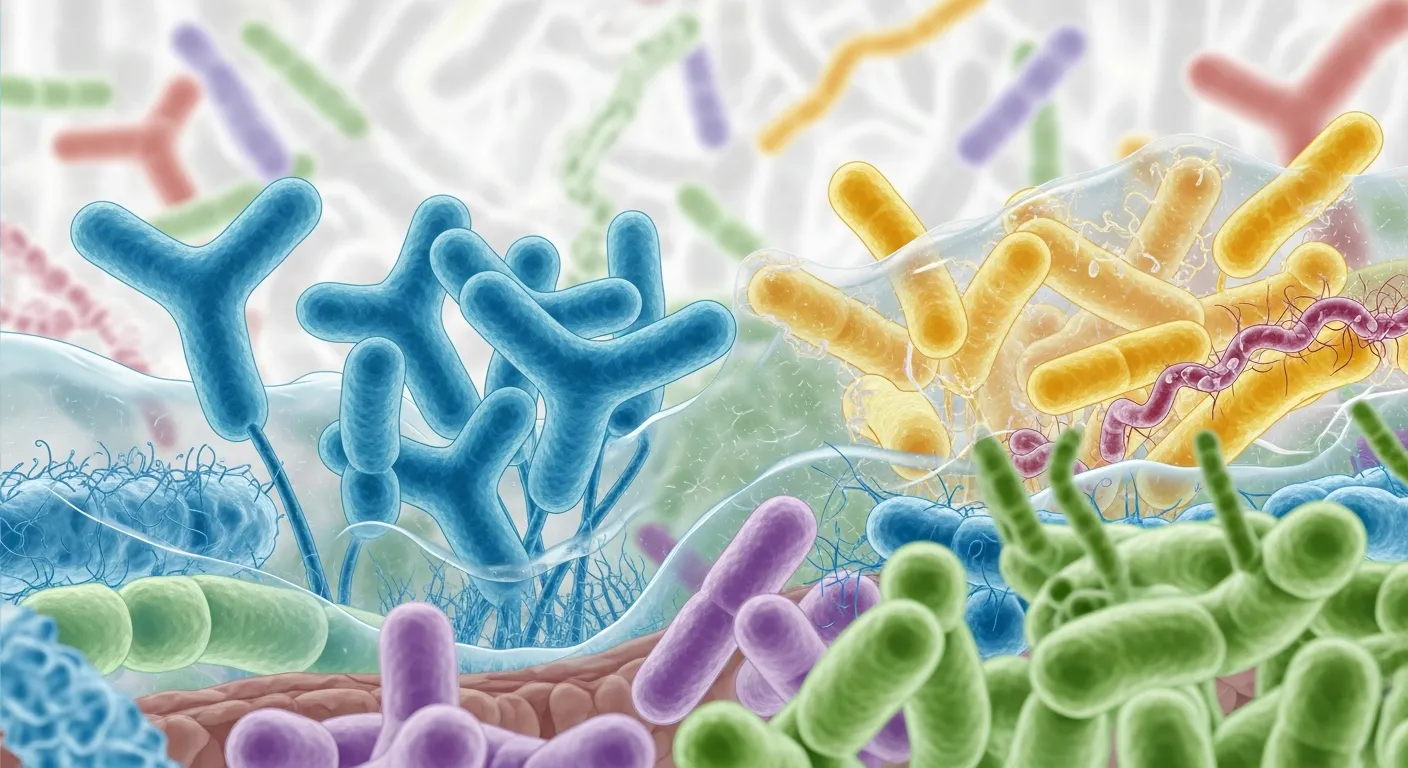
One is that Bifidobacterium is exceptionally abundant compared to the rest of the world. The other is the remarkable fact that approximately 90% of Japanese people carry gut bacteria with enzymes capable of breaking down seaweed polysaccharides.
These two discoveries provide scientific evidence that “the Japanese gut has been uniquely shaped by food culture and genetic background.”
Comparing Data from 37 Countries and Over 30,000 People
The defining characteristic of this research is its sheer scale.
The research team, centered at Tokyo University, integrated data from the “Japanese 4D Microbiome Cohort” (which includes 4,198 Japanese subjects) with publicly available metagenomic data from 36 countries worldwide. The analysis covered a total of 37 countries and 31,695 samples—an unprecedented scale for international comparative research on gut microbiomes.
“Metagenomic analysis” is a technique that reads the DNA of all microorganisms present in the gut simultaneously, comprehensively identifying what kinds of bacteria exist and in what proportions. Unlike culture-based methods that can only grow certain bacteria in the lab, this approach allows us to see the entire gut ecosystem “as it is,” including bacteria that cannot be cultured.
Using this data, the researchers performed principal component analysis (PCA) to compare gut microbiome characteristics across countries and statistically identify bacterial genera unique to Japanese people.
Discovery ①: Why Japanese Guts Have So Much Bifidobacterium
The first characteristic revealed by the research is that Bifidobacterium is exceptionally abundant in Japanese people’s gut bacteria compared to the rest of the world.
Bifidobacterium is known to be prevalent in infants’ guts and is said to play an important role in maintaining a healthy gut microbiota. However, it typically decreases significantly in most people as they reach adulthood.
So why do Japanese people retain so much Bifidobacterium in their guts?
The research team focused on the combination of lactose intolerance and milk consumption.
Many non-Western populations, including Japanese people, experience a decline in lactase activity (the enzyme that breaks down lactose) as they mature into adulthood. This is the genetic background behind what’s called “lactose intolerance,” and people with this trait often experience bloating or diarrhea when drinking milk.
On the other hand, in Japan, milk was introduced into school lunch programs after World War II, and most Japanese people developed the habit of consuming milk during their growth years.
When these two elements combine, undigested lactose reaches the colon and serves as a nutrient source for Bifidobacterium (functioning as a prebiotic), the research team explains.
A genetic trait that makes it “difficult to digest lactose” has, as a result, created an environment that nurtures Bifidobacterium in the gut—this is a fascinating discovery showing how an apparently “disadvantageous” genetic characteristic, through interaction with food culture, has created a unique feature of the gut environment.
Discovery ②: The “Seaweed-Digesting Enzyme” Found in About 90% of Japanese People
The other discovery more directly reflects “Japanese food culture.”
It was confirmed that approximately 90% of Japanese people carry gut bacteria capable of breaking down seaweed-derived polysaccharides (such as porphyran) in their intestines.
In Western populations, gut bacteria with this enzyme are barely detected. In regions with food cultures that consume little seaweed, the gut bacteria simply never have the opportunity to acquire this enzyme in the first place.
Gut bacteria change in response to what the host eats. In the guts of Japanese people who eat seaweed daily—nori, wakame, kombu, hijiki—bacteria capable of utilizing seaweed polysaccharides have become established over many generations.
This phenomenon is evidence that “gut bacteria adapt to food culture.” It demonstrates that cultural accumulation through eating habits, rather than genetics, has shaped the form of the gut ecosystem.
Previous studies have reported that Japanese people’s gut bacteria possess the ability to break down seaweed polysaccharides, but this research clearly positioned that finding within an international comparative context across 37 countries.
Connections to Age, Gender, and Body Composition
The research also analyzed relationships between Japanese people’s gut bacteria and age, gender, and BMI.
Regarding age, the study confirmed the existence of specific bacterial genera that increase or decrease with advancing years. This aligns with the general knowledge that gut flora changes with age, and having this confirmed in large-scale data from a Japanese cohort increases its reliability.
As for gender differences, males tend to have more Prevotella, while females tend to have more Eggerthella. Food preferences and lifestyle differences may be reflected in the composition of gut bacteria.
In terms of BMI correlation, the study found that people with higher BMI tend to have increased levels of certain bacterial genera such as Acidaminococcus. The relationship between obesity and gut bacteria is a widely researched topic globally, and finding similar trends in Japanese data is significant.
”Japanese Food = Health” Backed by Science
The significance of this research goes beyond simply confirming that “Japanese gut bacteria are different from other countries.”
What’s important is that we can now explain why—through food culture and genetic background.
The abundance of Bifidobacterium is the result of overlapping genetic lactose intolerance and dietary changes exemplified by school lunch programs. The widespread presence of seaweed-digesting enzymes is the accumulation of a food culture where Japanese people have eaten seaweed for many generations.
Gut bacteria can be thought of as a “record of the gut,” reflecting that person’s diet, living environment, and genetic background. This research demonstrates that this record has accumulated not just at the individual level, but as a collective, cultural legacy.
Behind the belief that Japanese food is healthy, there may lie a deeper mechanism than just the effects of specific foods or nutrients—one rooted in how Japanese people’s gut bacteria have adapted to food culture and formed their own unique ecosystem.
Connection to Fermented Foods
This research directly addresses the “diversity and distribution of bacterial species” in the gut and doesn’t directly measure the effects of fermented foods. However, the possibility that Japan’s fermented food-rich culture has been involved in shaping the gut environment is not unrelated to these findings.
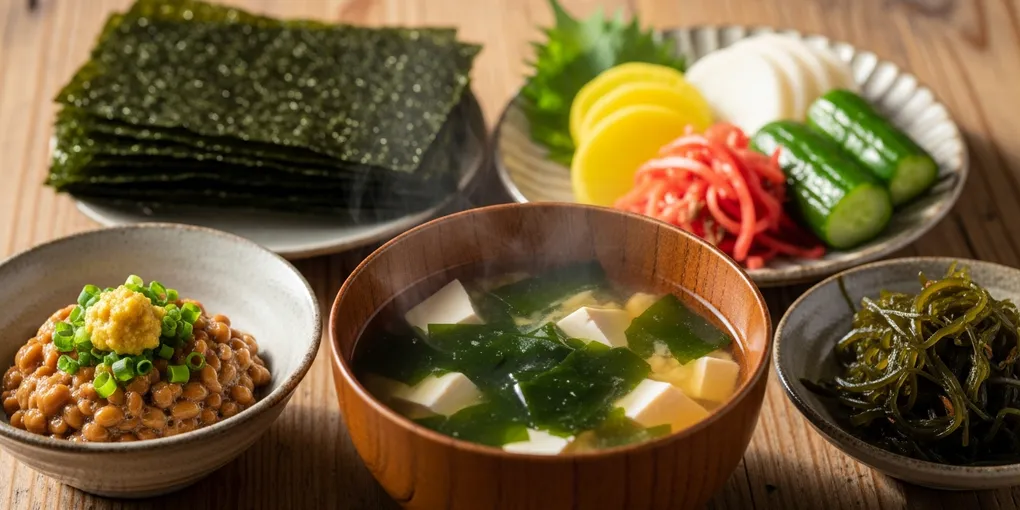
Miso, soy sauce, natto, and pickles—these fermented foods don’t just supply fiber, organic acids, and diverse microorganisms; they’ve continuously provided diverse substrates that gut bacteria can utilize. The possibility that daily consumption of fermented foods has long-term supported gut bacterial diversity and the establishment of specific bacteria is an important question for future research to address.
This Tokyo University study offers a perspective for viewing the gut microbiome not as a matter of “individual health management” but as a “product of culture, community, and history.” It prompts us to reconsider what Japanese food culture, including fermented foods, has nurtured within the gut.
The Japanese gut has been nurtured by Japanese food culture. It is an invisible “ecosystem” woven together over time through genetics and eating habits.
From Toshio
Reflecting on this topic, I’ve come to realize that my growing interest in fermentation and gut health isn’t simply a response to passing trends—it’s a “personal boom” that naturally connects to my own experiences and values. Of course, there’s the health aspect, but beyond that, I’m struck by the fascinating reality that what I’ve eaten and the habits I’ve accumulated over time are firmly etched into the invisible world of my gut.
What strikes me most is the perspective that Japanese people’s gut bacteria are deeply intertwined with food culture. When I think about how the foods I’ve eaten daily—miso, nukadoko (rice bran pickling bed), seaweed—may have been quietly affecting my body over a long time, suddenly each meal I’ve taken for granted takes on new meaning. It makes me realize that my body is the result of the food choices I’ve made, and the very embodiment of that accumulation.
This growing interest isn’t just expanding my knowledge either—it’s gradually changing my daily actions. Incorporating fermented foods, being mindful of how I eat, paying attention to subtle changes in my body—these small accumulations have given me a tangible sense of improving my overall condition.
Overall, I feel this isn’t something imposed from outside, but rather a concern that’s naturally grown from within me, and it’s becoming the foundation for a better life moving forward. I want to continue at my own pace, without rushing. There’s a real sense of optimism about it.
※ This article is based on personal experience and publicly available information. It is not intended to diagnose, treat, or prevent any disease. If you have health concerns, please consult a doctor or registered dietitian. See our Disclaimer.