⏱ About 8 min read
The "Natural Antibacterial Substance" Made by Lactic Acid Bacteria Is Being Researched as a New Strategy Against Drug-Resistant Bacteria
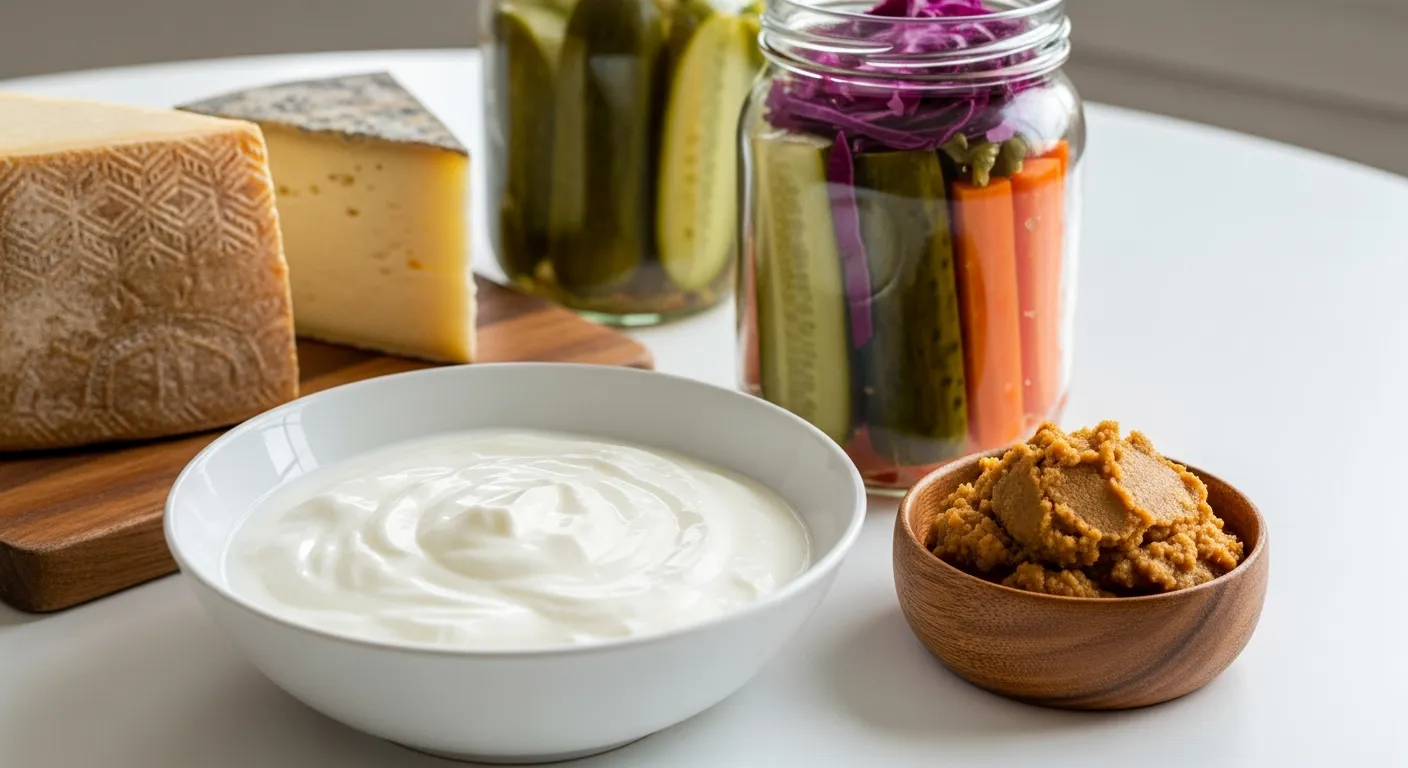
Yogurt, pickles, miso — lactic acid bacteria are so familiar at our tables.
But did you know that these bacteria are actually producing “natural antibacterial substances”?
During fermentation, lactic acid bacteria secrete tiny proteins that inhibit the growth of other microorganisms. This substance is called “bacteriocin” — essentially a “natural weapon” that lactic acid bacteria create to protect their own territory.
In February 2026, an academic journal called Probiotics and Antimicrobial Proteins published a review article organizing the potential medical applications of bacteriocin. The focus was on using it as a strategy against “multidrug-resistant bacteria” — pathogens that no longer respond well to antibiotics.
I want to be clear from the start: this is a review article that systematically consolidates existing research, not the establishment of a new treatment method. It simply points to a research direction suggesting that “natural substances produced by lactic acid bacteria may prove useful in future medicine.”
What Is Bacteriocin?
Bacteriocin is a general term for antimicrobial proteins (or peptides) produced by bacteria.
Many bacteria create such substances to suppress their competitors in their immediate surroundings. Bacteriocins produced by lactic acid bacteria (LAB) have been used in food preservation for a very long time.
For example, “nisin,” a well-known bacteriocin, has been used as a food preservative in cheese and other products worldwide for many years. In other words, bacteriocin is something relatively familiar to us — a substance we’ve unknowingly consumed countless times.
One reason fermented foods last so long is precisely because of this activity of lactic acid bacteria. They create acid, making the environment acidic, and simultaneously use bacteriocin to suppress unwanted microbes. Within the process of fermentation lies an ancient form of natural preservation technology.
Why Is It Drawing Medical Attention Now?
The background to this review article centers on “antimicrobial resistance (AMR)” — a global challenge.
Antibiotics revolutionized the treatment of infectious diseases. However, through decades of use, bacteria resistant to antibiotics — “resistant bacteria” — have proliferated worldwide. “Multidrug-resistant bacteria,” which are resistant to multiple antibiotics simultaneously, represent a particularly serious problem.
The paper focuses on neonatal sepsis. Sepsis is a severe condition in which the body experiences an inflammatory response to infection from bacteria or other pathogens. Especially in low- and middle-income countries, neonatal sepsis is a major cause of high morbidity and mortality, and when combined with the problem of resistant bacteria, conventional antibiotics become increasingly ineffective.
In response to this “situation where existing antibiotics are no longer effective,” bacteriocin — which suppresses bacteria through a completely different mechanism — is being explored as a research topic. However, this is still at the basic research stage, asking “might research in this direction advance in the future?” It’s not about discovering an immediately applicable solution.
It’s also important to note that what’s being researched here is purified, isolated bacteriocin as a “substance” — not fermented foods like yogurt or miso themselves. Research into fermented foods and antimicrobial research in medical settings need to be understood as completely separate matters.
The “Narrow Targeting” Characteristic of Bacteriocin
One interesting feature of bacteriocin that the paper highlights is its range of action.
Most antibiotics have a “broad spectrum” — meaning they act on a wide variety of bacterial species all at once. While convenient, this has the drawback of also reducing beneficial bacteria in our gut. This is why taking antibiotics sometimes upsets our digestive system.
In contrast, many bacteriocins are said to have a “narrow spectrum” — targeting and suppressing specific bacteria. The paper identifies one advantage as bacteriocin’s potential to “inhibit specific pathogens while being less likely to disrupt the host’s microbial flora” (such as the balance of gut bacteria).
Suppressing only the target while protecting allies — if this characteristic could be applied in medicine, it would represent a different approach from traditional antibiotics. The paper systematizes the action mechanisms, molecular diversity, and possibilities for clinical application of bacteriocins.
An Important Reminder: This Is Still “Research Stage”
I want to be especially clear about this.
This review article is a compilation and organization of previous research on bacteriocin’s antimicrobial properties — primarily from laboratory experiments in test tubes. It’s not a completed new treatment drug, nor has it been proven effective for treating neonatal sepsis.
Many hurdles remain to cross before medical application: safety, efficacy, administration methods, and stability within the body, among others. Actual clinical use in patients would require years of accumulated research and clinical trials ahead.
Of course, treating infections like sepsis absolutely requires proper diagnosis and medical care at a healthcare facility. This article makes no claim whatsoever that eating fermented foods or yogurt can prevent or cure infections. I’d like you to read this as a “science topic” — describing the breadth of medical research into substances created by lactic acid bacteria — nothing more.
Another Face of the Bacteria We Know from Fermented Foods
Still, the perspective this research presents is genuinely fascinating to those of us who love fermented foods.
The lactic acid bacteria we consume nearly every day don’t just preserve food, create flavor, and affect our gut environment — they also possess the remarkable ability to produce “natural antibacterial substances.” And those substances are now subjects of investigation in contemporary scientific research.
What I want to emphasize once more: this is purely research focused on “bacteriocin as a substance,” and eating fermented foods does not mean preventing or treating disease. I ask that you understand food and medical research as separate domains.
Miso, pickles, yogurt, cheese — for thousands of years, humanity has experientially harnessed the power of lactic acid bacteria. The wisdom to prevent decay and extend shelf life represents an intuitive, practical application of how lactic acid bacteria work. Yet today, this humble microorganism continues to be a subject of scientific inquiry. There’s something deeply moving about that.
The lactic acid bacteria that have sustained our tables remain under the gaze of science. Old wisdom and cutting-edge research are, surprisingly, just beside each other.
From Toshi
Upon reading this article, what struck me most forcefully was the realization that “within the familiar things surrounding us lies tremendous potential still awaiting full understanding.”
Fermented foods like yogurt, miso, and pickles sit naturally and unpretentiously on our daily tables. They’re nothing special. Yet I was genuinely astonished to learn that the lactic acid bacteria within them produce “bacteriocin” — an antimicrobial protein.
However, this paper is merely a review consolidating existing research, and at present, no established medical treatment based on this has been implemented in clinical practice. This point is crucial, and I felt strongly that readers should approach it with appropriate skepticism.
What particularly impressed me was the concept of “narrow-spectrum” action. While conventional antibiotics work across a broad range of bacteria, bacteriocin has the potential to target specific pathogens. If this characteristic could eventually be applied in medicine, it might enable a new approach — addressing infections while minimizing disruption to the gut environment.
Nevertheless, many challenges remain before practical implementation. Stability within the body, safety, administration methods, and clinical validation of efficacy all represent substantial hurdles to overcome. Therefore, it’s essential not to interpret this as “a usable treatment right now,” but rather as “a direction future research may take.”
What also struck me was the relationship between fermented foods and medical research. When everyday foods are discussed alongside cutting-edge science, it’s natural to wonder, “Could eating these foods produce similar benefits?” But the reality is quite different. Lactic acid bacteria consumed through food and bacteriocin investigated for medical use exist in different contexts, with different purposes and different physiological environments. Understanding this distinction is critical — without it, we risk developing misconceptions about health. That’s precisely why this article’s clear statements — “this is not a treatment” and “food cannot serve as a substitute” — matter so much and deserve trust.
At the same time, I found myself deeply moved by the profound nature of fermentation as a cultural practice. Throughout long history, humanity has empirically discovered how to preserve food, enhance flavor, and eat safely. Through this process, we’ve harnessed the work of lactic acid bacteria, and now — generations later — modern science is rediscovering what was embedded in those traditional practices. Could it be that contemporary science is only just catching up to wisdom accumulated over centuries?
In my own life, I regularly incorporate fermented foods, but I do so primarily for the cultural enjoyment and nutritional value they bring. Learning about this research has deepened my appreciation for the microbial processes underlying these practices.
How bacteriocin research will unfold in the future is extraordinarily intriguing. Particularly interesting is its potential to become a new option against the global challenge of antibiotic resistance. Yet we must not forget that careful verification and considerable time will be needed before such applications reach the medical clinic.
This article represents a fascinating instance where “the familiar” meets “cutting-edge research,” offering a glimpse into how science expands. Simultaneously, it reinforced an important lesson: as recipients of information, we must understand accurately and avoid unrealistic expectations.
Going forward, I want to keep my eyes open to the relationship between everyday life and science, approaching information with both clear-headedness and openness to possibility.
※ This article is based on personal experience and publicly available information. It is not intended to diagnose, treat, or prevent any disease. If you have health concerns, please consult a doctor or registered dietitian. See our Disclaimer.