⏱ About 9 min read
When Kombu is Fermented with "Lactic Acid Bacteria + Yeast," the Briny Taste Drops by 41.5%. New Possibilities in Seaweed Fermentation
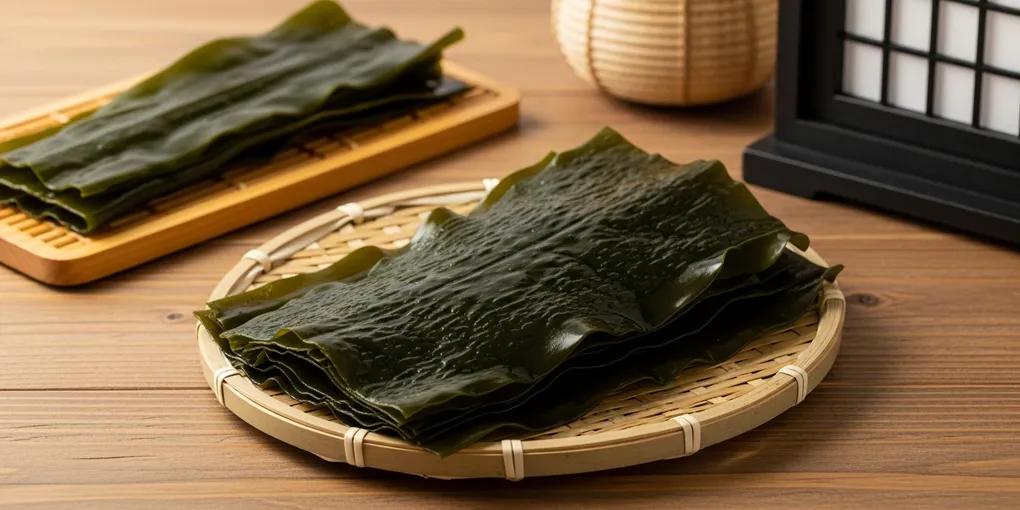
Kombu is an irreplaceable ingredient on the Japanese table.
As a foundation for dashi broth, in simmered dishes, in seasoned preserves — Japanese people have been eating kombu for centuries. It’s a treasure trove of glutamate, the umami compound, and rich in dietary fiber and minerals too.
But when you try to process kombu as a “fermented food,” you run into one wall: the distinctive briny taste that seaweed carries.
For some, this unique aroma is appealing. But as a product trying to find wide acceptance, it becomes a challenge. Especially when kombu is broken down into fine particles and fermented into a slurry, this briny character tends to stand out strongly.
In February 2026, a research paper tackling this very problem was published in the academic journal International Journal of Food Microbiology. It came from a research team led by Chenhan Geng at the National University of Singapore.
The key turned out to be a technique called “co-fermentation” — fermenting lactic acid bacteria and yeast together.
What is “Co-fermentation”?
Most fermented foods involve multiple microorganisms working together.
Take sake, for example. Koji mold converts rice starch into sugar, and then yeast transforms that sugar into alcohol. Bread too — it rises and gains its flavor when yeast and lactic acid bacteria work side by side.
Intentionally combining multiple microorganisms to ferment together — this is what we call “co-fermentation.”
A single microorganism alone can’t produce complex flavors, but when they work together, there’s potential to create nuances that one bacterium couldn’t achieve alone, and for them to compensate for each other’s limitations. This research applied co-fermentation to kombu.
What Was Combined?
The research team added three types of microorganisms to enzymatically processed kombu slurry (ma-kombu, Saccharina japonica):
- Lacticaseibacillus paracasei Shirota
- Lactiplantibacillus plantarum 299v
- Pichia kluyveri, a yeast that creates aroma
The first two are lactic acid bacteria that have been studied as probiotics. The last one, Pichia kluyveri, is a yeast known for creating fruity-scented compounds (esters) and has drawn attention in coffee and wine fermentation.
“Lactic acid bacteria being researched in the health field” combined with “yeast that creates pleasant aroma compounds” — this is the heart of the idea.
Result ①: Bacterial Survival Rate Increased
First, what stood out was the “survival rate” of the probiotic bacteria.
Generally, probiotics are thought to be more effective when more viable cells reach the intestines, but bacterial counts can decline during fermentation and storage (though research perspectives vary on this).
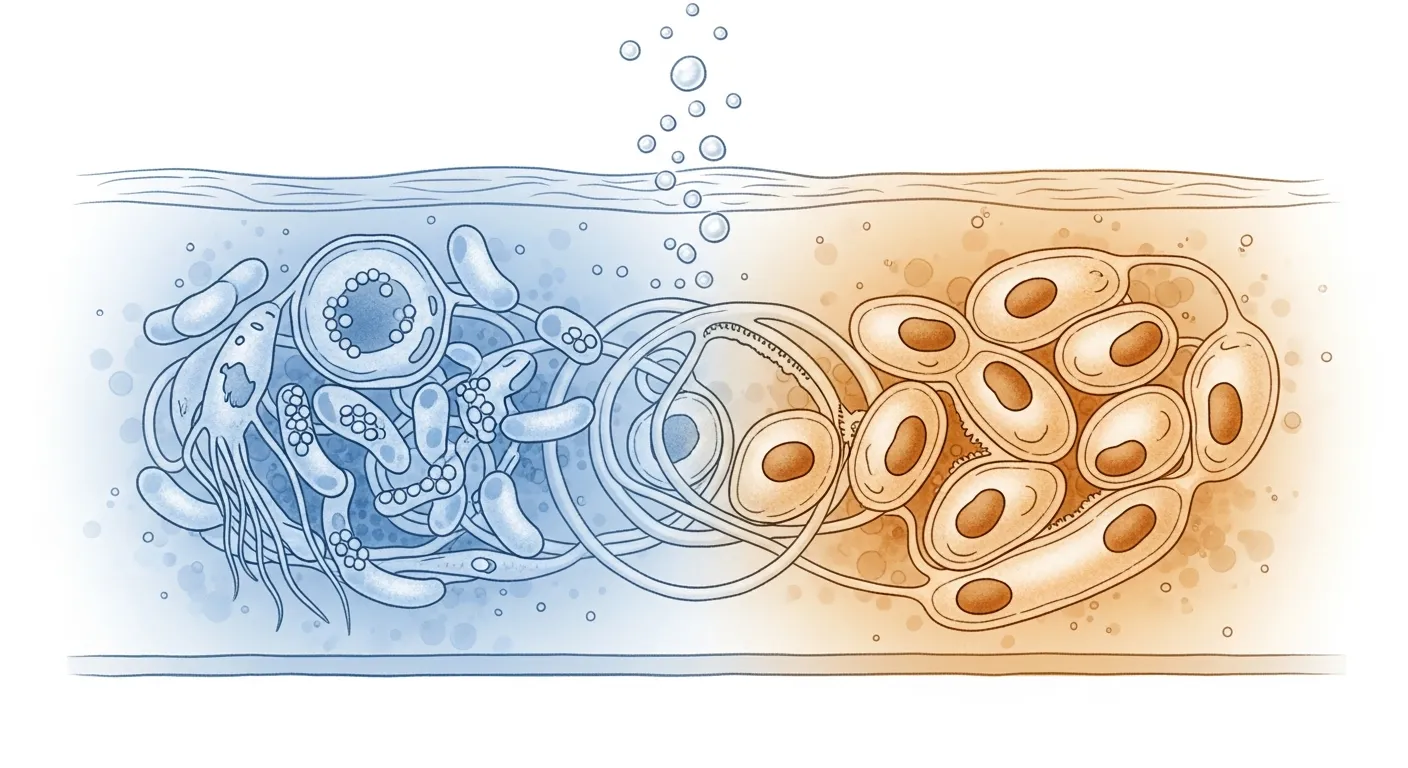
In this study, under specific experimental conditions, when lactic acid bacteria were fermented alone, bacterial counts remained at 6.10–6.40 log CFU/mL. But when fermented together with the yeast Pichia kluyveri in co-fermentation, counts reached 7.36–7.48 log CFU/mL.
Log CFU/mL expresses bacterial numbers on a logarithmic scale — a difference of one means roughly a tenfold difference in bacteria. In other words, co-fermentation dramatically increased the number of surviving probiotic bacteria.
The yeast likely created conditions favorable for the lactic acid bacteria, fostering a mutually supportive relationship. This is the strength of “co-fermentation.”
Result ②: Briny Taste Reduced by Up to 41.5%
And here’s the highlight of the research: improvement in aroma.
The briny character in kombu slurry comes from volatile aroma compounds like 1-octen-3-one and (E,Z)-2,6-nonadienal. These are known to create the “raw” or “grassy” smells associated with seafood and seaweed.
Under the study’s conditions, co-fermentation reduced these unpleasant aroma compounds by as much as 41.5%. It’s important to note that this result was confirmed under specific experimental conditions, and the same effect cannot be guaranteed across all types of kombu or production methods.
Why the reduction? During fermentation, microorganisms likely broke down or transformed these aroma compounds into something else. Fermentation doesn’t just create new flavors — it also has the power to “erase” unwanted ones.
Result ③: Fruity Aroma Compounds Were Generated
Moreover, co-fermentation generated entirely new aroma compounds.
Through the action of the yeast Pichia kluyveri, isoamyl acetate and other esters (fruity-scented compounds) were created. Isoamyl acetate is known for its banana or pear-like aroma.
In other words, under the study’s conditions, co-fermentation accomplished something remarkable: it “reduced the compounds that create briny taste” while simultaneously “generating fruity aroma compounds.” The flavor profile of kombu changed dramatically from both directions.
Through both subtraction and addition, the character of the kombu was entirely rewritten.
Why This Research Matters
The significance of this research lies in going beyond the “fermentation = health” framework to concretely demonstrate that “fermentation = a technology for designing deliciousness.”
When fermented foods come up in conversation, attention naturally gravitates toward health benefits — “good for gut health,” “supports immunity,” and so on. But fermentation has another major role. It’s the ability to transform a ingredient’s taste and aroma, extend shelf life, and create entirely new foods. It’s a “craft” dimension.
If we can take nutrient-rich seaweed like kombu and transform it into more palatable, more appealing fermented foods, the range of ways we can use seaweed expands dramatically. Japan is blessed with seaweed resources. Co-fermentation holds the potential to put those resources to new use.
The Depth of Fermentation as “Design”
What this research reminds me of is that fermentation isn’t a matter of “leaving it to the bacteria.” It’s a technology that can be precisely designed.
Which bacteria do you combine with which? How are they ordered, timed, and what environment do you create? Depending on that design, which bacteria survive, which aromas emerge, and which disappear — all change.
Japan’s traditional fermented foods — miso, soy sauce, sake — represent craftsmanship built over centuries, where artisans empirically refined the art of “the right combination.” This kombu research shows how contemporary microbiology is backing up that traditional wisdom while taking it further.
Of course, this is research-stage work, and we won’t see fermented kombu products on store shelves tomorrow. But the direction of “making seaweed delicious through fermentation” aligns beautifully with Japanese food culture. It feels like a hopeful signal of where fermented foods are heading.
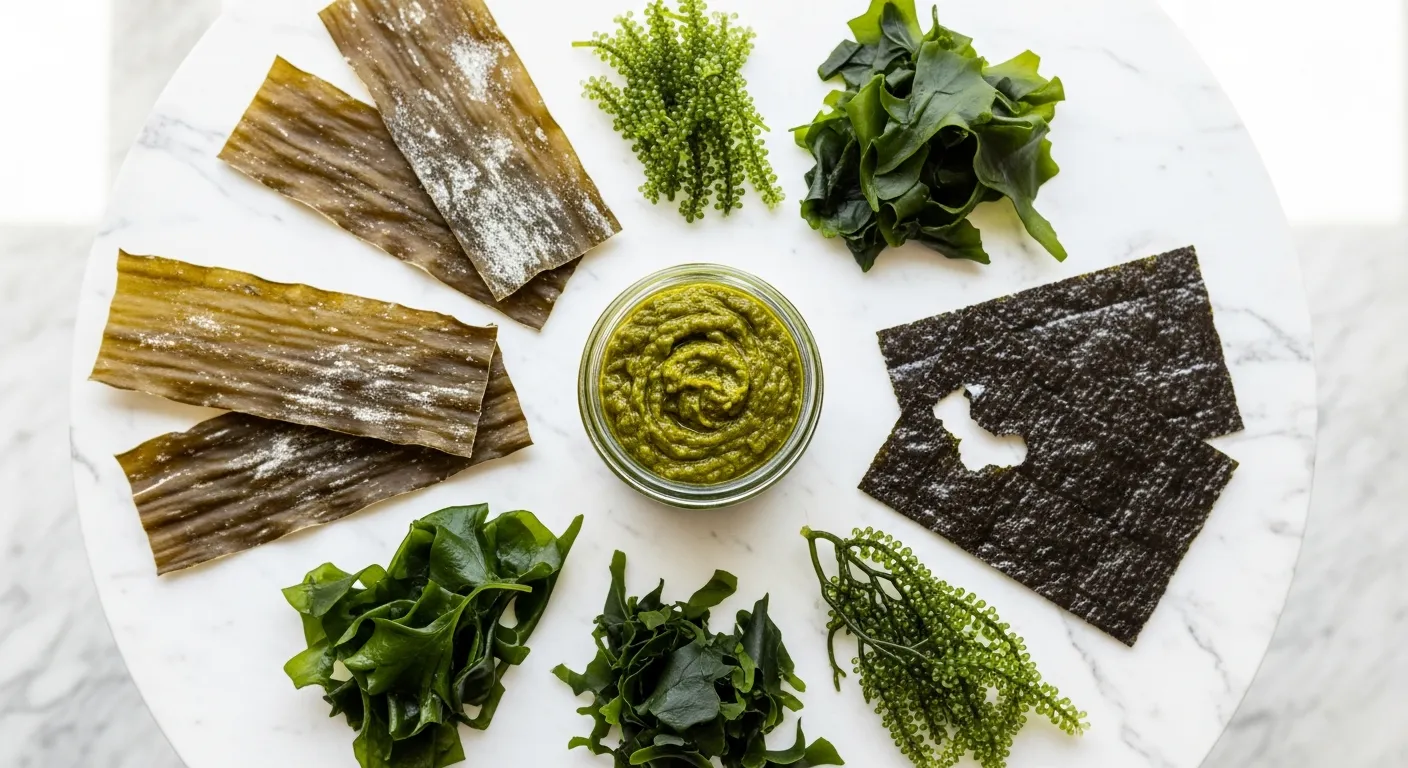
Fermentation doesn’t just create health. It erases briny flavors, adds aroma, and transforms ingredients into entirely new foods. It’s the invisible work of a craftsperson.
From Toshi
The idea of fermenting kombu isn’t new in itself. But reading this research, what struck me was the realization: “Can fermentation really be designed this intentionally?”
Kombu holds a special place in Japanese food culture. As a base for dashi, it supports the foundation of cooking. In simmered dishes and seasoned preserves, it weaves into everyday life. It carries glutamate — the essence of umami — and is rich in nutrition. And yet, when you try to develop kombu as a fermented food, you hit that one wall: the briny taste.
For those who love it, that aroma is attractive. But as a commercial product meant for broad appeal, it’s a barrier. Especially when you ferment it as a slurry, that character rises more intensely. I see this in the kitchen too. The aroma of fish and seaweed hinges on subtle differences — the line between “delicious” and “fishy” is razor-thin. How you handle that boundary is an extremely important question for any cook.
What makes this research compelling is that it confronts this challenge directly. And the method, while simple, is fundamentally sound. Co-fermenting lactic acid bacteria with yeast. This approach improves not just the aroma problem, but also the functional aspect of bacterial survival.
With lactic acid bacteria alone, the environment doesn’t shift the way it does when you add yeast. The result: more bacteria survive, and simultaneously, the aroma profile transforms. This structure — “one intervention creating multiple changes in value” — felt to me like I was glimpsing the essence of fermentation itself.
What struck me most was that the compounds causing the briny character diminished while fruity aromas were born. This isn’t mere improvement. Addition and subtraction happening at once. In the kitchen, it’s like the work of paring away unnecessary elements while layering new aromas over them.
In other words, fermentation isn’t just a preservation technique or a way to add health value. It’s an “editing technology” that reconstructs the aroma and taste of ingredients.
This crystallized something I’ve long felt: “Fermentation can be designed; it’s not left to chance.”
Which bacteria do you choose? How do you combine them? At what timing, in what environment do you place them? Through that accumulation, the final taste and aroma shift dramatically.
Japanese traditional fermentation must have done the same thing. Miso, soy sauce, sake — all of these are the result of centuries spent finding the optimal combinations and conditions. This research reinterprets that in scientific terms and opens new applications.
From a working kitchen perspective, this thinking has enormous practical reach. A kombu fermentation paste as a sauce base. Or a fermented liquid for preparing seafood. If you can reduce the briny character while adding aromatic depth, the possibilities for ingredients that were previously difficult to work with suddenly expand.
Further, from a value-to-the-customer angle, it’s fascinating too. Not just “tasty,” but being able to convey “why this aroma?” and “what design choices were made?” adds experiential depth. In today’s world, customers value not just flavor but also context and story. That’s where fermentation technology becomes compelling.
There’s also the probiotic dimension. Generally speaking, the number and state of bacteria are thought to affect quality, and it’s intriguing to see shifts in this area through co-fermentation. But what matters here is maintaining perspective — understanding “how microbial action changes food quality” rather than overstating health claims.
Fermentation is ultimately “a means to make food better,” and multiple values emerge as a result. That’s a more honest way to frame it, both in practice and for the customer.
Through this research, I’m reminded that kombu — seemingly perfected over long history — still holds room for evolution. Even familiar ingredients reveal new possibility when you shift your viewpoint.
Fermentation is the powerful tool that draws out those possibilities. It erases briny notes, adds aroma, and reconstructs value. That process is invisible but manifests unmistakably in the result.
Standing in the kitchen, this idea of “fermentation as design” feels increasingly vital. How do we weave this kind of insight into experience and intuition? Doing so deepens both the expression of cooking and the value we offer.
Kombu will still change. And fermentation is the technology that guides that change.
This research, I felt, quietly points toward that future.
※ This article is based on personal experience and publicly available information. It is not intended to diagnose, treat, or prevent any disease. If you have health concerns, please consult a doctor or registered dietitian. See our Disclaimer.