⏱ About 8 min read
Why Can Koji Fungus Produce Such Massive Amounts of Enzymes? Tokyo University Discovers the Mechanism Behind "10-Fold Increases in Cell Volume and Nuclear Count"
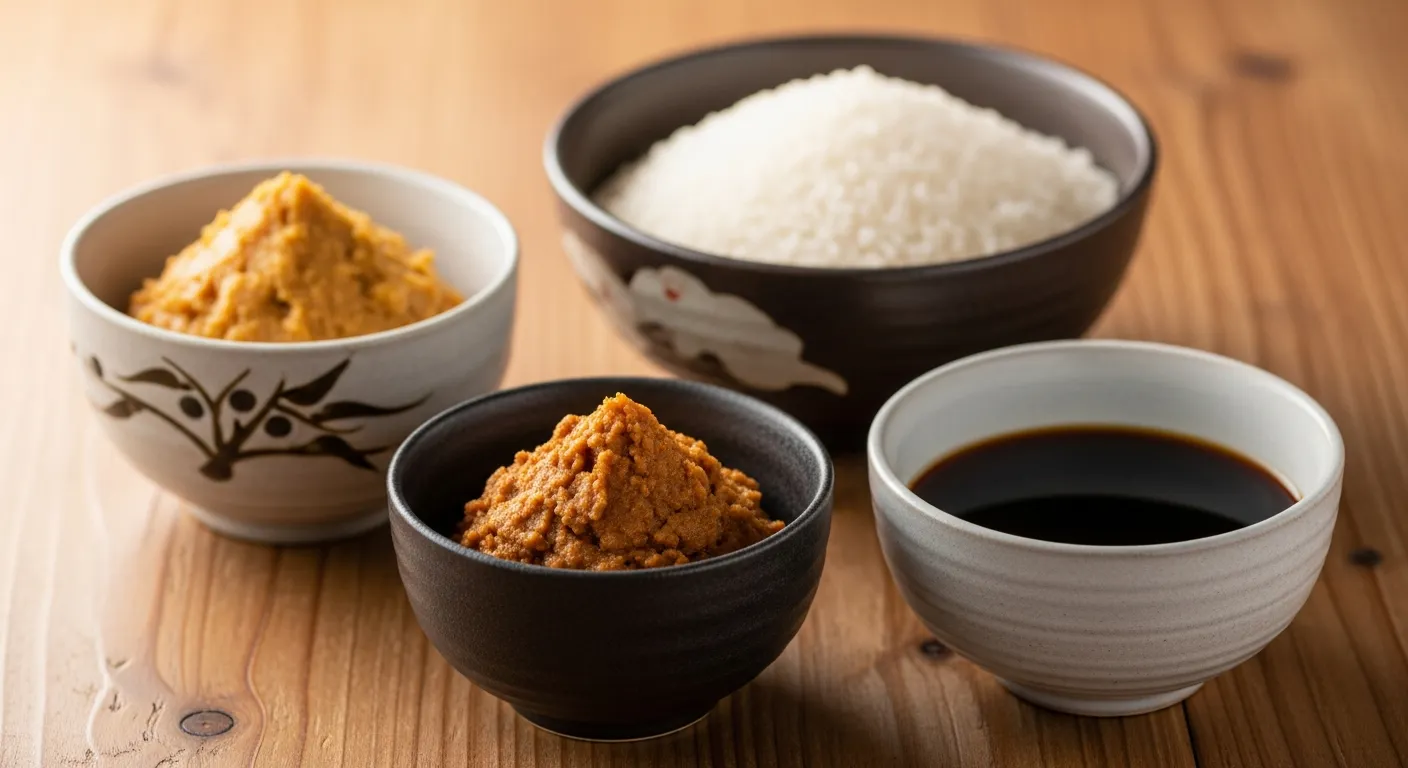
Miso, soy sauce, sake, mirin, amazake—
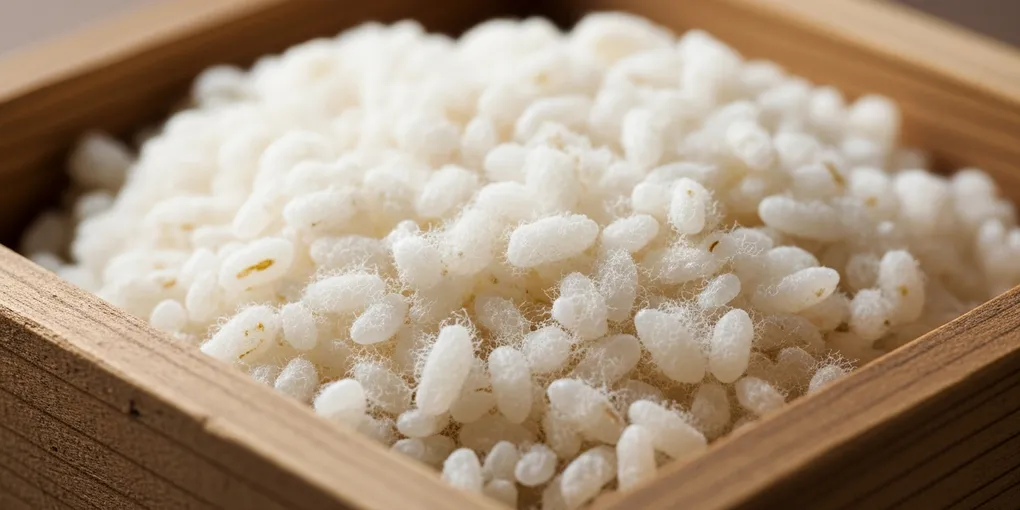
These fermented foods, which have become indispensable to Japanese dining, all depend on the work of a single remarkable microorganism: koji fungus, or Aspergillus oryzae in scientific terms. This fungus has even been designated as Japan’s “national fungus.”
Koji fungus produces enormous quantities of enzymes that break down the starches and proteins in rice and soybeans. These enzymes transform the raw ingredients into sugars and umami-rich compounds, creating those complex, deeply satisfying flavors we know so well. In many ways, koji fungus is the unsung hero quietly supporting Japan’s entire fermentation culture.
But here’s the question that had puzzled researchers for years: how does koji fungus manage to produce such staggering amounts of enzyme? In September 2025, a research team from Tokyo University’s Graduate School of Agricultural and Life Sciences and Tsukuba University finally uncovered the answer, publishing their findings in the prestigious international journal eLife (Paper title: “The increase in cell volume and nuclear number of the koji-fungus Aspergillus oryzae contributes to its high enzyme productivity,” DOI: 10.7554/eLife.107043.4).
The key turned out to be something unexpected: the cells themselves grow dramatically larger, and the number of cell nuclei increases significantly.
What Exactly Is Koji Fungus?
Let me start by clarifying what koji fungus actually is.
Koji fungus is a type of mold (filamentous fungus) that grows by extending thread-like structures called hyphae. It thrives on the surface of steamed rice, grains, and soybeans, secreting a variety of enzymes—amylase for breaking down starches, protease for breaking down proteins, and many others.
In miso production, for example, koji fungus enzymes break down soybean proteins into umami compounds (amino acids) and convert rice starch into sugars. In sake brewing, koji fungus transforms rice starch into sugar, which yeast then converts into alcohol.
This remarkable ability to produce enzymes in such abundance is precisely why koji fungus has been used in Japanese fermentation for centuries. Master brewers have developed sophisticated techniques to coax the maximum performance out of these fungi. Yet despite their expertise, the cellular mechanisms underlying this enzyme-producing prowess remained a mystery—until now.
”Thick Hyphae” Appear During Cultivation
The research team focused their attention on changes in hyphal structure that occur as koji fungus develops.
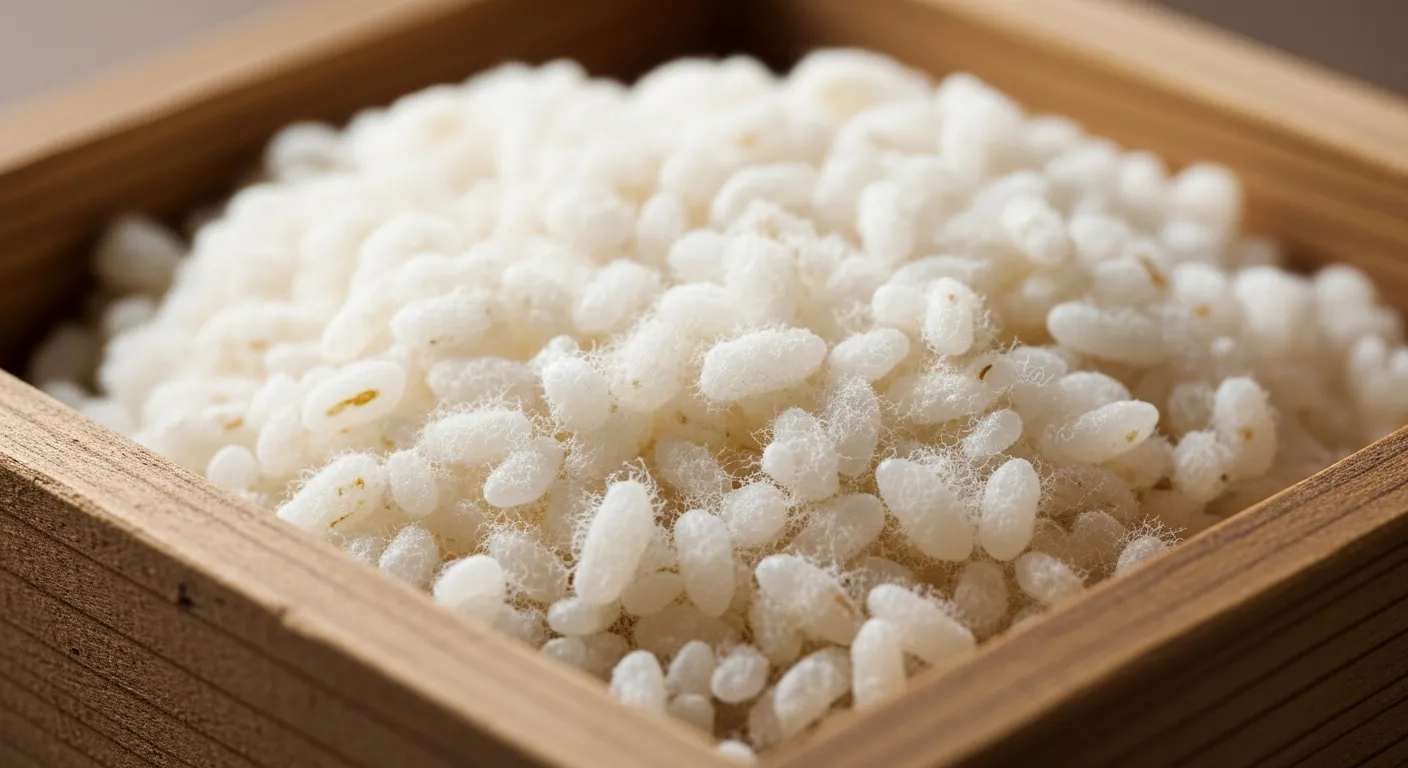
As koji fungus cultures mature, the hyphae undergo visible transformation. When the team observed this process carefully, they made a striking discovery: thicker-than-normal hyphae appear as cultivation progresses.
Within these thick hyphae, something remarkable was happening. The cell volume expanded to roughly 10 times its normal size, and the number of nuclei within each cell multiplied to over 200—also about a tenfold increase.
Let me explain what nuclei are. The nucleus is essentially the cell’s blueprint storage vault, containing the genetic information (DNA) that instructs the cell what to do. While most organisms have just one nucleus per cell, filamentous fungi like koji can have multiple nuclei in a single cell. In the thick hyphae of koji fungus, this number was extraordinary.
“Larger Cells with More Nuclei” Means More Enzymes
So how does this increase in cell volume and nuclear count relate to enzyme production?
The research team’s analysis revealed something striking: the increase in cell volume and nuclear number showed a strong correlation with increased amylase (starch-digesting enzyme) activity. In other words, thicker hyphae with more nuclei simply produced more enzymes.
The mechanism works like this: each nucleus contains genetic blueprints. When the number of nuclei increases, you’re essentially multiplying the number of enzyme-producing blueprints. The research also demonstrated that the overall amount of “transcription” and “translation”—the processes by which cells read these blueprints and manufacture enzymes—ramped up significantly per hyphal unit.
With more blueprints on hand and production machinery running at full capacity, the result is massive enzyme output from each fungal filament. Koji fungus’s extraordinary enzyme-producing ability is underpinned by these dramatic cellular transformations.
“Create thick, large cells with abundant nuclei”—this strategy, refined through evolution and centuries of human cultivation, turned out to be the key to koji’s legendary enzyme production.
Why Does This Research Matter?
This study doesn’t immediately translate into new health claims or food products. It’s basic research aimed at understanding the fundamental mechanisms of a microorganism. Yet its significance is far from trivial.
First, it explains the bedrock of Japan’s traditional fermentation culture in scientific language. Miso, soy sauce, sake, mirin—all these fermented foods rest entirely on koji fungus’s capacity to produce enzymes. Understanding that capacity at the cellular level deepens our grasp of fermentation itself.
Second, there’s potential for practical application. Koji isn’t only used in food production; it’s also an industrial workhorse for manufacturing enzymes themselves. The cellulase used in laundry detergents and countless other industrial enzymes all rely on koji fungi. This discovery—showing us that thicker cells with more nuclei produce more enzymes—offers new hints for optimizing large-scale enzyme production.
Ancient koji research has revealed yet another facet of itself through modern life science methodology. Craftspeople’s accumulated wisdom and cutting-edge science: both illuminate the profound depths of this tiny organism.
Koji Fungus and Japanese Food Culture
Koji fungus is genuinely rare when viewed on a global scale.
Many molds spoil food or produce dangerous toxins. Koji fungus, by contrast, is a “domesticated mold”—carefully selected and safely refined through centuries of human stewardship. Of course, this doesn’t mean you can use any mold growing in your kitchen. The Japanese Brewing Society recognized koji fungus as Japan’s national fungus in 2006, a testament to how deeply it’s woven into our food heritage.
The aroma of miso soup, the umami depth of soy sauce, the delicate flavor complexity of sake, the gentle sweetness of amazake—all of these exist because koji fungus produces enzymes in such abundance. The flavors in the fermented foods we eat so casually are crystalline expressions of dynamic cellular activity happening invisibly within the fungus.
This research lets us glimpse that activity at the microscopic scale. The next time you sip a bowl of miso soup, you might picture the koji fungus cells that labored behind the scenes—cells that swelled to ten times their normal size, multiplied their nuclei, and produced enzyme after enzyme to create that nourishing, delicious bowl before you.
Koji fungus enlarges its own cells precisely in order to manufacture enzymes. The richness of the Japanese table is supported by the modest, tireless work of a microorganism too small to see.
From Toshi
Reading this research, I found myself marveling at koji fungus all over again.
Miso, soy sauce, sake, amazake—they all sit so naturally on our tables that we hardly give them a second thought. Yet behind each dish, invisible koji fungus works steadily, creating enzymes that gently transform rice and soybeans. I’d always understood koji as “the fungus that produces a lot of enzyme,” but learning that it actually enlarges its own cells and multiplies its nuclei to achieve this suddenly made the whole world of fermentation feel three-dimensional.
What struck me most was realizing that koji doesn’t simply stumble into enzyme production by accident. Instead, it fundamentally restructures its own cellular machinery to achieve massive enzyme synthesis. It’s like a factory that, faced with a big order, doesn’t just work harder—it actually expands the facility itself, duplicates the blueprints, and scales up the entire operation. There’s something almost touching about such a tiny organism possessing such impressive ingenuity.
I also appreciated that this research is basic science—it’s about understanding how koji actually works, not about rushing to claim health benefits. It doesn’t try to shortcut from enzyme production straight to human wellness. Rather, it carefully examines koji itself first. I think that methodical approach is essential for truly understanding fermented foods.
At the same time, the word “mold” warrants caution. Koji fungus is a special microorganism, carefully selected and refined by humans over centuries of use in fermentation. That pedigree matters. It doesn’t mean you can use any household mold for food—fermentation and spoilage may seem similar, but they’re fundamentally different processes. It’s precisely because we use koji strains that have been safely passed down through generations, in properly controlled environments, that we get miso and soy sauce.
I’ve loved fermented foods for years, but writing this piece, I realized something important: fermentation is neither purely ancient wisdom nor purely modern science. Brewmasters have always read temperature, humidity, aroma, and texture to coax the best from koji. Their accumulated experience is now being explained at the cellular level by contemporary research. That convergence of old knowledge and new science is where fermentation’s real magic lies.
The next time I drink miso soup, I won’t just taste something delicious. I’ll think about how koji fungus cells enlarged themselves, multiplied their nuclei, and labored to produce all those enzymes. That simple bowl of soup becomes something different—a blend of microbial life and human wisdom layered together across generations.
Fermented foods aren’t flashy. Yet they quietly support our tables, our nutrition, our health. This research illuminates one corner of that quiet work through scientific language. Knowing what happens inside koji’s microscopic cells makes me want to approach fermented foods with even greater appreciation.
※ This article is based on personal experience and publicly available information. It is not intended to diagnose, treat, or prevent any disease. If you have health concerns, please consult a doctor or registered dietitian. See our Disclaimer.