⏱ About 9 min read
What's the Difference Between Fermentation and Spoilage? Exploring the Depth of Japan's Fermented Food Culture Through the Eyes of the Ministry of Agriculture
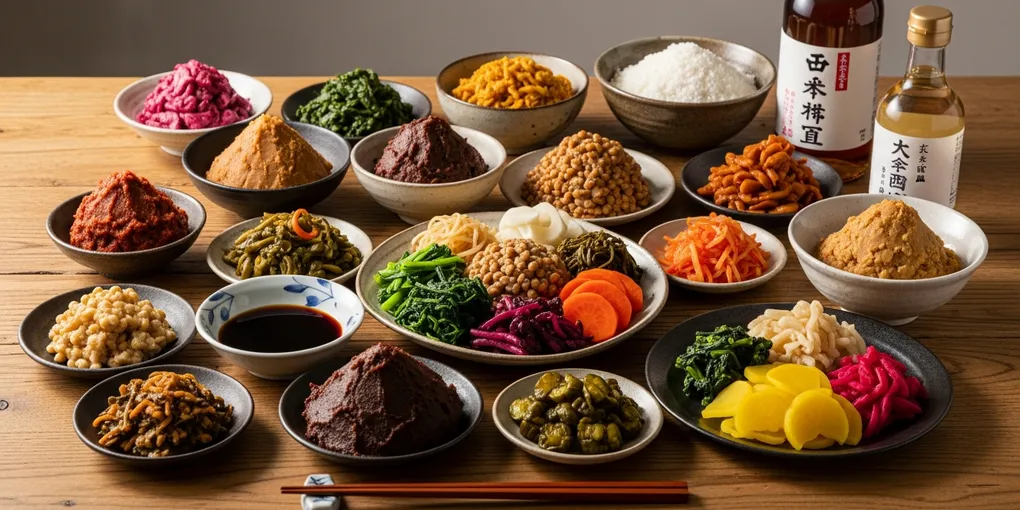
Soy sauce, miso, mirin, vinegar, sake, natto, pickles—
When you look around a Japanese dining table, you notice how remarkably full it is of fermented foods. We eat fermented foods every single day, often without even thinking about it. That’s how deeply fermentation has woven itself into Japanese food culture.
But what exactly is this “fermentation”? Why do fermented foods come into being, and what microorganisms make it all happen? In November 2022, the Ministry of Agriculture, Forestry and Fisheries published a special feature titled “The Mystery of Fermentation” in their web magazine “aff”—and it does a wonderful job of explaining this familiar yet profound world in clear, accessible terms.
It’s particularly interesting that a government ministry is taking the time to carefully introduce fermented food culture to the public. So today, I’d like to explore the basics of fermentation and the richness of Japan’s fermentation heritage based on what that feature shared.
”Fermentation” and “Spoilage”—Both Are the Work of Microorganisms, But Safety Is the Real Dividing Line
Let’s start with a simple question many people wonder about: What’s the difference between fermentation and spoilage?
According to the Ministry’s page, fermentation is defined as “the change that occurs when microorganisms increase in food.” And here’s the surprising part: fermentation and spoilage aren’t actually distinguished by the type of microorganism involved.
What separates them is whether something is “harmful to humans or not.” When microorganisms multiply and the result is beneficial, delicious, and safe for us to eat, we call it “fermentation.” But if the result is harmful or inedible, we call it “spoilage.”
In other words, fermentation and spoilage are distinguished based on whether the outcome is beneficial and safe for humans. From the microorganism’s perspective, both are essentially the same—they’re increasing and changing substances—but whether that change results in something safe for humans is the crucial dividing line.
The page emphasizes that “maintaining safety is the first condition of fermentation.” Fermented foods aren’t prized just for their deliciousness—safety has always been paramount. Over centuries, humans have refined the techniques needed to ferment foods safely.
It’s worth noting that it’s dangerous to assume leftover food at home or food with unintended mold is “fermented” and decide to eat it on your own. Fermented foods are created under proper conditions—the right ingredients, the right microorganisms, the right temperature, and careful hygiene—and you can’t tell the difference between spoilage and fermentation just by looking at it. When food goes bad, it’s safest to throw it away.
”Koji”—The Foundation of Japanese Fermentation
Japanese fermented foods have a characteristic that’s quite remarkable on a global scale. That characteristic is the existence of “koji” (rice mold).
According to the Ministry’s page, soy sauce, miso, mirin, vinegar, sake, and shochu—all of these are made using koji. Koji is created by cultivating koji mold on steamed rice, barley, or soybeans.
The greatest strength of koji mold is, as the page puts it, that it “produces enzymes in vast quantities.” These enzymes break down the protein in raw ingredients into amino acids—which are the foundation of umami (savory flavor)—and convert starches into sugars, which provide sweetness. This is how the complex, rich flavors of fermented foods are born.
Koji mold is so important that it’s been officially designated as Japan’s “national microorganism” by the Japan Brewers Association. It’s a microorganism that supports Japanese food culture at its very foundation.
A Cast of Distinctive Fermentation Microbes
Koji mold isn’t the only microorganism involved in fermentation. The Ministry’s page introduces several representative fermentation microbes, each with their own unique characteristics.
Koji mold, as I mentioned earlier, produces vast quantities of enzymes and is the star player in creating umami.
Yeast is known for its “distinctive aroma.” There are two types—alcohol-producing yeast and salt-tolerant yeast—and they’re responsible for the aromas in sake and soy sauce.
Lactic acid bacteria is characterized by a “slightly astringent sourness.” It’s responsible for the acidity in pickles and yogurt.
Bacillus subtilis (the natto bacterium) is distinguished by its “rapid multiplication speed.” It creates natto’s distinctive stickiness and flavor.
Acetic acid bacteria is essential for making vinegar and is known for its “sharp, pungent acidity characteristic of acetic acid.”
Even though it’s all “fermentation,” the flavors and aromas that emerge depend entirely on which microorganisms are doing the work. The diversity of fermented foods springs from the distinct personalities of these different microbes.
The Diverse Fermented Foods Alive in Communities Across Japan
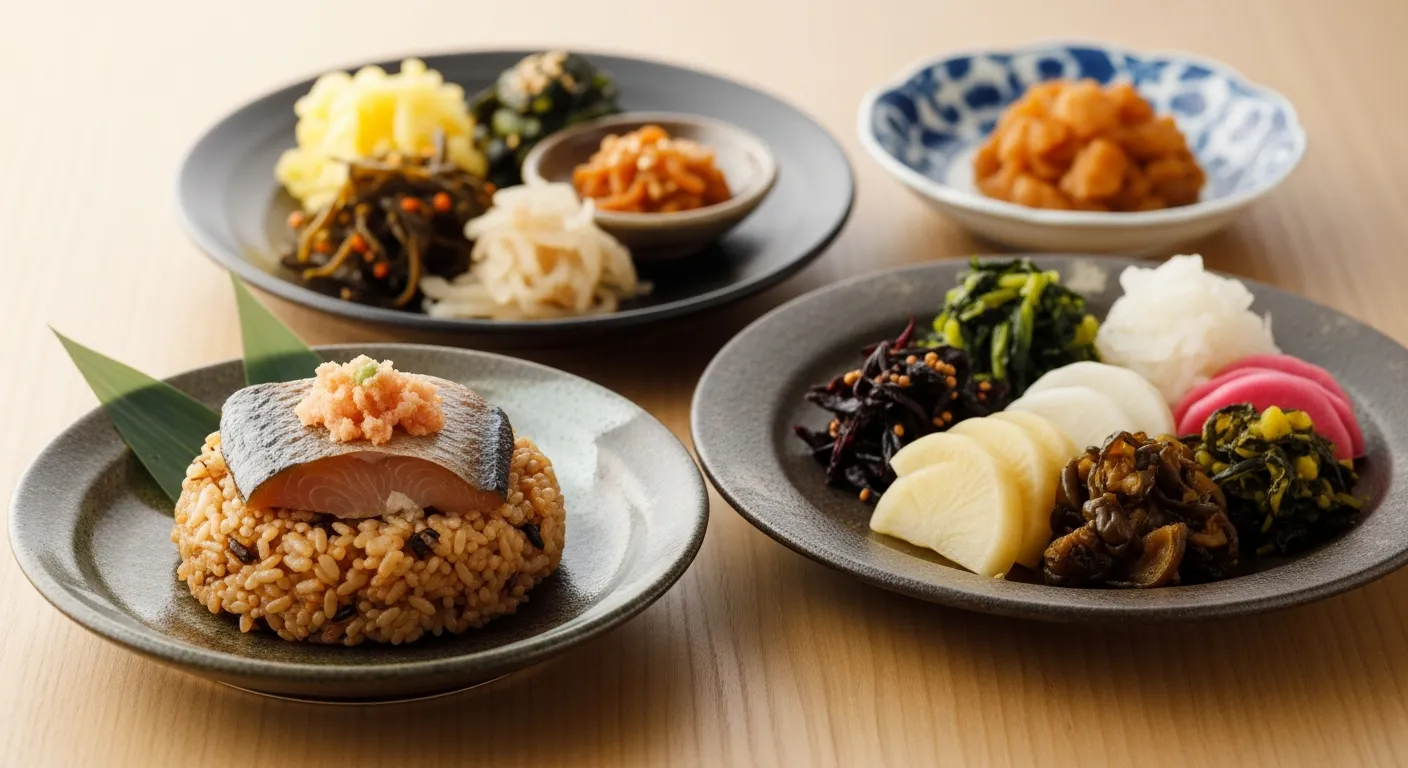
The Ministry’s page also introduces regional dishes from all over Japan that harness fermentation. Each one is a unique creation born from local knowledge and environment.
- Iizushi from Hokkaido: Fish and rice koji fermented with lactic acid bacteria—a winter preservable food
- Red pickles (akazushi) from Akita Prefecture: Red shiso leaves and rice fermented together, creating a vibrant dish
- Oname from Saitama Prefecture: A type of flavored miso made with barley koji and soybeans
- Koji-pickled herring from Niigata Prefecture: Herring pickled in koji
- Funazushi from Shiga Prefecture: A representative narezushi (fish fermented with salt and rice) made by fermenting salted fish with rice
- Koji-pickled squid from Tottori Prefecture: Squid pickled in koji—a rare delicacy
- Miso-pickled tofu from Kumamoto Prefecture: Tofu pickled in miso, developing a cheese-like flavor
Looking at this list, you’re struck all over again by just how expansive Japan’s fermented food world really is. Fish, soybeans, vegetables, seafood—every ingredient imaginable has been transformed through regional fermentation techniques into unique preserved foods and delicacies. You could say that fermentation has quite literally shaped regional food culture itself.
What Fermentation Has Brought to Our Lives
But why have humans been making fermented foods in the first place? The Ministry’s page points to several advantages fermentation provides.
One is improved shelf life. Before refrigerators existed, fermentation was a precious technology for preserving food over long periods. The work of microorganisms makes food less likely to spoil. Fermentation was humanity’s wisdom for storing food.
Another is the creation of umami and complex flavors. As koji mold enzymes break down proteins into amino acids and starches into sugars, flavors emerge that weren’t present in the original ingredients. Fermentation is a technology that makes food more delicious.
The page also touches on nutritional changes that occur through fermentation. There’s growing research interest in components like “peptides” that are created during fermentation. That said, it’s important to understand this as ongoing research interest rather than a promise of health effects from eating fermented foods. Fermented foods are simply part of our daily meals, something to enjoy as part of a balanced diet.
Savoring Fermentation Anew, Right Here in Our Everyday Lives
What the Ministry’s special feature conveys is that fermentation isn’t something special or distant—it’s something immediate and familiar, happening all around us in our everyday lives.
Drinking miso soup. Pouring on soy sauce. Stirring in natto. Picking up a piece of pickle. In each of these unremarkable daily moments lies the work of microorganisms and the accumulated wisdom of humans refined over centuries.
The fact that fermentation and spoilage are separated by the thinnest of lines; that artisans and home cooks have spent generations perfecting the techniques to keep that boundary on the safe side; and that diverse fermented foods have taken root throughout different regions—when you understand these things, your everyday dining table begins to look a little different.
The very fact that a government ministry like the Ministry of Agriculture, Forestry and Fisheries takes the time to share fermented food culture so clearly is itself evidence of how essential fermentation is to understanding Japanese food. Next time you eat a fermented food, I invite you to pause for a moment and think about the quiet, invisible work of the microorganisms behind it.
Fermentation and spoilage are both changes brought about by the work of microorganisms. But what matters as food is whether it’s been managed carefully enough to be safe to eat. The wisdom that has maintained that line throughout history is what enriches the Japanese dining table.
From Toshi
Looking at the difference between fermentation and spoilage again this time, I was reminded that fermented foods don’t simply happen naturally—they’re the result of wisdom that humans have accumulated over long periods of time to handle them safely.
Miso, soy sauce, natto, pickles. These appear on the everyday table as if by routine, but behind each one lies the work of koji mold, yeast, lactic acid bacteria, and other microorganisms. We don’t usually think about it, but when you realize that every day we’re nourished by the power of these tiny microbes, your ordinary meal somehow begins to feel a bit more special.
At the same time, because fermentation and spoilage are so close to each other, it’s crucial that fermented foods are made safely. It’s dangerous to see food going bad in your kitchen or mold appearing by chance and think “maybe it’s fermented.” Fermented foods can only be eaten with confidence when they’re made with proper ingredients, the right microorganisms, correct temperature control, and careful hygiene.
In times when there were no refrigerators and none of our modern scientific knowledge, people still searched for ways to keep food fresh longer and make it more delicious. That accumulated effort is what led to the fermented food culture we have in Japan today.
From now on, when I’m drinking miso soup, pouring soy sauce, stirring in natto, or eating a pickle, I want to pause for a moment and think about the microorganisms working behind the scenes and the human wisdom that makes it all possible. I want to savor fermented foods with that deeper appreciation.
Toshi
※ This article is based on personal experience and publicly available information. It is not intended to diagnose, treat, or prevent any disease. If you have health concerns, please consult a doctor or registered dietitian. See our Disclaimer.