⏱ About 9 min read
Lactic Acid Bacteria Found in Cheese May Bring Changes to Metabolic Markers — A Discovery from Egyptian Traditional Food (Rat Study)
Every region in the world has fermented foods passed down through generations.
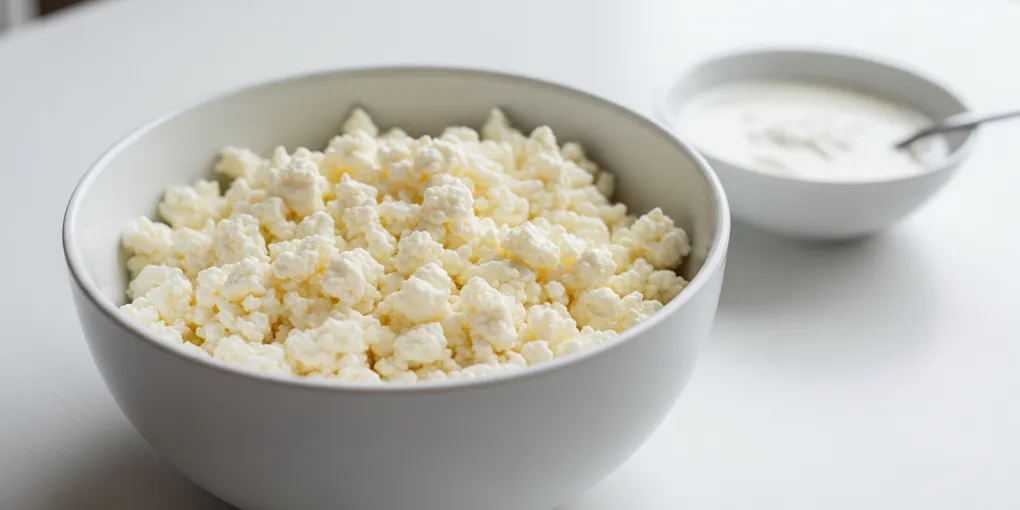
Just as Japan has miso and pickles, Egypt too has traditional fermented foods. One of them is cottage cheese. These age-old fermented foods may harbor microorganisms we haven’t yet discovered—driven by this hope, research is underway around the world to “search for promising lactic acid bacteria in traditional fermented foods as subjects of scientific study.”
In January 2026, an academic journal called Probiotics and Antimicrobial Proteins published research focused on lactic acid bacteria isolated from Egyptian cottage cheese (paper title: “A Potential Probiotic Lactiplantibacillus Plantarum Isolate from Egyptian Cottage Cheese Alleviates Metabolic Syndrome Manifestations,” DOI: 10.1007/s12602-025-10896-6). It was conducted by a research team led by Cairo University.
The research team investigated whether this lactic acid bacterium could bring about changes in markers related to “metabolic syndrome” through both in vitro experiments and rat studies.
But let me be clear about something important from the start. This research remains at the in vitro and rat (animal study) stage — the same results have not been confirmed in humans. This is absolutely not saying that “eating this cheese will improve metabolic syndrome.” I should also note that this research didn’t examine the effects of eating the cheese itself, but rather used a specific bacterial strain isolated from the cheese.
About this article: This article introduces research findings and does not guarantee the effects or health benefits of any particular food or lactic acid bacterium. This research is at the stage of in vitro experiments and animal studies using rats, and has not confirmed effects in humans who consume it. For treatment or prevention of metabolic syndrome, diabetes, dyslipidemia, and other conditions, please always consult a medical professional.
What is “Metabolic Syndrome”?
First, let me briefly explain “metabolic syndrome,” which is the focus of this research.
Metabolic syndrome refers to a condition where, against a backdrop of visceral fat accumulation, high blood sugar, high blood pressure, and dyslipidemia (abnormalities in cholesterol and triglycerides) overlap. Even if each factor is mild on its own, when they combine, the risk of lifestyle-related diseases increases significantly.
As this condition becomes more common in modern society, improvements in diet and lifestyle habits are considered fundamental. In this context, research is being conducted worldwide asking: “Can lactic acid bacteria that maintain healthy gut flora have a positive impact on metabolic syndrome markers?” Today’s research is part of this broader trend.
Searching for Promising Bacteria in Egyptian Traditional Cheese
The research team isolated a total of 10 strains of lactic acid bacteria from samples of 12 different foods and juices.
Among these, the most promising bacterial strain was found in Egyptian cottage cheese: Lactiplantibacillus plantarum Y10b. This bacterium belongs to the family of plant-based, food-derived lactic acid bacteria commonly found in pickles and fermented foods.
The research team evaluated whether this bacterium had the qualities to be a probiotic candidate from several angles.
- Survival in the intestine: Viability decline was minimal even under simulated intestinal conditions
- Surface hydrophobicity: Over 70% (an indicator of how well it sticks to intestinal cells)
- Self-aggregation: 82.6% after 24 hours (the tendency of bacteria to cluster together)
- Polysaccharide production: Positive
- Ability to ferment milk: Remained stable even after 21 days of storage
- Antimicrobial activity: In vitro antimicrobial activity was confirmed against four types of pathogenic bacteria
These are indicators that “this bacterium possesses the basic characteristics needed as a probiotic candidate.” It was, in essence, a careful first step in evaluating the bacterium’s fundamental qualities.

Changes Observed in Vitro and in Rats
Next, the research team investigated how this bacterium might relate to metabolic syndrome markers.
In in vitro experiments, the following results were reported:
- Glucose (sugar) reduction rate: approximately 53%
- Cholesterol reduction rate: approximately 98%
This shows that in the test tube, the bacterium demonstrated the ability to take in and reduce sugar and cholesterol. However, these are results under artificial conditions, and there’s no guarantee the same would happen inside a living body.
In rat studies (animal experiments), rats made to have a metabolic syndrome-like state through a high-fat diet were given this bacterium, and changes were observed. The paper reports that significant changes were seen in markers related to blood sugar, cholesterol levels, and body weight.
Whether in vitro or in rats, changes were observed in metabolic markers—that is the main finding of this research.
Important Points Worth Careful Consideration
This is the section I want to emphasize most strongly in this article.
This research remains at the in vitro and rat stage. The paper includes no clinical trials involving humans.
Just because a lactic acid bacterium shows good results in animal experiments doesn’t mean it will work the same way in humans. The human body is far more complex than animals, and gut environments differ from person to person. It’s not uncommon in medicine for success in animal studies to fail to translate into human benefits.
Additionally, metabolic syndrome, diabetes, and dyslipidemia are conditions that require professional medical management. This research does not demonstrate that “eating a particular cheese or consuming certain lactic acid bacteria will improve these conditions.” If you have concerning symptoms, please don’t rely on food products based on self-judgment—consult a medical professional.
Fermented foods and probiotics should be enjoyed as part of a balanced diet, nothing more. They are not a substitute for treatment or prevention. I want to reaffirm this important point.
Still, What This Research Suggests
Having laid out these careful caveats, there is still meaningful significance to this research.
It lies in this perspective: “The world’s traditional fermented foods may be treasure troves of beneficial microorganisms.”
From Egyptian cottage cheese—a fermented food eaten in that region for generations—a bacterium that could be a probiotic candidate was discovered. This suggests that traditional fermented foods worldwide—like Japan’s miso, pickles, and natto—may similarly harbor unknown beneficial bacteria waiting to be found.
Since ancient times, before scientific knowledge existed, humanity created fermented foods through experience and lived alongside microorganisms. In the long history of this practice, fermented foods developed with countless beneficial microbes woven into them. These traditional foods have become a rich “field of exploration” for modern microbiological research. This research is one such example.
Perhaps one day, the accumulation of these painstaking foundational research efforts will lead to insights that benefit human health. Viewing this research as one early step in that journey reminds us once again of the depth and potential of fermented foods.
Traditional fermented foods may harbor bacteria whose names we don’t yet know. Confirming each one through steady research builds the knowledge of tomorrow.
From Toshi
Reading this research made me feel just how vast the world of fermented foods truly is. In Japan, miso, soy sauce, natto, and pickles are familiar to us all, but when you look beyond Japan, you find foods like Egyptian cottage cheese—fermented foods that have been eaten and cherished in their regions for a very long time. That new lactic acid bacteria are being found in such foods and examined closely as subjects of scientific study really brought home to me the profound depth of fermentation culture.
What struck me most was the idea that traditional foods have become a “treasure trove of microorganisms” that modern science considers precious. The people of old didn’t know the names of lactic acid bacteria or understand their mechanisms, yet through experience, they created foods that were delicious and could be stored well. And now, hidden within all that accumulated knowledge, lie the very bacteria that today’s researchers are eager to study. I find this fascinating.
However, I must emphasize again: this research consists of in vitro experiments and animal studies using rats. The finding that markers related to blood sugar, cholesterol, and body weight showed changes is intriguing, but it has not been confirmed that the same happens in humans. I want to keep this distinction clear.
When you hear “bacteria found in cheese,” it’s easy to think, “Maybe eating that cheese would be good for my health.” But this research didn’t examine the effects of eating the cheese itself—it used a specific lactic acid bacterium isolated from it. And it wasn’t conducted in humans; it was in rats. So it would be premature to connect this directly to our daily eating habits or health decisions.
Terms like metabolic syndrome, diabetes, dyslipidemia, and obesity are topics that touch our lives directly and matter deeply. Precisely because they matter, we need to be careful not to slip into thinking “food can improve it” or “a lactic acid bacterium can cure it.” If you have health concerns, it’s important to consult a medical professional rather than rely on self-judgment and food products.
Still, this doesn’t mean the research is meaningless. In fact, through the accumulation of research like this, insights that benefit human health in the future may eventually emerge. It’s a step-by-step process: first we study in test tubes, then in animals, and if necessary, we confirm it in humans. Science moves forward one careful step at a time.
Because I myself love fermented foods, I think it’s equally important to avoid letting expectations run too high. Fermented foods have real appeal. Their flavors run deep, they carry the culture of their regions, and they enrich our tables. But if we start thinking of them like medicine, we lose sight of what makes fermented foods genuinely wonderful.
This research focused on a lactic acid bacterium found in traditional Egyptian cottage cheese. Beyond Japan’s fermented foods, there are fermented foods around the world, each harboring its own microbial world cultivated in its own land. By studying each one, we gradually come to understand how humans and microorganisms have related to one another throughout history.
Fermented foods aren’t simply relics of old food culture. They are ancient wisdom, yet they remain an active area of modern research. There is something beautiful about the intersection of tradition and science—that’s where fermentation’s true fascination lies.
Through this article, I’ve come to hold what I think is a balanced view: “Fermented foods have potential, but there’s still much we don’t understand.” Interest without claiming certainty. Learning with curiosity while thinking carefully about health. I believe that sense of balance is what allows us to have a long, meaningful relationship with fermented foods.
I want to keep my eyes open not just to miso and natto, but to fermented foods from around the world. In them may lie bacteria whose names we haven’t learned yet and benefits still waiting to be discovered. The world of fermentation is both familiar and vast. This research reminded me of that wonderfully.
※ This article is based on personal experience and publicly available information. It is not intended to diagnose, treat, or prevent any disease. If you have health concerns, please consult a doctor or registered dietitian. See our Disclaimer.