⏱ About 9 min read
Fermentation Does More Than We Thought — It Actually Changes How Our Bodies Absorb Nutrients
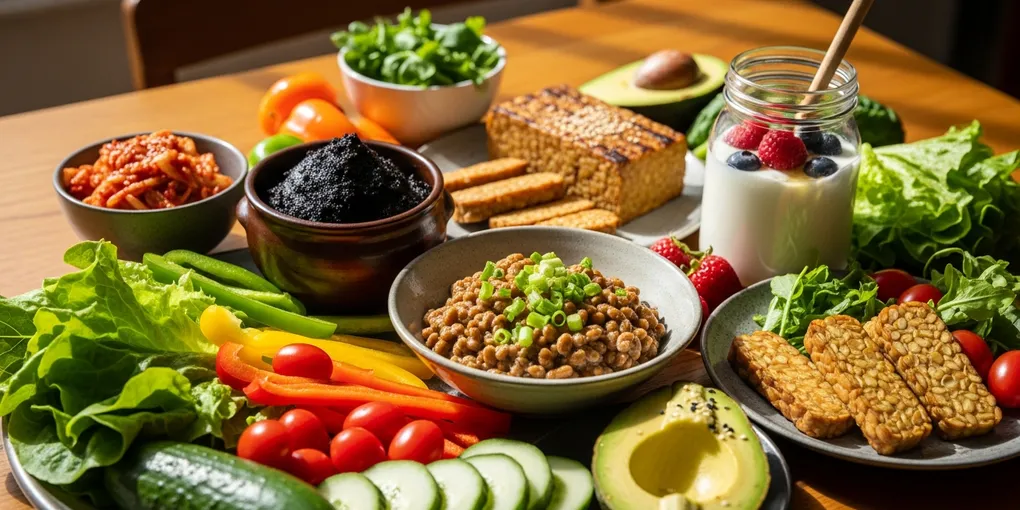
When we think of fermented foods, a few images come to mind: they keep longer, they taste richer, they’re supposed to be good for your gut. But fermentation does something else — something that doesn’t get nearly enough attention. Microbes can actually change the amount of nutrients in food, and how easily our bodies absorb them.
This idea of “microbial biofortification” — nutrients created and unlocked by microbes during fermentation — has been detailed in a recent review paper published in February 2026 in Frontiers in Nutrition (“Microbial biofortification of fermented foods: a review of probiotic-mediated nutrient enhancement,” DOI: 10.3389/fnut.2026.1754233).
Today, I want to walk through what this paper tells us about the relationship between fermentation and nutrition, using examples from everyday foods like natto (fermented soybeans) that we all know.
One thing to be clear about upfront: this article introduces a review of research findings, not a guarantee of health benefits for any particular food. The numbers you’ll see are examples of what researchers have reported — nothing more.
A note on this article: This is an introduction to research, not a guarantee of health effects or benefits from any specific food. The paper we’re discussing is a review that synthesizes previous studies. If you have health concerns or take medication, please consult a doctor or pharmacist.
Fermentation Can Actually Create Nutrients
Most of us assume the nutrients in a food are fixed — you eat an apple, you get what’s in that apple. But with fermented foods, something surprising happens: microbes can actually make nutrients that weren’t there in large amounts before.
According to the paper, the microbes involved in fermentation — like Lactobacillus, Bifidobacterium, Propionibacterium, and Streptococcus — synthesize various vitamins as they work.
In other words, fermentation isn’t just “microbes eat the food and change it.” It’s also “microbes create new nutrients as they go.” Some fermentation conditions may produce vitamin B12 and vitamin K, according to ongoing research.
The Vitamins Microbes Make
The paper lays out specific examples of vitamins that fermentation microbes produce. These are research findings, not guarantees, but they’re worth noting:
- Folate (Vitamin B9): Made by Lactobacillus plantarum and Bifidobacterium
- Riboflavin (Vitamin B2): Some lactic acid bacteria produce this
- Vitamin B12: Propionibacterium creates this
- Vitamin K2: Natto bacillus (Bacillus subtilis natto) produces this
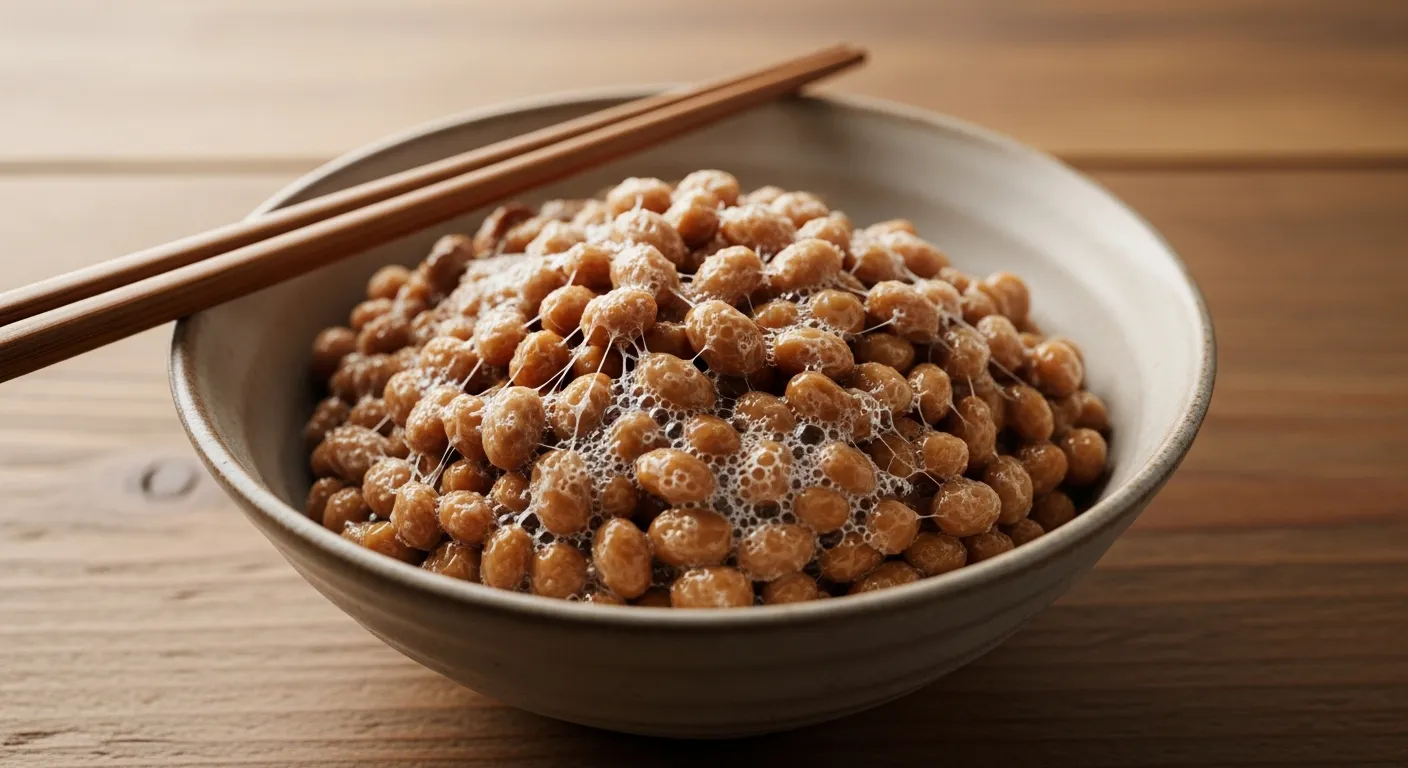
That last one — natto bacillus — deserves attention. Natto is one of the most familiar fermented foods for Japanese people, and we’ve known for a while that natto bacteria make vitamin K2. The paper cites natto’s vitamin K2 production as one of the clearest examples of fermentation-based nutritional enhancement.
When I think about my daily bowl of natto as a product of microbes actively creating nutrients, that simple breakfast dish starts to look different.
But there’s an important caveat with natto and vitamin K2: if you take blood-thinning medications like warfarin, you need to talk to your doctor or pharmacist before eating natto or other vitamin K-rich foods. The vitamin can interfere with how the medication works.
The Other Superpower: Making Nutrients Absorbable
Creating new nutrients is only half the story. The other half is equally important: fermentation can make nutrients that are already in food easier for our bodies to actually use.
The paper highlights “phytic acid (phytate)” as a key example.
Phytic acid is found in beans and grains, and it binds to minerals like iron, zinc, and calcium — preventing our bodies from absorbing them well. You can have plenty of these minerals in your food, but if phytic acid is holding them hostage, your body can’t access them.
During fermentation, microbes break down this phytic acid. According to the paper, this makes minerals more bioavailable — more accessible to your body. Some research shows improvements in iron and zinc absorption specifically.
Additionally, during fermentation, microbial proteases (protein-digesting enzymes) break proteins down into easier-to-digest forms, and some essential amino acids actually increase. Fermentation doesn’t just make nutrients; it frees them up as well.
Why It Matters That This Is a Review Paper
I want to be direct about something important here.
This paper is a review — it gathers and synthesizes existing research rather than conducting new experiments. Most of the numbers mentioned come from individual studies, and they vary widely depending on conditions. It’s not saying “eat fermented foods and you’ll definitely get this much of that nutrient.”
The actual amount of nutrients depends heavily on the type of microbe, the fermentation method, the original ingredients, and storage conditions. Two batches of “fermented food” can be quite different inside.
Fermented foods are one part of a balanced diet — not a substitute for it. The idea isn’t to rely on one fermented food to fill a nutritional gap, but to enjoy a variety of foods together, with no pressure or perfectionism.
The Paper Also Honestly Names the Limits
What I respect about this paper is that it doesn’t just talk about the promise — it also clearly discusses the challenges and gaps in what we know. This matters too.
The main limitations the paper identifies include:
- Loss during storage: Microbes and vitamins can decrease during drying, storage, and refrigeration
- Flavor trade-offs: Some bacteria that produce more vitamins create distinctive (sometimes unwanted) smells
- Inconsistency and standardization: Nutrient levels vary from product to product and batch to batch, and there’s no universal standard yet
- Lack of large-scale human studies: Most research is small and short-term; we need bigger, longer studies
So the takeaway isn’t “ferment something and it’s automatically more nutritious.” The potential is real, but turning that potential into stable, predictable products requires much more research and work.
A New Way to Appreciate Fermented Foods
Despite all these caveats — or maybe because of them — this paper reveals something beautiful about fermented foods.
We’ve known them as shelf-stable staples, as flavor-makers, as “probably good for digestion somehow.” But underneath, microbes have been doing delicate nutritional work the whole time: making vitamins, unlocking minerals, making proteins easier to digest.
The idea that fermentation microbes might help address nutrient gaps — especially with plant-based foods — is genuinely intriguing as we think about food’s future. In parts of the world where nutrition is scarce, fermentation is an accessible, culturally rooted technique. Done safely, it could help.
Miso soup this morning. Natto last night. Pickles at lunch. Yogurt for a snack. Microbes are quietly working in all of it, possibly making it richer in ways we’re only beginning to understand. That thought makes me feel differently about these everyday foods.
Fermentation does more than keep food fresh and make it taste better. Microbes are quietly reshaping nutrition itself. It’s humble, invisible work.
From Toshi
Reading through this article, I found myself seeing fermentation from a completely new angle.
For most of my life, fermented foods have meant one thing to me: they last longer, they develop deeper flavors, they’re supposed to be gentle on the gut. Miso, natto, pickles, yogurt — these aren’t special things to me. They’re just part of daily eating, woven into the rhythm of meals without fanfare.
But what this review paper introduced was different. It suggested that fermentation might actually be changing the nutrients themselves — that microbes might be making vitamins, or unlocking minerals so your body can actually use them. When you think about it that way, fermentation isn’t just transforming food; it’s quietly nurturing the nutrition inside it.
Natto and vitamin K2 particularly struck me. For Japanese people, natto is just — breakfast. Something ordinary. But inside that simple bowl, natto bacteria are fermenting soybeans, creating that distinctive stickiness and smell, and also creating vitamin K2. Knowing that makes a plain morning bowl feel less ordinary.
But here’s what I think matters most: not falling into the trap of treating fermented foods like medicine. This paper is a review — it brings together existing research. It’s not saying “eat fermented foods and you’ll get this specific amount of nutrition.” Bacteria species, ingredients, fermentation method, storage — all of these change the outcome. The same natto, the same yogurt, the same pickles can be quite different depending on how they were made and kept.
And with the vitamin K2 story, there’s a real caution for people on blood-thinning medications. Natto seems healthy, but if you’re on warfarin, your doctor might advise against it. Fermented food isn’t automatically good for everyone without exception. That boundary matters.
What I believe fermented foods are really about — what draws me to them — isn’t “eat this and you’ll be healthy.” It’s that they quietly enrich everyday eating. A bowl of miso soup. Some natto with breakfast. A small plate of pickles. A spoonful of yogurt. These small habits carry both microbial life and human knowledge passed down through generations.
This paper’s language — “microbial biofortification” — sounds technical. But what it’s really saying is that traditional fermented foods are being rediscovered through modern science. Our ancestors didn’t know the words “vitamin” or “phytic acid,” but they knew that fermentation preserved food, made it taste better, and somehow made it more nourishing. That intuition was onto something real.
Fermentation isn’t magic, though. Salt content matters. Storage matters. Hygiene matters. So I don’t want to over-romanticize it. The point is to fit fermented foods naturally into balanced eating, without pressure or exaggeration.
If I’m honest, I’d rather enjoy fermented foods first — taste them, savor them — and know about the microbial work happening in the background as a layer of deeper appreciation. The stickiness of natto. The aroma of miso soup. The tang of pickles. The smoothness of yogurt. Each one has invisible work behind it.
What I took from this paper is that fermentation is still a frontier — there’s so much we’re learning even about foods we’ve been eating for centuries. And that’s exciting. Some of that research might eventually help people in parts of the world where nutrition is a real struggle. That possibility feels meaningful.
But meaningful doesn’t mean overclaimed. It means holding the excitement alongside careful honesty: here’s what we think is happening, here’s what we still don’t know, here’s what varies, here’s what needs caution.
I think that’s the way forward with fermented foods. Not as a health hack, but as part of life — something to taste slowly, to know a little better, to trust without needing to prove it.
Going forward, I want to keep eating my natto, my miso soup, my pickles with this wider awareness. Not as a checklist, but as a small daily reminder that even the most ordinary food can be more interesting than it first appears.
※ This article is based on personal experience and publicly available information. It is not intended to diagnose, treat, or prevent any disease. If you have health concerns, please consult a doctor or registered dietitian. See our Disclaimer.