⏱ About 11 min read
How Microorganisms Interact During Fermentation | A Review of Microbial "Ecology"
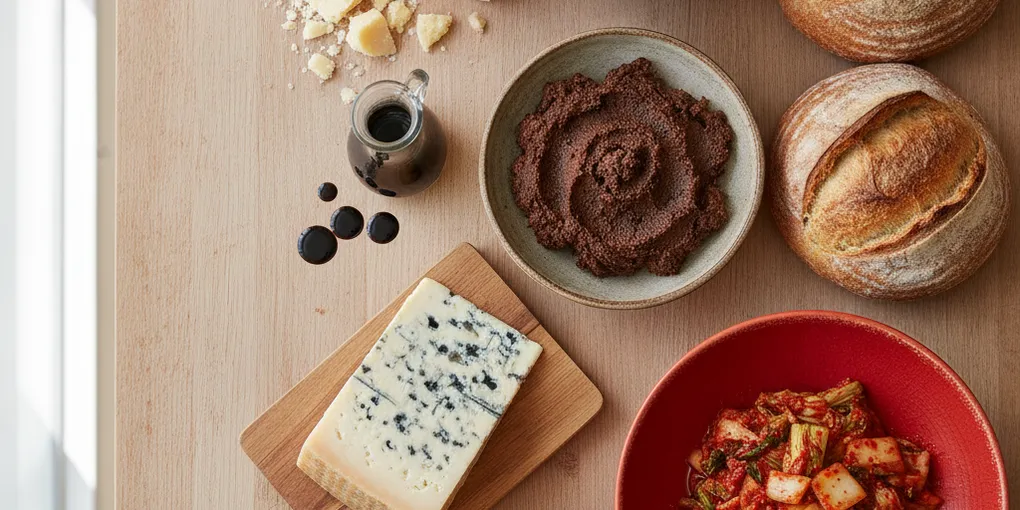
Miso, soy sauce, yogurt, cheese, kimchi, bread.
Fermented foods that grace tables around the world all owe their existence to the work of microorganisms. But what’s happening inside these foods? How do microbes interact and relate to one another?
A comprehensive review examining microbial interactions and ecosystems in fermented foods was published in 2025 in the journal Nature Reviews Microbiology. The authors are researchers from the University of Nebraska–Lincoln, including faculty from the Department of Food Science and Technology and the Nebraska Food and Health Center.
Let’s use this paper as a window into the “small society” flourishing inside fermented foods.
Fermented Foods: Intentionally Cultivating Microorganisms
First, let’s establish the foundation of this review.
The paper defines fermented foods as “foods manufactured by the intentional cultivation of microorganisms.” It notes that fermented foods rank among the most widely consumed foods in the human diet.
Here, we’re talking specifically about foods where microorganisms are deliberately harnessed during production. It doesn’t necessarily mean the finished product contains living microbes. Some fermented foods, like bread, are heated during processing, or products may be sterilized after manufacture, leaving few living bacteria behind.
What matters crucially is the metabolic byproducts the microbes create. Compounds like organic acids and ethanol emerge from microbial activity, enhancing the food’s shelf life and preservation qualities. Yet fermentation and spoilage aren’t distinguished by metabolic byproducts alone. We must consider which microorganisms are involved, manufacturing conditions, overall safety, and whether the resulting changes are beneficial to humans.
In earlier times, before refrigeration, people intuitively understood and used this mechanism. Fermentation was both an art for creating delicious food and a pragmatic way to extend shelf life and prevent unwanted microbes from taking hold.
Some Ferments Dominated by a Few Players; Others Feature Diverse Microbial Casts
One key insight this review highlights is how different fermented foods have different “microbial lineups.”
According to the paper, there’s considerable variation among fermented foods. Some are dominated by a limited number of systematically similar microorganisms, while others feature diverse microbial communities working in concert.
Take yogurt, for example. It’s made by adding specific lactic acid bacteria as starter cultures. The microbial cast is relatively narrow and controlled. Traditional miso, aged cheese, and kimchi, by contrast, involve various bacteria and yeasts from the raw ingredients and surrounding environment, constantly shifting as fermentation progresses.
Even though all are called “fermented foods,” they’re not all created equal. A fermentation driven by a disciplined few operates very differently from one woven together by many diverse players.
Cooperation, Competition, and the Relationships Between Microbes
So what happens when multiple microorganisms are at work together?
One dynamic is cooperation. One microbe breaks down raw material, producing substances that a different microbe then uses as food. This exchange allows fermentation to advance in ways that might stall if a single microbe worked alone.
Another is competition. Microbes vie for nutrients and living space. When lactic acid bacteria produce acid and shift the environment toward acidity, bacteria that struggle in acidic conditions find it harder to thrive.
There’s also succession — the starring microbes can change as fermentation progresses. In vegetable fermentations, for instance, different bacteria dominate early on compared to later stages when acidity has increased. As conditions shift, so do the active players. Fermentation isn’t performed by the same cast from beginning to end.
These cycles of cooperation and competition, these shifts and transitions, gradually shape the final taste, aroma, and texture. The character of a fermented food may emerge not from a single microbe alone, but from the relationships between microbes.
Shaping Fermentation Through Careful Conditions
The review also addresses real-world production.
Manufacturing conditions can be adjusted to enhance both the quality and sustainability of traditionally fermented foods, the authors explain. Temperature, duration, salt content, and the state of raw materials all influence which microbes become dominant. Understanding and controlling these conditions helps guide the microbial community in desired directions.
Again, the key insight is that fermentation isn’t something to leave entirely to chance — thoughtful management of conditions is essential. This is likely why traditional fermented food-making has been sustained by generations of accumulated knowledge.
That said, this principle only works when processes are properly managed. When making fermented foods at home, it’s crucial to follow trusted methods and handle ingredients and containers with care. Fermentation isn’t as simple as “just leave it out and nature will take over.” We should keep this clearly in mind.
How Fermented Foods Affect the Gut: Research Is Still Unfolding
The review also examines recent research on how microorganisms from fermented foods might influence microbial ecology in the human gut.
Research is actively exploring both the potential functional benefits of fermented foods and their safety. We should approach this thoughtfully.
This article introduces a review on the microbial ecology of fermented foods and doesn’t guarantee health benefits from any particular food. It hasn’t been uniformly confirmed that bacteria from fermented foods establish themselves in the gut or universally improve gut health.
The question of which bacteria, in what amounts, and in what ways influence the gut — these are still being investigated. We should distinguish between hope and evidence.
Peeking into a Tiny Ecosystem
Reading this review makes it clear that fermented foods are truly “microbial ecosystems.”
A bowl of miso soup, a slice of cheese, a plate of kimchi — the journey to their completion involves webs of microbial cooperation and competition. The living bacteria may not survive to the finished product, but the fruits of their labor show up in taste, aroma, and texture.
What we’re actually savoring might not be just transformed ingredients, but the accumulated work of a tiny society across time.
Next time you enjoy a fermented food, take a moment to imagine the relationships quietly at work behind the scenes.
Note: In the original paper, some authors disclosed financial relationships with Synbiotic Health.
From Toshi
When I read about fermented foods, I find myself wondering, “What bacteria are in this?” That’s because fermented food descriptions often focus on specific microbial names — lactic acid bacteria, yeast, koji mold, natto bacillus, and so on.
But reading this review changed my perspective. Understanding fermented foods requires more than memorizing individual bacterial names. What truly matters isn’t just which bacteria are present, but the relationships between them — how they cooperate, compete, and take turns driving the fermentation forward.
One bacterium breaks down raw material and produces a compound that another bacterium consumes as food. Lactic acid bacteria generate acid, shifting the environment’s acidity, allowing other bacteria suited to that new condition to flourish. Sometimes bacteria compete for nutrients and space, with one kind increasing as another declines.
Fermentation isn’t a simple process where a single bacterium does the same job from start to finish. As time passes, temperature, acidity, and nutrient availability all change — and the bacterial cast and their roles shift accordingly.
If I had to compare it to something, fermentation is less like one skilled artisan completing a work single-handedly, and more like many participants passing different roles to one another in a collaborative effort. Yet they’re not always cooperating peacefully; competition plays a role too. And somehow, from this interplay, a finished fermented food emerges.
In everyday conversation, we use tidy terms like “beneficial bacteria” and “harmful bacteria.” But the microbial world isn’t that simple. The same bacterium can behave differently depending on its environment, abundance, and which other microbes surround it.
A bacterium essential to one food might contribute to unwanted changes in another food or in an unmanaged setting. Rather than labeling bacteria “good” or “bad” based solely on their name, we need to consider their environment and relationships.
Some fermented foods, like yogurt, use relatively few starter cultures in a controlled way. Others — certain traditional miso varieties, aged cheeses, kimchi — involve diverse microorganisms from ingredients and the manufacturing environment.
Even though we call them all “fermented foods,” they’re made in very different ways. Some fermentations use selected bacteria kept stable and productive; others leverage complex microbial shifts. Neither is superior; they simply have different mechanisms and purposes.
This perspective shifts how I see traditional fermented food craftsmanship.
People in earlier times couldn’t see bacteria under microscopes or analyze their genetics. Yet through careful observation of temperature, timing, salt amounts, ingredient qualities, and changes in aroma and texture, they developed methods to guide fermentation in the right direction.
They had the technology to create environments where bacteria could thrive — without knowing bacteria’s names. The craftspeople making fermented foods weren’t directly controlling the microbes; they were designing the conditions where desired fermentation could happen and undesired changes could be prevented.
Traditional fermentation techniques, in other words, might be described as microbial ecosystem management refined through generations of experience.
This review also explores how modern science might enhance traditional fermented foods’ quality and sustainability. As we develop tools to identify bacterial composition and measure metabolic products during fermentation, we’ll better understand why one batch turns out beautifully while another shifts in unexpected ways.
Yet I don’t think standardizing everything through science is the right goal. Fermented foods naturally vary by region, season, raw materials, and maker. Those differences have created diverse food cultures and individual flavors worth preserving.
A good relationship between tradition and modern science means using scientific analysis to distinguish between valuable regional variation and quality problems we should prevent — not erasing all differences in pursuit of uniformity.
At the same time, we shouldn’t uncritically accept the phrase “natural fermentation” as automatically safe.
Fermentation doesn’t succeed simply by leaving food at room temperature. If ingredients or containers are unclean, or if salt, temperature, and timing aren’t right, undesirable microbes can proliferate. Sometimes you can’t judge safety by appearance or smell alone.
When making fermented foods at home, follow trusted recipes, keep everything clean, and don’t dramatically alter storage conditions on your own. The joy of fermentation and food safety aren’t separate matters — they go together.
Another point worth remembering: not all fermented foods contain living bacteria in their finished form.
Bread involves yeast fermentation, but then gets baked at high heat. Miso gets cooked when made into soup. Some yogurts and fermented beverages are heat-sterilized after production.
So “eating fermented food” and “consuming live bacteria” aren’t always the same thing. Yet even when bacteria are killed by heat, the acids, aromatic compounds, and broken-down raw materials they produced during fermentation remain in the finished food.
We’re not tasting just the live microbes themselves, but the food as the bacteria transformed it.
I want to approach the gut connection thoughtfully too. Exactly how microbes from fermented foods behave once they reach your gut is still an active area of research.
Just because a food contains bacteria doesn’t mean those bacteria arrive alive in your intestines or establish permanent residence. And even if you eat the same fermented food, different people — with different existing gut flora, genetics, and diets — may experience different effects.
“Eating fermented food automatically improves your gut health” is far too simple. It matters to separate promising research directions from what’s actually been confirmed in people.
Yet I don’t think this diminishes the appeal of fermented foods. Actually, they hold real value without grand health claims.
The aroma of miso, the umami depth of soy sauce, the tang of yogurt, the complex flavors of aged cheese, the evolving taste of kimchi — none of these come from raw ingredients alone. They’re born from microbes working over time, influencing each other in intricate ways.
We only see the finished product. But behind the scenes, invisible bacteria rise and fall according to their conditions, exchanging compounds and reshaping the food entirely.
Rather than viewing fermented foods merely as “probably healthy,” we might appreciate them as a food culture born from both nature and human skill working together. This review offered me that perspective.
The next time I sip miso soup or eat bread or cheese, I want to imagine not just whether living bacteria survive to the bowl or plate, but the fermentation time and relationships that made it possible.
The character of fermented foods doesn’t come from one special bacterium alone. It emerges from bacterial cooperation and competition, environmental change, and the accumulated wisdom of people who watched and tended these processes across generations.
To know that so much complexity and time can live inside a single food — it makes everyday fermented dishes seem suddenly richer, layered with invisible history and relationship.
Perhaps the true nature of flavor lies not in a single microbe, but in the relationships between them.
※ This article is based on personal experience and publicly available information. It is not intended to diagnose, treat, or prevent any disease. If you have health concerns, please consult a doctor or registered dietitian. See our Disclaimer.