⏱ About 7 min read
Koji Mold Proteins Shape Sake's Profile: Exploring the "National Microbe's" Multifaceted Role
Traditional sake brewing relies on three essentials: rice, koji (the cultured rice mold), and water. Fermentation happens through the work of koji mold and yeast working together.
At the heart of it all is koji mold — scientifically known as Aspergillus oryzae. Because of its importance in brewing sake, miso, soy sauce, and other fermented foods, Japan’s Brewing Society officially designated it as the nation’s “National Microbe” in 2006.
But exactly how much does koji mold influence sake’s final character? A team of researchers from the National Research Institute of Brewing and Hiroshima University set out to answer this question by focusing specifically on the proteins that koji mold itself produces. Their findings were published in the peer-reviewed journal Applied and Environmental Microbiology in 2026.
Let’s use this research as a window into the precise, invisible work that koji mold does in every glass of sake.
Koji Mold: A Treasury of Enzymes
First, let me lay out what koji mold actually does during sake brewing.
When you grow koji mold on steamed rice, you get koji — and as the mold grows, it produces various enzymes. Think of enzymes as tiny molecular tools that break down and transform substances. These enzymes break down rice’s starch into glucose and proteins into amino acids. The yeast then transforms those sugars into alcohol. Sake brewing is an elegant partnership between koji mold and yeast.
Until now, koji mold has mainly been recognized for what it produces — its enzymes. But exactly how much the mold’s own proteins influence sake’s final composition remained unclear.
Mapping Koji’s Protein World
So the research team decided to comprehensively examine koji-derived proteins in rice koji (which they labeled “RKPs” in their study).
Using a technique called proteomics — which analyzes all proteins in a sample at once — they identified 159 different koji proteins. Then, they went further: they created 85 different strains of koji mold in which specific genes were disabled. By brewing sake with these gene-deleted strains, they could observe how each missing protein affected the final product’s composition.
57 Genes, 57 Shifts in Character
The results were fascinating.
Among the 57 gene-deleted koji strains they tested, at least one detectable metabolite in the sake showed marked changes. Some of these metabolites relate to flavor and aroma, though it’s worth noting this study didn’t include human taste tests — only analytical measurements of the sake’s chemical profile.
What matters here is that by removing different proteins one at a time, the team saw the sake’s composition shift in different ways. This reveals how broadly koji mold’s proteins influence what ends up in your cup.
Notably, proteins involved in controlling how much the koji mold grows — its biomass — were connected to larger changes in the sake’s chemical makeup. The mold’s growth patterns, shaped by its own proteins, rippled outward to shape the final product.
A More Complex Picture Emerges
This research shows that koji mold isn’t simply an “enzyme-producing machine.”
Through its own proteins, koji mold regulates how it grows, and those growth patterns, in turn, widely influence the sake’s chemical profile. The mold does far more than just secrete enzymes; it shapes sake at multiple stages of brewing.
Over centuries, master brewers developed an intuition for reading koji’s condition and adjusting the final flavor. This research helps explain, at the molecular level, what was actually happening during all those decisions — the invisible protein choreography beneath the master’s practiced eye.
What Comes Next
This knowledge might eventually help brewers achieve more stable quality or even design sake’s chemical profile more deliberately. But we’re not there yet — the study was foundational research, not a demonstration of real-world applications or commercial benefits.
Moreover, koji mold isn’t unique to sake. It’s the foundation of miso, soy sauce, mirin, and much of Japan’s fermented food world. A deeper understanding of koji proteins could eventually help us understand all these foods better.
Tradition and Science, Hand in Hand
I should be clear: this is basic research into how koji mold works. The brewers used lab-created, gene-deleted strains in small-scale experimental batches. There were no human taste tests. This research didn’t evaluate any commercial sake or prove anything about a specific product’s taste or health benefits. That distinction matters.
Some might worry about the phrase “gene-deleted.” But in this context, it’s simply a research tool — a way to understand what each protein does by removing it and watching what changes. It’s not about the sake we buy in stores.
I don’t believe science and tradition are opponents.
For centuries before anyone spoke of genes and metabolites, sake masters could feel the slightest changes in koji’s condition, smell its development, feel the warmth of the fermentation. Through experience and careful attention, they guided the sake toward its intended character.
Research like this doesn’t replace that skill or deny its value. Rather, it offers a new language for describing what these masters have always known through their senses. When a brewer says “the koji’s developing differently today,” perhaps there are changes in cell mass and protein composition they’ve unconsciously detected. When scientific data and lived experience align, our appreciation for the craft deepens.
Science doesn’t homogenize sake’s flavors — and it shouldn’t. Part of sake’s beauty is its diversity: differences between breweries, between harvests, between waters and soils and seasons. That individuality is precious. At the same time, understanding fermentation helps brewers reduce unintended inconsistencies and troubleshoot problems. Science helps us distinguish between the variations we want to preserve and the instability we want to prevent.
Koji mold earned its designation as Japan’s National Microbe for good reason. It appears in sake, miso, soy sauce, mirin — throughout the Japanese food culture. Today’s findings about sake can’t be simply transferred to these other foods, since the ingredients, conditions, and microbes involved are different. Yet understanding koji’s protein roles may offer clues for future research into Japan’s broader fermentation traditions.
And since we’re discussing an alcoholic beverage, I want to say clearly: this article isn’t promoting drinking. Whether someone drinks sake or not is entirely their choice. For those who do drink, moderation matters. Avoiding alcohol is always an option.
You don’t need to drink sake to find fascination in its story. The way koji mold and yeast cooperate, the techniques developed and passed down through generations — there’s plenty to appreciate in the background.
What we see as a finished glass of sake represents the end point of a long journey: farmers growing rice, people protecting water sources, brewers nurturing koji, the careful monitoring of fermentation, and the silent work of invisible microbes. This research shines light on one corner of that world that was particularly hard to see — the realm of koji proteins.
As science advances, fermentation doesn’t lose its mystery; it gains new dimensions. I felt that while reading about this work.
Each answered question leads to new ones. Which compounds actually create flavor and aroma? How does koji development shift with different brewing conditions? How can laboratory insights serve traditional breweries? Fermentation research still has vast frontiers.
Japanese fermentation culture wasn’t preserved unchanged from ancient times. People observed, experimented, learned from failures, and gradually refined their crafts. As modern science joins that continuing story, something new emerges that honors both past and future.
Behind every glass of sake sits the intricate work of koji mold. And behind that work are researchers trying to understand it, and brewers who have tended that understanding for generations. Our growing appreciation for what we can’t see — combined with respect for the people who have long cared for it — is what will keep Japan’s fermentation culture alive and flourishing.
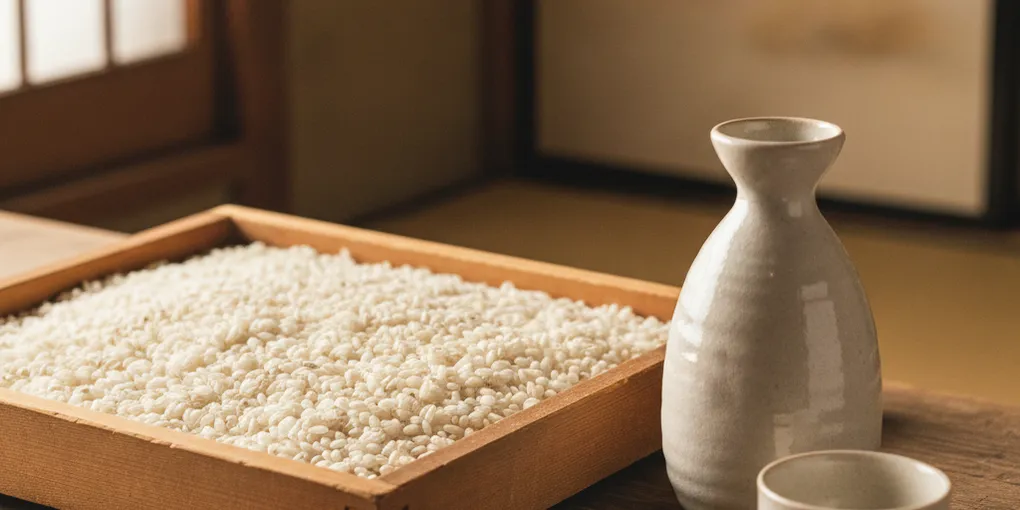
About the image: This is a conceptual image representing rice koji and sake. It is not a photograph of materials or products used in the actual research.
Toshi / 56 years old, passionate about fermentation, health, and running
※ This article is based on personal experience and publicly available information. It is not intended to diagnose, treat, or prevent any disease. If you have health concerns, please consult a doctor or registered dietitian. See our Disclaimer.