⏱ About 4 min read
Running on Children's Day Morning: What a Man in His 50s Discovered About the Seasonal Festival
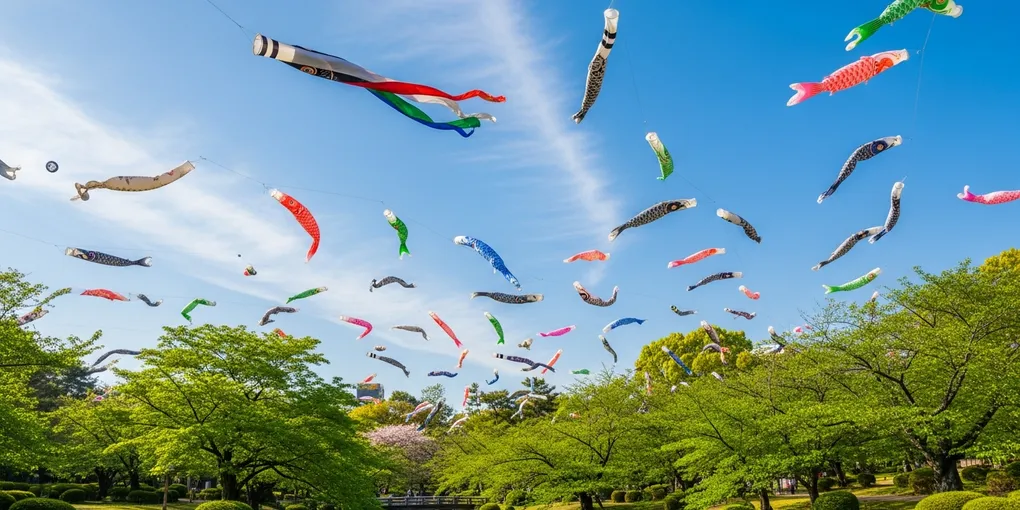
Today is May 5th, the Boys’ Festival—what we also call Children’s Day. As someone who’s no longer a child myself, I found myself wondering what this day really means for me as I laced up my jogging shoes this morning.
Running on the Second Half of Golden Week
The streets were quieter than usual. Once I started running, I noticed the landscape had shifted from just a few days ago—freshly sprouted, vibrant young greens caught my eye everywhere.
There was something almost sweet about the aroma rising from those tender leaves, reminiscent of kashiwa-mochi, the oak-leaf rice cakes traditionally eaten today. The breeze was gentle, and my spirits naturally lifted.
This season, spanning late spring into early summer when you’re surrounded by youthful green foliage, is called “shin-ryoku”—fresh green. It’s when the trees that shed their leaves all winter spread out new life. These fresh leaves are soft and bright yellow-green in color, and just looking at them seems to energize you.
Five minutes into my jog. Just stepping outside for a few minutes lets you notice the shift in seasons. That was the small gift of this morning.
Kashiwa-Mochi and Fermentation: A Deeper Connection
The “deep connection” between kashiwa-mochi, chimaki (bamboo leaf-wrapped dumplings), rice, koji mold, and fermentation isn’t simply about holiday foods. It’s rooted in a food culture that sees rice as central—one that thinks about preservation, nourishment, and seasonal adaptation all as one. Kashiwa-mochi and chimaki themselves aren’t fermented foods, but they’re part of the same rice-farming culture that gave birth to the wisdom of fermentation in rice koji, miso, sake, and amazake.
Kashiwa-mochi belongs to “rice food culture” because it’s made with rice flour and glutinous rice. Koji mold clings to rice stalks, and natto bacteria to rice straw—Japanese fermentation has always been deeply tied to rice farming. Kashiwa-mochi and chimaki are symbols of “eating rice at the turning points of seasons,” and behind that lies the wisdom of fermenting rice to improve its shelf-life and nutritional value.
Long ago, people saw the changing seasons as times when “the body becomes unsettled,” and they’d adjust through their eating and daily habits. Eating kashiwa-mochi and chimaki during the Boys’ Festival is part of this practice of “bringing body and spirit into balance” at seasonal transitions. Fermentation, too, is a technique that doesn’t just eat ingredients as-is—it “adjusts” them through time. Kashiwa-mochi and chimaki are at the gateway to this, and fermented foods are the natural extension.
How a Man in His 50s Celebrates the Seasons
As a child, Children’s Day meant getting treats and playing games.
But now it’s different. I run in the morning, move my body, and think about the meaning behind seasonal foods. That’s become my way of celebrating the festivals as a man in his 50s.
Tonight, I’m planning to make a meal with my homemade miso. Something simple, paired with vegetables in season. That’s my own way of “honoring the festival.”
What You Discover Through Running
The more I run, the more I understand what it means to “feel the seasons in your body.”
Hearing “Today is the Boys’ Festival” through a screen is completely different from actually jogging outside and breathing in the scent of fresh green foliage. It’s the difference between knowing something as information and feeling it with your whole being.
It’s the same with eating fermented foods. More than just knowing intellectually that “it’s good for your gut,” there’s something real about experiencing the changes in your body day after day.
Running and fermented foods—it wasn’t until I hit my 50s that I finally realized both of these are things where “continuing naturally reconnects your body to the world around it.”
I ran today. On the morning of the Boys’ Festival, through the fresh greens. For a man in his 50s, that’s the truest celebration of all.
※ This article is based on personal experience and publicly available information. It is not intended to diagnose, treat, or prevent any disease. If you have health concerns, please consult a doctor or registered dietitian. See our Disclaimer.