⏱ About 7 min read
Amata Chonburi, Day Three. Rain, Beef, and the Story of Tenderloin.
Rain at Dawn
6:25 AM. I opened the curtains and the world outside was dark.
Rain.
It hammered down like a squall, then suddenly softened. Then it built up again. It seemed ready to stop, but it didn’t. Tropical rain doesn’t care about your plans. The air hung heavy and thick, humidity clinging to everything. It was different from Japan’s muggy rainy season. This was something more intense—a suffocating heaviness where heat and moisture pressed down on you all at once. Should I go out, or should I stay in? I hesitated, watching the downpour.
In the end, I decided to stay inside.
Part of me wanted to move around, to be active. But pushing myself to walk through the rain didn’t feel right. I decided to head to breakfast early instead.
Breakfast in the Rain. Observation Continues
The buffet breakfast was the same as yesterday.
But my eyes had changed. By day three, the small details started bothering me more. Today I found myself watching the timing of food replenishment. Sure enough, they were waiting until dishes emptied before refilling them. A shame, really.
While eating, I mentally organized what needed to happen today.
Morning Work
Training on sourcing and storage methods for meat from three countries.
American, New Zealand, Australian. Three countries’ beef lined up before me. No Wagyu. Probably a cost issue—it wouldn’t be realistic for a facility of this size. I understand that. But these three types each have their own character, and they’re worth mastering.
The meat prep work was textbook standard.
Remove excess fat, trim the sinew. The steps were correct. There was care in the work. The staff took it seriously. That attitude deserves honest recognition.
But something bothered me.
They were portioning everything into individual cuts, vacuum-sealing each piece, and freezing it.
From a business standpoint, I understand. There are stretches when few customers come. Having pre-cut portions ready makes sense. I can appreciate that logic. But when frozen meat is thawed under running water after an order comes in, the umami-rich juices escape. The flavor drops. The texture changes. The satisfaction when you eat it definitely goes down.
Figuring out how to handle that will be a challenge ahead. But given the reality of few or no reservations, I judged that cut-and-frozen storage was the most practical choice for now.
Training the grill chef. I was teaching Tokyo-style technique. This was extremely difficult. Each griller had experience in Bangkok and had developed their own habits—deeply ingrained ones. That’s what we were trying to fundamentally correct.
Today I started with vegetables. Six, seven different kinds to grill first. Then we’d move to meat. There’s a reason for that order. To ease the burden on the stomach, we introduce gentler things first—vegetables. Then move to seafood, then meat. Also, by learning how fire cooks vegetables, you develop intuition for cooking meat. Vegetables are honest. How they char, how they shrink, how the aroma develops—it’s all visible. Once you develop that feel, understanding meat becomes deeper.
But training this griller turned out to be quite difficult.
Their face was stiff. Even when I asked “Do you understand?”, the response was thin. I couldn’t tell if it was sinking in or not—it felt like groping through fog. Even when I spoke to them, they just stood there quietly.
I demonstrated myself, twice, three times. I communicated through hands, fire, and smoke rather than words. They were watching. I had to trust that was enough.
I worked with two people this morning.
We finished at 11:20 AM. The normal break time was 11:00. I went twenty minutes over. I felt sorry about that. Maybe I was being too meticulous. Next time, I want to be more conscious of balancing speed with care.
Lunch. Thai Supermarket and Thai Food
At 12:15 PM, T and I headed out.
First, we went to a nearby supermarket—the kind of large life-goods store you’d compare to an Aeon in Japan. Thai everyday ingredients lined the shelves. The variety of vegetables, the types of seasonings, the way fresh fish was displayed. In the fermented foods section, there were dozens of bottles of fish sauce (nam pla). It reminded me of the soy sauce aisle back home, but the smell was completely different. That complex umami of fermented fish. I didn’t dislike it. I actually liked it.
Just walking through this supermarket, you could sense the depth of Thai food culture.
After that, we had lunch at a Thai restaurant.
They brought out green papaya salad—som tam. Shredded green papaya tossed with lime, fish sauce, chilies, and peanuts. Sour, spicy, refreshing. Some dishes were meant to be eaten with your hands. A Thai table is something you experience with your whole body.
I thought I’d ordered squid, but shrimp came out instead. Apparently that happens all the time in Thailand. It wasn’t bad at all. The shrimp was sweet and savory, full of umami. Thai cuisine’s combination of sweet, spicy, and refreshing never misses.
Thai food is a treasure trove of fermented foods. Fish sauce, shrimp paste (kapi), fermented vegetables. Everywhere you taste fermented umami. It feels like Thai tables and Japanese tables share the same roots.
Afternoon Work. Tenderloin Created Smiles
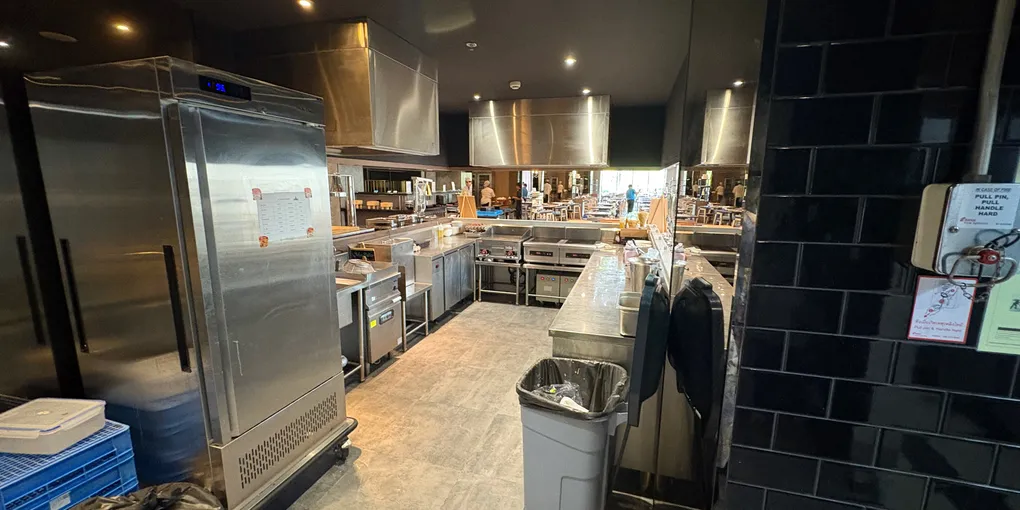
In the afternoon, I was back at the kitchen.
Today’s main focus was technical practice for the grill chef. Shrimp, tenderloin, vegetables—we’d work through the sequence.
We used large black tiger shrimp. First, I demonstrated in Tokyo style. Peel the shell, carefully remove the digestive tract. Using tongs, rotate it as it stands vertically while grilling. No butter. Just a light seasoning of salt and pepper, then serve as-is. Simple, but that’s what lets the ingredient shine.
I had the same griller practice the same steps.
Their hands moved. They followed the steps. But had it really sunk in? Honestly, I suspected that once I left, they’d go back to their old ways. That’s the reality on the ground here.
Then we moved to tenderloin—the filet.
Again, I demonstrated first. How to cook it through, how to develop a crust. Build color on the surface while sealing in the umami inside. Let it rest slightly off the heat. Then slice it. Cut into bite-sized cubes, uniform pieces. I showed the entire sequence, plating and all.
Grilled, rested, sliced, then everyone tasted it.
The reaction was different.
“Delicious.” “I want more.” Those voices came from all around. The air was different than when we’d tasted the sirloin. Tenderloin is tender, lean, and its umami unfolds with each bite. The team felt the quality of this meat.
A conclusion emerged.
“We’ll move forward with tenderloin instead of sirloin.” That’s the direction for future menu development. It was one significant decision.
Evening. Demonstration for the Owner
Around 6 PM, the owner arrived. We’d planned for 7 PM, but they came about an hour early.
I demonstrated the cooking again, this time for the owner.
I finished the shrimp Tokyo-style. Carefully removed the digestive tract, rotated it vertically with tongs as it grilled. No butter, just salt and pepper seasoning. Simple, letting the ingredient’s natural umami speak. The owner and staff watched quietly.
They tasted it.
There weren’t many words. But their faces said it all. That was enough.
The Farewell Dinner
After work, a gathering was held.
We sat at a table with everyone who’d helped me during this trip. Thailand’s nights are steamy and hot. But somehow when people gather, that heat fades into the background. The food, the smiles, the conversation—they warm the table.
This is the time from a business trip that stays with you.
How My Body Felt Today
My digestion remained strong.
Thai food agrees with me. Plenty of vegetables, deep fermented flavors. Fish sauce’s aroma seems to work gently on my gut. The food is supporting me through the fatigue of the trip.
I hope tomorrow morning is sunny. I feel like I could run.
Day three in Amata Chonburi has ended.
Cooking transcends words. Everyone smiled when they tasted that tenderloin.
※ This article is based on personal experience and publicly available information. It is not intended to diagnose, treat, or prevent any disease. If you have health concerns, please consult a doctor or registered dietitian. See our Disclaimer.